

Engaging with Forensic Engineer Expert, James Cohen
April 27, 2026In this episode…
Mr. James Cohen emphasizes that the most critical step in any engagement is clarifying scope at the outset. He advises attorneys to be explicit about what codes, contracts, and standards are in play, since those define the boundaries of his analysis and ultimately shape the credibility of his opinion. For him, scope is the safeguard against wasted effort, conflicts of interest, and misapplied expertise.
Check out the whole episode for our discussion on the evolution of forensic engineering, the realities of expert engagements, and how credibility and methodology shape testimony over time.
Episode Transcript:
Note: Transcript has been lightly edited for clarity
Host: Noah Bolmer, Round Table Group
Guest: James Cohen, Owner, James Cohen Consulting
Noah Bolmer: Welcome to Engaging Experts. I’m your host, Noah Bolmer. Today, I’m excited to welcome James Cohen to the show. Mr. Cohen is an award-winning forensic engineer with over forty years of experience. He’s a sought-after expert witness and holds a Master of Science in concrete structures from Imperial College London. Mr. Cohen, thank you for joining me here on Engaging Experts.
James Cohen: Thank you very much. I’m pleased to be able to talk with you.
Noah Bolmer: You’ve worked as an engineer since the late 1970s. How did you first become involved in expert witnessing?
James Cohen: My first job was at Grumman Aerospace, right after the lunar module. I was assigned to do high- what was then high-level finite element analysis with ANSIS, which at that time had just come out as a state-of-the-art package. For various reasons, I decided I didn’t like working there. Then I joined Amon and Whitney in New York. Other companies have subsumed them, but they were known for the Throgs Neck Bridge, the George Washington Bridge, and the Arecibo Observatory. High profile, high-level jobs. The first thing they did was stick me in their bridge group and at the time, computers were not used and calculators were still the basic multiply-divide stuff. There were no scientific calculators. My role was to calculate moments of inertia for built-up bridge sections because it had to get done. I spent one month doing that and went to the partner and said, “I can’t do this anymore.” He stuck me in what was known as the Special Structures Group. The first thing I did was hang off the top of the Chrysler Building. I don’t remember exactly what my function was, but I knew I was unqualified for almost anything. I was inspecting the masonry and brick. [I have] no idea why anymore. I was on this swing scaffold, which would be condemned outright by OSHA today. Looking at the top of the- from the top of the Chrysler Building down to the sidewalk with nothing between me and the pavement.
Noah Bolmer: You are made of sterner stuff than me, my friend.
James Cohen: It was great. Then I went on to another job, the MIT Kresge Auditorium. They had a simple job, which was to re-roof the shell. It’s an eighth of an inch- eighth of a sphere. If you cut an orange into eighths, that’s the way the roof looks. They had lead shingles, and the concern was that the shell might buckle as they took the heavy lead off. No one knew how to do finite element analysis. Like at Grumman, I was the only one. They let me loose on that. While the work was going on, they discovered that water had been getting through the lead shingles and percolating through the shell- the concrete shell, which only had three supports, no redundancy. The water would collect at the base at one of the supports, and it rotted through the concrete, corroded the steel, and it was losing its support. No big deal at the time. Get the contractor to do a repair. They had to take the bad concrete away [and] put in the good concrete. I was a junior engineer, and I had no say in this. Unfortunately, it was also my first experience with how eager contractors are to do a good job, particularly demolition contractors. They didn’t just take out the good- the bad concrete, they also took out the good concrete, thereby compromising one of the three supports. You now on a three-legged stool, [and] someone’s pulled out a leg. The building started to slowly collapse and sag. Then it became an emergency. That was my first forensic job. I was tasked with finding out what were the internal stresses in the shell after having been in service, I’m not sure for how long. I could be wrong, but I think it was built in the1950s. It had at least 20 years of concrete creep movement, adjustment, and shrinkage. With ANSIS, I created a time-lapse analysis using American Concrete Institute (ACI) creep equations, to try to find out what the stresses were after 20 years of service, taking out the support, and putting in struts to find out what all those loads would be. Today, I would give my analysis zero credibility for accuracy. At the time, I thought it was absolutely top-notch, and I was terrific doing that. Anyway, that job finished.
The Special Structures Group got the jobs nobody else wanted to do. I hung off the Chrysler Building. I rode the top of the Roosevelt Island Tramway to do a cable replacement. That was the first failure job- real failure job I had for construction. As they- I was on Roosevelt Island, and as they moved the tram back to Manhattan Island, they were using walkie-talkies to communicate, and someone neglected to tell the contractor on Roosevelt Island that there was a crane driving down 2nd Avenue. A tall crane unrelated to their job, but the tram went right into it and got impaled by the crane. We managed to get back over to Manhattan. My task, because I wasn’t licensed, I was an observer with no official capacity. I was asked to take photographs, and I started taking loads of pictures of this calamity. While I was doing that, the contractor came over to me and said, “If you take one more picture, I’m going to take that camera and wrap it around your neck.” I was hooked. That was the job I wanted to do. Hanging off the Chrysler Building. Doing high-level analysis and looking at these failures. It was a- it was a real blast.
When I left, there was no forensic engineering. At the time, I referred to it that way, but it was a dirty word. A forensic engineer in those days was reputed or had the reputation of being a hired gun and opinion to pay. What we looked at was failure analysis. I moved to England and joined a company called Flint & Neill. They did nothing but testing and code writing. I was developing test protocols for various things. Code writing for wind and flood. Working on suspension bridge analysis beyond what any code had. I was getting exposed to that idea of working outside of a code to find out what ultimate values were for strength and performance. Learning exactly how codes get developed, their limitations, what those factors of safety mean when you put them in there, and how it relates or not when something fails.
From Flint & Neill, I joined ARIP, got my master’s degree, and joined ARP. At that point, I was looking at failure analysis. That was what I was interested in. They did not- they put me into their Advanced Analysis Group, which was doing nothing but testing high-level- they were developing code for ANSIS, testing protocols, code writing, failure analysis, and hands-on instrumentation. One of the two of the jobs that I recall particularly was writing the protocols and developing the instrumentation to put onto a nuclear- a spent nuclear fuel flask container, which would stand being fired at a concrete wall at a thousand miles an hour. Something to simulate a plane crash, then being burnt in aviation fuel. The purpose of which was to see if any gas leaked, because it was going to hold plutonium gas if I recall. This is back in the 1980s, so I don’t think I’m revealing any secrets. The problem was what could you do to instrument this so you could get readings that would not get destroyed during the process? There were no black boxes, and they had to take readings somehow.
The other job was instrumenting the Hong Kong Shanghai Bank, which had just been completed. That was also an Arab design job, a fantastic building. What they wanted, and they were doing it mostly at their own cost, was to find out after all the analysis- doing this high-level stuff with typhoons hitting the building, doing dynamic analysis, which at the time was state of the art, how did it behave? Did it match the analysis? They felt that- they got permission from the Hong Kong Shanghai Bank to instrument it. My task was to develop the strain gauging and data acquisition, go there, install it, and then they would start to take the measurements. That is the beginning of doing nothing, but what I now refer to as forensic engineering, which I don’t think is necessarily failure analysis. Analyzing for possibilities, consequences, or results of failure was failure analysis.
Noah Bolmer: How is it working across all of these venues in different countries? I imagine that they all have completely different codes. As you said, you’ve been involved in writing some of them or giving your knowledge to try and develop them. To what extent do you have to prepare yourself when you’re working in Shanghai on an engineering job out there? How well do you have to understand the Shanghai engineering codes compared to what you’re accustomed to elsewhere?
James Cohen: It’s not a problem because, like all the work I do now, the code that you work with is the code in the contract. In this case, we were looking at British codes, British standards, which by that time I was familiar with. I had been in the country for three or four years. I had forgotten what pounds and kilos were. I was working only with newtons, pascals, and megapascals. I’ve forgotten completely what those are. I’m back to just PSIs. The knowledge base I needed was already in the contract.
And so that is what I follow. When I do forensic engineering now, one of the key pieces of information I want, if it’s available, because often these things are done unbelievably with a handshake, is what is the contract? What’s the scope of work? What are the codes being invoked? Are they the correct codes to invoke? So now move working across countries wasn’t an issue.
Noah Bolmer: When you’re talking about these contracts, are you typically given one by the engaging attorney or the engaging side, or do you like to use your own contract and go from there?
James Cohen: When I have a client and I’m going to be doing a job, I prepare a contract for them [with] a standard set of terms and conditions. A front part which briefly provides the scope of work, and the payment base. Terms and conditions cover the necessaries of insurance, liability, copyright, payment terms in terms of 30 days, 60 days, whatever. That’s a boilerplate. When I’m looking at a forensic job which I’m engaged in, I look to my client to provide me with the contracts which have been used in the job which I’m now analyzing.
Noah Bolmer: Tell me about these initial phone calls and how they’ve changed throughout the decades. You get a call from an engaging attorney to do this job. What are the question because it’s a two-way vetting process. You’re vetting them and they’re vetting you. If you’re the right expert, and you want to see if this is something that you want to do or are qualified to do. Tell me about some of the questions you like to ask and some of the questions that they ask you in an initial phone call for an engagement.
James Cohen: There are three basic items that I want to know. One is what is the work? I try to get as much as I can from the attorney with regard to details, which they’re not willing to give because it’s still not a job and it’s all confidential. I need to know is it within my area of knowledge? Often, the attorney is not aware of what they need. They can only describe the problem. I need to figure out if this is a mechanical, electrical, plumbing, geotechnical, structural, civil, or architectural. Is it OSHA, or ADA compliant? What are the things that they are going to need? Is there anything there I can contribute or is it better to give them a referral to someone else? That’s one. A basic one.
Another basic question is where is the job located? Am I licensed there? If I’m not licensed there, how much time is there to get a license, assuming I’m not refused by the licensing board? Is that acceptable to the attorney? The last thing I want to know, and this usually comes in a second phone call, is who are the parties involved so I know I don’t have a conflict of interest.
Noah Bolmer: Sure.
James Cohen: Those are what I want to know. What the attorney usually wants to know is do I have the expertise that they need? They often don’t know what expertise they need so that’s a back-and-forth education process. My availability is key. Usually, they don’t have three years to do the job. Sometimes I get a job- can I produce a report in 30 days? Occasionally in two weeks. That’s usually a no, but there’s a timeline that they need. They want to know the rates. Am I pricing myself out or are they getting a bargain? What information might I need? Although that comes on later.
There’s a list of things that most experts would want to have. Almost always none, or very little, of it’s available. They’re the things that would be great. Site visit requirements. Can I go out? When can I go out? What else might they be asking? They also want to know about conflict of interest. Those are the basic ones. Availability, expertise, and conflict of interest. For me, it’s licensing, scope, and conflict of interest.
Noah Bolmer: Have these calls changed in any significant way over the decades? Are engagements these days different than engagements back in the1970s and 1980s?
James Cohen: In terms of the conversation we’ve just had, the only real change is my knowledge that these are the things I need to know. Rather than finding out, I’ve become much more fluid in the questions. More assertive in what I have to know before I say yes or no to a job. The biggest change outs that have happened is, and maybe it’s because my rates have gone up, is that budget and budget estimates are something which is now a norm. I would say ten years ago, I was almost never asked about how much it was going to cost. It was rare. Whatever it was, that was acceptable. I mean, clearly, if somebody decided to take a client to the cleaners, there’d be a problem. But assuming that one is acting honorably and within a normal scope, they weren’t concerned with how much it was going to be. Now, even if I go to a site visit, I’m often asked, how much will that be? That’s the biggest change that’s happened.
Noah Bolmer: When you talk about things like site visits and travel, is that something that you bill in a different way? Do you have travel rates?
James Cohen: I find that experts have their- each one seems to have their own favorite way of doing it. My particular approach is that if I’m spending my time devoted to a project, I bill for it. I don’t care what I’m doing. If I’m traveling on the site or twiddling my thumbs in a room waiting to get deposed, it’s still devoted to that job. For travel, I do put in a personal limit that if I’m doing nothing but traveling- if I have to go to Florida or Texas, I won’t bill more than eight hours.
Noah Bolmer: Gotcha.
James Cohen: Even if for some reason it takes me twenty hours to get there- twenty hours is getting to two days. but if it’s more than one working day, I’ll only bill the one working day. On the other hand, if I’m expected to be at a site at six in the morning, I have to get up at three or four and travel two hours to get there. If [the visit] goes from six a.m. to four p.m. and takes me two to three more hours to come back. I bill for all that time.
Noah Bolmer: One of the things you mentioned is a litany of different trades that might be involved in various actions. To what extent, if any, do you ever work with other experts that are part of the same engagement? Do you ever collaborate on pieces of a report or a site visit? Are there other opportunities to collaborate with other experts during an action, or are you largely segregated?
James Cohen: There comes to mind three different ways that happens. One, the client, who may be an attorney, but could also be an insurance company, a contractor, or an adjuster, engages experts on their own to do different things. That’s not unusual. Sometimes I’m provided with the information that those experts are producing. Sometimes we have a conversation, although that’s rarer. That’s up to the client how they want us to interact, if at all. On one job I had an opposing expert who wanted to see which opinion they wanted. They had two experts working on the same job for the same thing. Another method is that I engage expertise that I don’t have as a subconsultant. Typically, that’ll be mechanical, electrical, and plumbing. I don’t usually go beyond that except for cost estimating which is a fuzzy area. Yes, I do cost estimating. No, I’m not a cost estimator. I am happy to be engaged to assess a cost estimate for reasonableness, but I would not want to be put forward as an expert in cost estimating. I leave that to the attorney, and then I’ll engage a cost estimator. The third way is that there is a team which is put together and we all work collaboratively. It depends on the job, and the client.
Noah Bolmer: When you subcontract out to another trade, is that something you have to get approved through the end client, the engaging attorney or is that something that you can just do?
James Cohen: I will get approval. I haven’t ever tested if I can just do it. I want the clients to know who is working on it, what their fees are, how we’ll interact, and who takes responsibility for the opinion. Sometimes, if I need outside expertise on a topic, like having a drawing that I have to sign and seal, they are doing the work under my direction, and I assume their- I assume the data and I form an opinion. On the other hand, if I need someone to provide an opinion, then that is what they will do. We produce separate reports for the same job, but on different subject matter. MEP comes to mind immediately because that’s the most common one. Are there issues with the HVAC system? Are there issues with the sewage? I don’t do that at all. I would not even attempt to represent somebody else’s opinion on that. They provide their own report under my direction to the extent that I’m responsible for payment, making sure they get the work done on time, making sure there’s no conflict of interest. And that they are available and licensed. I would have to do that for myself. I produce my report, which is a separate standalone opinion. There is overlap. If I’m looking at water damage to a structure and it’s related to the plumbing or the HVAC, there’s an interaction. But there is still that separation of discipline. They have to comply with the engineering code of ethics, and legal licensing issues. I do not do something which I am not sufficiently familiar and knowledgeable about. I always get somebody else for that.
Noah Bolmer: Speaking of your opinions, you’ve been developing opinions for a long time. How do you keep track of all of the things that you’ve said and how you said it? If you change your mind about something or perhaps a methodology has changed and then you’re attacked for it in court, how do you deal with those issues?
James Cohen: I’ve never been attacked in court for prior opinions.
Noah Bolmer: Oh, okay.
James Cohen: I don’t know to what extent the attorneys or adjusters are doing historical research. I know that they do because at least one attorney has engaged me based on a deposition that she found I had done in years past, and she liked it. How do I keep track of it is a simple answer. I don’t. My approach is I tell and stick to the truth. If I do that, and I’m always honest, I don’t have to remember anything I said. In all my reports and work, I have a caveat that if I’m given new information, I have the right to change or modify my opinion, which has happened, where I’m suddenly presented with something new. It has happened in court once or twice. Yes, I haven’t seen it, but it’s important, and it changes my opinion on the spot. When there are new techniques, new codes, or whatever, it’s going to change.
When it gets to the forensic engineering work, it’s important to use the codes and standards which are applicable to the job. Those may be historical so, nothing is going to change there. It has to do with current state-of-the-art knowledge. One side may say, “We now know that this will deteriorate concrete.” Or “This is going to happen in the windstorm.” The other side, which- and it might be me on either side, because they’re all valid arguments, will say, but we didn’t have that then. That’s not relevant to the fault. It may be relevant to the cause of failure, but it’s not a cause of the fault. It’s important to distinguish between those.
Noah Bolmer: Walk me through a typical deposition for you. What are the questions that you get asked? What venues are you in? Tell me about depositions.
James Cohen: Those have evolved over time. Primarily, when I started my initial depositions, the focus of the first half an hour of questions was to destroy my credibility and my qualification as an expert because my CV would have been lighter. My experience was lighter. My background was lighter. Now they look through my CV, and they ask questions. I’m not exactly sure why that challenge to my credibility usually doesn’t arise. There’s the advantage of working for forty or forty-five years versus working for ten. The first- destroying one’s credibility as an expert, and as an individual, doesn’t happen to me anymore. It did at the beginning. Quite honestly, I enjoyed that part. I miss it. Now they do that, then they go through what I did for the project? How was I engaged? What was my scope? The same things that we’re talking about today. Was I limited? That often comes up. Was I limited in what I was allowed to do? The answer is always yes. I’m limited in time and limited in expense. Almost every forensic job can turn into a PhD thesis given unlimited time and money. I’ve seen that happen with some jobs where the other side goes totally bananas. For whatever reason, their client is either happy, doesn’t know, or doesn’t care. But yes, there are always limitations on time, and scope, not quality. That pyramid- you can never reduce the quality. The output should be as good as it can be, given the limitations on time and scope. They’ll go through the questions on that.
Then they’ll get into a report, if there is a report. Some states don’t require a report. It varies. They will then go through [the report] in a fine way. They obviously had technical consulting going on behind the scenes, and I get detailed technical questions. Occasionally, I have found that I made an error, and the most important thing to do is to simply confess, “I got that wrong.” Does it make a difference? Hopefully not. I’ve yet to- I don’t remember a time when there was something which happened that I had missed or had a material effect. There was one project in New York where a huge crane collapsed and killed seven people in 2008. It’s known as the 51st Street crane collapse. I was with ARP, and we were engaged by the New York City Department of Buildings, and given a huge, almost unlimited budget. We had six months to do anything we needed to get a report done. [There were] certain questions they wanted to have answered. When it came to the trial, which was a murder trial due to the deaths, and the client at that point was the New York County District Attorney, the opposing expert came up with a hypothesis of what may have resulted in a failure. Not proof that it happened, but simply that there was a possibility, which in a manslaughter trial is all you need. I forget what the legal phrase is. We’ve heard it in a lot of movies, though. They presented something which we had not looked at. I sat on the witness stand, and decided that it was possible, but the failure mechanism that they were referring to was not possible.
That could have been a “I say / you say” situation. Happily, I had created some props to demonstrate certain principles which I thought might be difficult to do just with words. One of them included a cylinder, [like a] coffee cup [that] was on the table. I was also provided with paper towels. The issue was that something going around this cylinder, a collar, that could have fractured on the far edge. Physically, all things being perfect in a perfect world, you have some friction as it grips around- as the collar grips around the cylinder. That far end should not be the highest stress point. The highest stress point is going to be closer to the two and ten o’clock positions. Having no idea what would happen, this was a big risk, but it was a real question. I took the paper towel, wrapped it around the cylinder, and I pulled. It broke at the ten and two position, so I was able to demonstrate the opinion that I was providing. There was physical evidence for it.
Noah Bolmer: Do you use a lot of demonstratives?
James Cohen: When it’s possible. I was testifying about an alleged design defect in a thousand-foot-high telecommunications tower related to a leg connection. That was the focus. They were- the plaintiff was claiming that it was unsafe because the leg was going to fail in a certain way, and we were claiming that no, it’s safe the way it was designed. This was in Missouri or Kansas. I got to the trial, which is a long story in itself getting there. I was in the witness stand and starting a technical explanation. It was a jury trial, and I looked at the jury. They were all local people, which is proper. They were farmers and tradesmen. Nobody technical. I started talking about compression, tension, shear, and torsion. They looked at me and I could see their eyes glazing over. The court had provided me with Styrofoam cups for water. I took the cups and I started demonstrating what a tension failure looks like. Just take the cups and separate them that’s torsion failure. Sliding them against each other is shear failure. What really got their attention is I took a cup, put it upside down on the table, and said, “This is a compression failure.” It went bam [as I smashed it]. They paid attention for the rest of my testimony. That was unplanned. It was an ad-lib. It was a lesson in my looking at who’s making the decisions in the trial. Are they understanding what I am saying? If I get the sense, they do not understand my words, I have to change my words, and my method of approach. That is something I’ve kept with me through all trials. If it’s a judge trial, a bench trial, I look at the judge when I answer the questions. I want to know that he or she understands what I’m saying. If it’s a jury trial, I’m looking at the jury, not the attorney asking me the questions. I have to look at him to understand the questions. I use both lips and sound for that.
Noah Bolmer: Sure.
James Cohen: I don’t want anyone to think I’m ignoring the other counsel. But the people I’m talking to- the testimony is not for the attorney; it’s for the decider. The ones who are going to be deciding the decision. All answers get addressed to them in a language that they understand. I try to avoid being technical. If you can’t explain something to a three-year-old, you don’t understand it.
Noah Bolmer: Does that also go with your report writing? Do you make sure that a lay person is able to parse your writings for your reports?
James Cohen: Absolutely. If there are- my favorite example is the term efflorescence. Now, every structural engineer out there knows what efflorescence is. Pick someone at the shopping center and ask them what efflorescence is. They won’t have a clue. It may sound nice and high-minded, but if that’s the term being used, it has to get completely defined. Usually, I’ll shorten it to white deposits, but I need to explain how they occur. In a report, I will define efflorescence. Then, I’ll use the term because it’s a shorthand term, like most technical terms are, for what may be a long explanation. I always try to gear the report to the layman.
Noah Bolmer: We were talking about depositions and trials. One thing I like to ask all of my guests is do they have any pre-deposition or pre-trial routines that helps them get into the right headspace and prepared for what could be a difficult or long day. Some people like to cram. Some people like to do yoga or drink coffee. Do you have a routine that works for you? That gets you ready to go.
James Cohen: A good night’s rest and making sure there’s a supply of coffee. That is, I again- when I started, my first testimony was at an arbitration involving a deteriorated wearing course- concrete wearing course at a hospital, which was over the emergency surgery area. They were concerned about this. In order to get prepared, I created a loose leaf. There were no- we were not using laptops at those days. No one owned a laptop. I don’t know if they had been invented yet. It was a huge loose leaf [binder] with all the dividers. It was a three-inch binder where I put all the codes, standards, reports, and everything I needed there. I nearly memorized the whole thing. When I got there- this was also my first, so the credibility issue was major. I was testifying- my opposing expert was an expert, a seasoned expert in the subject matter. I was not. I had just done the work and was convinced of where I was, I had all the standards. I’d like- I’m glad to say my side prevailed. We were correct. We were right. There are several lessons there. One is [to] know the material. Winging it is not the way to approach anything.
Noah Bolmer: Sure.
James Cohen: Don’t be a hired gun. Admit when something is there. The opposing expert, if I recall correctly, did not admit things which were factual. In my loose leaf, I had proof it was there. The ASC- the ASTM standards for a wearing surface on a deck were clear. The drawings of how this was constructed were clear. He went into denial on it. He was working- the phrase I now like to use, he was working too hard for his client.
Noah Bolmer: That’s an expert witness- their duty is to the neutral truth, not to the end client, the attorney, or anyone else. It’s to tell the truth. That is absolutely sage advice. Let’s back up to a couple general questions. Tell me about what makes for a solid attorney expert relationship. How do you get that started and how do you maintain that momentum throughout the action? Part two to that question is the reverse. What are some red flags that warn you that this might not go the way that you’re hoping?
James Cohen: In my proposal, and this should be in all expert proposals, I have a statement- I’m not going to be able to quote it, but it’s to the effect that my opinion is my own and is not reflected by the client. I make it clear that my opinion will be my own. It’s not intended to help them. I will phrase my opinion in a way which is most beneficial. My best example of that is the eight-ounce glass with four ounces of liquid. The usual way people put it is that it’s half empty or it’s half full. There’s also too much glass, [not] enough liquid, they got the order wrong, and they ran out of the correct glasses, and had to get a larger one to accommodate the order. The other is the menu doesn’t say anything about how much liquid you’re going to get. As I put it to one person the other day, if you have an eight-ounce glass and you order some whiskey at a bar, they’re not filling the glass. They’re not even going to fill it halfway. Are you going to complain that you have a half-empty glass? No one in their right mind would expect you to fill it. There are all these ways of saying the exact same thing. The way it’s said affects- is affected by who the client is. The facts don’t change. The interpretation of the facts has to be consistent, whether it helps or hurts.
I had one job where the- it had to do with a severe injury from somebody falling off a telecom tower. I used to do a lot of telecom towers. What I didn’t know is that the attorney, who is a personal injury attorney, had engaged another expert on exactly the same thing. We each gave our reports. I gave the facts and my interpretation. It wasn’t as beneficial as the attorney would have liked. He told me he was going to use the other expert because it was a better opinion. I heard from him a couple of months later that he got rid of the other expert because the guy had no credibility. Whereas my approach was highly credible. No, I didn’t say exactly what he wanted, but I was consistent and could stand behind my opinion without any doubt.
Noah Bolmer: Before we wrap up, do you have any last advice for expert witness or attorneys working with experts?
James Cohen: Stick to the truth. An attorney is an advocate. They are there, in my opinion, to do the best for their client. The expert’s work is to provide the correct information. The attorney can do the best for their client given what happened. If it’s a personal injury versus a construction defect, it’s still the same. It may not be the absolute best thing that the attorney was hoping for, because yes, their client did contribute to their injury. They shouldn’t have been there. But with all the other parties involved, should it have happened anyway? How many contributors were there? Usually there are multiple- in a construction case, there are many subcontractors, consultants, designers, [and there] could be several inspectors. There are typically more than one or two, who contributed to the problem. Should they pay? Should they be held culpable? I have no idea. That’s not my job. My job is to point out and to give the attorney the information on where the faults lie. How many of the faults contributed to whatever it is that’s being claimed. Not to cover it up. Not to say their client didn’t do anything. They have to have the correct information because if they don’t do that, the other side definitely will. If I don’t do it for our own client, I will lose all credibility in the opinion I provide. In my client’s point of view, they lose the case. For me, I still get paid. Yeah, so it- for my- I’m fine, but that’s not the attitude to take. I like to think that the work I do serves the cause of justice, not the cause of my bank account. The bank account will take care of itself. I’m there to provide, as I said, the best, honest information. If it’s simply an insurance claim and it’s a defense attorney, they want to know what their exposure is. They don’t want to know how they can get out of it. They want to know how much they should reasonably pay because they almost always take care of it through mediation. They want to know how high they can go. How low can they go? If it’s an injury, what is the contribution?
Noah Bolmer: Mr. Cohen, thank you for joining me today.
James Cohen: It was a pleasure. Thank you.
Noah Bolmer: And thank you as always to our listeners for joining us for another edition of Engaging Experts. Cheers.
Subscribe to Engaging Experts Podcast
Go behind the scenes with influential attorneys as we go deep on various topics related to effectively using expert witnesses.
Share This Episode
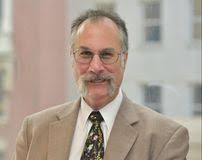
James Cohen, Owner, James Cohen Consulting
James Cohen, an award-winning forensic engineer with over 40 years of experience. He's a sought-after expert witness and holds an MS in concrete structures from Imperial College in London.
Find more episodes:
Expert Witness & Attorney Relationship, Expert Witness Budgeting, Expert Witness Confidentiality, Expert Witness Contracts, Expert Witness Credibility, Expert Witness Deposition, Expert Witness Testifying, Expert Witness Visual Aid, International Cases, Trial Team, VenuesForensic engineering professionals are responsible for the investigation of failures, some of which are serviceable and others are catastrophic. This process involves deep investigations of structures, materials, products, and more.