

Engaging with Meteorology Expert James Caron
September 18, 2026In this episode…
Our guest, James Caron, is a Certified Consulting Meteorologist and expert witness with nearly two decades of experience providing historical weather analysis for legal matters. In addition to his consulting practice, he leads meteorological operations across North America and Asia for Atmospheric G2, where his forecasts support critical decision-making in the energy sector.
Mr. Caron discusses how he transitioned into expert witness work through his CCM certification and shares insights on maintaining objectivity, preparing defensible reports, and communicating uncertainty in a scientific discipline where absolute certainty is rarely possible. He also explains why many weather-related cases settle before trial and emphasizes the importance of staying within one’s area of expertise, even turning down engagements when the available data cannot support a reliable opinion.
Check out the full episode for our discussion on meteorological expert testimony, rebuttal reports, deposition preparation, working alongside other experts, and the role of scientific credibility in litigation.
Note: Transcript has been lightly edited for clarity.
Host: Noah Bolmer, Round Table Group
Guest: James Caron, Director, U.S. & Asia Meteorological Operations at Atmospheric G2
Noah Bolmer: Welcome to Engaging Experts. I’m your host, Noah Bolmer. Today, I’m excited to welcome James Caron to the show. Mr. Caron is the director of US and Asia Meteorological Operations for Atmospheric G2, a weather decision platform for energy trading. Mr. Caron, welcome to the show.
James Caron: Hey, thanks, Noah. I appreciate you having me.
Noah Bolmer: Absolutely. Well, let’s jump into it. So, you’re a career meteorologist. How did you first become involved in expert witnessing?
James Caron: So, I came at it from operations, not from litigation. I’m a certified consulting meteorologist that is AMS certified, AMS being the American Meteorological Society. I spend my work hours primarily on operational forecasting. As you mentioned, I’m the Director of Meteorological operations for North America and Asia with Atmospheric G2. The first legal call honestly came back when I started in December of 2008. That’s when I received my CCM certification, certified consulting meteorologist seal from the AMS. And an attorney called asking about a weather question. He obviously didn’t need a forecast. He just needed to know what had happened in terms of precipitation at a specific location and a date. And that was primarily all historical based information. And that’s how I ended up starting my CCM, my consulting career.
Noah Bolmer: What was expert witnessing something that you knew about that you were aware of? Is it something that perhaps other meteorologists that you knew were working in a little bit?
James Caron: So, I first learned about it from my mentor, Jan Noll. Jan’s a great guy. He’s based out of San Francisco, and he owns what’s called Golden Gate Weather. [He’s] been super helpful throughout my career. I had initially spoken with him about doing consultation and expert meteorology work, and he kind of got me turned on to the career. Really just as a side gig. Also, like I said, I’m doing the operational side as my primary job. And I know there’s a lot of meteorologists that do this as a full-time gig. But again, for me, I kind of do it part-time.
Noah Bolmer: When you say you do part-time, do you think that it’s important to stay engaged in your industry? Is that something that increases your chances of getting expert witness retentions?
James Caron: In terms of certified consulting meteorologist work, it’s primarily myself going back in history and researching various topics, right? It could be icing like a slip and fall, specific location or hail or wind damage to a roof. I do think it’s important to stay engaged in the career field. The problem is, though, I would stay more engaged if there was a true flow or intake of cases. What’s fascinating, Noah, is as long as I’ve been doing this- back since December of 2008, I will get a drought, no pun intended, a drought of no cases, right? A drought of no cases for maybe two to three months. And then I will, no kidding, get contacted by three or four attorneys. And you would think maybe one or two of those attorneys would be on, you know conflicting on either side of a specific case. But no, it’s three or four different attorneys related to completely different cases. And that can happen within a few days of one another. It’s ironic and very strange how it happens, but that’s how I’ve been getting my cases. It’s a very ebb and flow type, I guess, type of career, which is why I wouldn’t necessarily rely on it on a full-time gig at this point. Especially with a young family, I kind of need that steady flow, so to speak, in terms of income. But like I said, this, it’s great to do this work. I really enjoy working with attorneys, with law firms. I love being on the operational side of meteorology. And so, what I mean by that is that I like producing results and seeing the immediate impact, right? With my job with Atmospheric G2, I talk primarily to energy commodity traders on a daily basis. And these energy commodity traders, believe it or not, are betting millions of dollars on my weather forecast, on the company’s weather forecast that I work for. It’s cool to see the real-time results right away. Same thing here with the forensic work. I’ll do the research, I’ll produce a report, and I’ll hear immediately from the attorney like, “Hey, this is great, this is what we’re looking for. I’ll let you know in a couple of weeks how it turns out.” Most of the time, at least for me personally, I haven’t done a whole lot, I guess, compared to normal, because there’s some meteorologists out there that have done hundreds of depositions and expert testimony. I honestly have done probably close to 9 total and the reason for that being Noah, I think, is that when I talk to these attorneys, I send them my official report. They’ll typically come back and say, “Hey, really appreciate your help on this. We don’t need you to testify. We actually settled based on the weather. So, thank you again for the, you know, for the information.”
Noah Bolmer: Sure, absolutely. Backing up to when you were talking about getting so many calls at once, I suppose you could say when it rains, it pours. Would you say that you’re getting more contacts from the plaintiff or the defense side, or would you say it’s roughly split?
James Caron: I would say it’s split. I’m completely unbiased when it comes to my weather reporting. I’m a scientist by nature. I am not going to use hyperboles. I’m not going to use any sort of biased wording in my reports. And I’ll be honest, it fascinates me even to this day throughout my career, how many rebuttal reports I’ve included embedded in my meteorological report because the attorney will say, “Hey, opposing counsel hired a meteorologist or opposing counsel has an engineer. And within that engineer’s report, they included a quote, unquote weather section.” And so, my job is to not only produce my own findings but then give a rebuttal to the findings on the opposing counsel side. And it blows me away, Noah, at how biased the majority of these reports are. I mean, just destroying the expert’s credibility right off the bat. And it’s easy for me to write to rebuttal because, you know, you go through XYZ with the attorney that hired me. I’ll typically coach the attorneys when they go to depose the opposing counsel’s expert meteorological witness. I’ll coach them and they’ll ask me, “Well, what kind of questions should I be asking the meteorologist?” Oh, well, it’s a field day. Here’s a plethora of questions you should ask them because their report is complete trash. Very biased and maybe the meteorological data is sound, but the bias just shoots them in the foot.
Noah Bolmer: Is there a qualitative difference between the manner in which you prepare a report versus a rebuttal report? Is there a different approach to that?
James Caron: Not necessarily. So, the overall process is going to be the same. Technically speaking, in a perfect world, my report should match verbatim with the opposing council’s meteorological experts report. And to this day, I’m shocked that it doesn’t most of the time, but qualitatively, we should be looking at the same data. Now, every once in a while, you know, we might not be looking at the same type of radar data, or maybe we’re not looking at the same reporting airport ASOS (Automated Surface Observing System) locations. That’s completely normal. That’s fine. And you can say that up front. I think attorneys appreciate that on both sides when you are being deposed. They not only want to know what you know, but perhaps what you might not know or some of the uncertainties within the weather itself. I think that goes a long way. I think that’s one big mistake that a lot of meteorologists make is that they try to sound as certain as possible. And that’s when you start to get into trouble, especially in depositions, because the attorneys can, for lack of better teterms;hey can smell blood in the water probably 10 miles away. And they hear that first crack in your voice when you’re not quite sure. It is okay to express uncertainty about the weather and about even your own findings. I think that helps a lot in terms of crcredibility,oo.
Noah Bolmer: Is there a specific way that you go about saying I don’t know? Is it something that you just express loudly and frankly and say, I don’t know the answer to that question rather than trying to beat around the proverbial bush?
James Caron: Yeah, so I would say exactly those words. I do not know the answer to that question. And what else is interesting, though, because of my background in the military, so way, way back in the day, I started off my career out of college as a meteorology officer in the United States Air Force. And it was funny, back in my boot camp days the drill instructors would tell us, “Here are your responses. You are only allowed to say these responses.” One of those responses, we constantly beat it into our heads, “I, Sir, Ma’am, I do not know, but I will find out.” Even to this day. Now granted in a deposition, I’m not going to have the time or the resources to research a question I don’t know the answer to, but typically speaking, you got to be up front and honest. I do not know the answer to that question.
Noah Bolmer: Let’s talk a little bit about contracts. Do you insert any special terms such as a retainer agreement or different travel rates? How do you structure your expert witness agreement?
James Caron: Yeah, so my first email to the attorney, typically when they reach out or either attorney or paralegal, they’ll say, “Hey, we’ve got a very general case here re the highlights. Do you think you can handle a case like this?” And I’ll typically respond, yes or no. And if I say yes, then, and this is also in a phone call format too. A lot of times the attorneys or paralegal will call me and they’ll say, “What do you need? What do you need from us?” And I’ll just say, “Well, I need a time, a location.” And then what they’ll typically ask for me is my CV and my fee schedule. Those are the two main paperwork items that the law firm will ask me for. So, the CV and then, the fee schedule has changed over time. I initially started off very low in terms of the fee schedule just to get my name out there and compete as a younger expert witness, competing with a lot of these older and more well-established folks like my buddy Jan Null. So, I started off with a fairly low fee schedule. I won’t say what it was, but it was really low. And I’ve kind of, over time as I’ve gained experience, and I think I’ve done fairly well in terms of producing the report, the results and the findings kind of increase that fee schedule over time.
Noah Bolmer: Absolutely. Let’s talk a little bit about the courtroom. Have you been in actions that have actually led to trial? Have you been cross-examined, or have they all gone to settlement before?
James Caron: So I’ve been deposed now, I think I’ve did eight times, but number nine is going to be coming up here in early October. I’ve actually got to travel to do the deposition, which is funny because I’ve only done virtual depositions thus far. So, this will be my first in-person deposition. I think they want to try to break me in person. That’s just my sneaking suspicion, but they’ll have more than enough coming to them.
Noah Bolmer: How do you feel about in-person versus virtual? Do you feel like you have to act any different, dress any different, make sure you’re looking at the right spot in the camera?
James Caron: I personally am looking forward to- I like doing in-person versus virtual. I just think it’s more personal. I think that you can definitely get your point across. I guess more clearly when you’re speaking to a person sitting right across from you as opposed to on a screen, that’s just my personal preference though.
Noah Bolmer: Let’s move to the general a little bit. What is meaningful? What is important about being an expert witness? Or put another way, why are expert witnesses themselves important to jurisprudence?
James Caron: Sure. So, I think as an expert witness, right off the bat, I think that it gives the client peace of mind saying that, okay, this isn’t just some meteorologist off the street or someone that practices weather. This person had to go through a fairly rigorous process in order to attain the seal of certified consulting meteorologist through the American Meteorological Society. So, the process and the process might have changed recently, but at least when I was going through the process back in December of 2008, it consisted of a written exam, a research report, and then an in-person vetting in front of a board of certified consulting meteorologists. Once you made it through all these individual steps, you were then given or potentially not given the CCM seal, depending on how well you did on the exam, your research report, and then the in-person board face-to-face examination.
Noah Bolmer: Have you ever worked in alternative venues, either something like arbitration or worked for state versus federal versus regulatory or even international, anything like that? Or have you pretty much stuck to one thing?
James Caron: Primarily international, some federal cases, some state cases. The amount of varying weather. That’s been pretty fascinating. Anywhere from lightning strikes to fog to hail, icing on the ground. I actually worked a case- so I’m here in Texas. I worked a case out of Vegas. And without giving specific details on the case, basically what ended up happening was, and this is just one of many fascinating cases, but allegedly a high gust of wind blew a chair off the balcony of a penthouse suite at a casino in Vegas, and that chair fell and struck an individual on the ground. So that individual turned around and tried to sue the casino. And so, the law firm that the casino hired wanted to know, “Okay, was there high wind that day? And if so, how high was the wind?” Well, the fascinating part about this from a meteorological standpoint, Noah, is that the wind observations are typically taken from the surface level or technically speaking about 10 meters above the ground. Now, obviously, this penthouse suite was much, much further up than 10 meters above the ground. So, I actually had to use a mathematical equation to estimate the difference between the wind speed at the ground and then the wind speed aloft at that penthouse suite. And typically, wind will increase with height. And then also you had this very interesting funneling effect occurring from what I found out through the various casinos there along the strip. So bottom line, the wind was extremely excessive that evening there. And again, I’m not an engineer. I’m not going to tell you whether or not the wind actually knocked that chair- was able to physically knock that chair over the railing and onto the street. All I’m going to do is simply report on what the weather was at a specific location at a specific time.
Noah Bolmer: That’s a really interesting point. You’re not an engineer, you’re the weather guy. Do you often have other expert witnesses like an engineer also working on the same trial team? And if so, do you interface with them at all?
James Caron: Yes, every once in a while, I will interface with an engineer. Attorneys like to get all their expert witnesses together and have typically a virtual meeting. Make sure we’re all on the same page. An engineer that might not have any weather in their report would come to me and say, “Hey, if you give me your findings, let’s just say hypothetically on wind speed, wind gusts, wind direction, I can ultimately tell you if, again, this hypothetical sign attached to a building would have been blown off based on the angle, based on how the sign was attached to the building.” Again, completely out of my realm of expertise, but I’m ultimately going to be working with this engineer and then that engineer is going to use my weather findings to develop his research and then ultimately produce those to the attorney.
Noah Bolmer: When you first get started in an expert-attorney relationship, a couple questions. One, are there any red flags that this might not be an engagement that you want to take? And two, if it is a good relationship and a good engagement, how do you keep that momentum going throughout the engagement and have a mutually productive working relationship throughout the engagement?
James Caron: Yeah, great question. I will admit the one case that I have not taken- and I’m trying to think back, I’ve taken almost all cases that have been presented to me. The one case I did not take that I did not feel comfortable with was actually an airplane turbulence case. And someone had, apparently they weren’t wearing their seatbelt tight enough and the turbulence was bad enough where they got kind of jostled around. They banged their head on the side there inside the aircraft and they turned around and sued the airplane or I’m sorry, the airline. And they ultimately- the attorney that hired me then for the airline wanted to know, okay, how bad was the wind associated with this turbulence? And it’s extremely difficult to know not only the wind speed at the surface level, but almost impossible to go back in history and look at what the wind speed, wind direction was and what could or might not have caused turbulence at that exact location that a plane flying three, four, five hundred miles an hour would have hit. I just- I did not feel comfortable. I wasn’t even sure where to begin in terms of the research, so I just didn’t want to touch that case. So, in terms of I like to give the attorney kind of peace of mind, if you will, when we first start the conversation. I tell them right up front my process from beginning to end in order to produce my findings. So I’ll say, “Listen, I’m going to go through and do the research” -assuming I get the green light, right? Typically, the attorney will come to me and ask, “Are you comfortable with this case?” And I’ll say yes. And then the attorney will say, “Okay, let me go back to the client, make sure the client is okay with your CV fee schedule. I would like to hire a meteorological expert, but we ultimately need the client to be on board with us.” They come back about a couple weeks later. “Hey, the client definitely wants to include your meteorological expertise.” Great. That’s the green light. Let’s go ahead. Now, what I tell the attorney is the way this process works is that I’m going to do the research. I’m going to extract data. I’m going to analyze that data. And then I’m going to come up with my findings. Now, before I put those findings in a report, because we don’t want to produce a paper trail, an unnecessary paper trail, I’m not going to e-mail you, and I’m not going to produce a report just yet. I’ll give you a call. I’m going to call you over the phone and give you the high-level findings for the case. Now, if you’re comfortable with those findings and you would like an official weather report, then I’ll go ahead and produce that weather report, and I will e-mail you said weather report. Now, if you’re not comfortable with the findings and you don’t think that they support your case, then instead of being considered, I suppose, an expert witness from the meteorological realm, I guess I would just be hired as a consultant at that point.
Noah Bolmer: Before we wrap up, do you have any final advice for experts or attorneys working with expert witnesses?
James Caron: For the attorneys specifically, I would say make sure you vet the meteorological expert. Make sure that they are knowledgeable in extracting historical weather data, that they are knowledgeable not just in one type of weather data, whether that’s just radar or airport ASOS reporting stations, that they have a broad general knowledge of all types of historical weather data and where to find that data.
Noah Bolmer: Mr. Caron, thank you so much for joining me here today.
James Caron: Hey, thanks, Noah. I appreciate the time today.
Noah Bolmer: Absolutely. And thank you as always to our listeners for joining us for another edition of Engaging Experts. Cheers.
Subscribe to Engaging Experts Podcast
Go behind the scenes with influential attorneys as we go deep on various topics related to effectively using expert witnesses.
Share This Episode
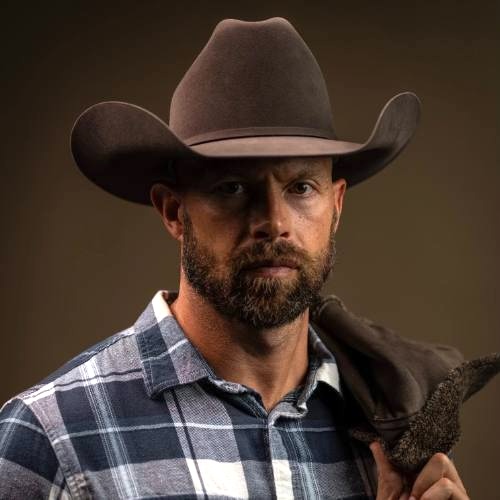
James Caron, Director, U.S. & Asia Meteorological Operations at Atmospheric G2
James Caron is a Certified Consulting Meteorologist (CCM) and serves as Director of U.S. and Asia Meteorological Operations at Atmospheric G2, a weather decision platform supporting energy trading. With expertise in historical weather analysis, forensic meteorology, and operational forecasting, he provides consulting and expert witness services in cases involving severe weather, wind, hail, icing, precipitation, visibility, and weather-related accidents. Drawing on his experience in both commercial forecasting and litigation support, Mr. Caron delivers objective, science-based opinions grounded in meteorological data.