

Engaging with Civil Engineer & Snow Sports Expert, Randy Wall
March 31, 2026In this episode . . .
Randy Wall is both a certified instructor and a licensed civil engineer, and he shows us how that combo changes everything when snow sports accidents land in court.
Randy explains how time gaps complicate site visits, why a consistent report template keeps testimony inside the “lane,” and how to translate dynamic crashes into clear, simple language that juries trust. Visuals are a cornerstone of his approach. He hand-draws clean diagrams to ground perspective and sequence, and when the record supports it, he partners with a crash reconstruction expert to build compelling animations that align physics with documented facts.
We also map the standards landscape. Snow sports live inside a patchwork of state statutes, county rules, ANSI ropeway codes, ASTM equipment standards, and the National Ski Areas Association Responsibility Code—many of them voluntary. Randy shows how real cases hinge on duty of care, standard of care, breach, cause-in-fact, and proximate cause, not on blanket rules. He walks through the cascade of decisions that often leads to injury and how to separate foreseeability from hindsight.
On the business side, Randy lays out his contract strategy: hourly, on retainer, with a thorough agreement. And how he screens for attorneys who want independent analysis rather than a prefabricated conclusion. His closing playbook for experts is crisp: prepare so your report leads, answer only the question asked in deposition, and never volunteer a tangent that opens new lines of attack.
If you value sharp thinking, clean visuals, and courtroom-ready explanations, this conversation delivers. Subscribe, share with a colleague who works in litigation or risk, and leave a quick review telling us your biggest takeaway.
Episode Transcript:
Note: Transcript has been lightly edited for clarity
Host: Noah Bolmer, Round Table Group
Guest: Randy Wall, Principal, Snowsports Expert and Consulting
Noah Bolmer: Welcome to Engaging Experts. I’m your host, Noah Bolmer, and I’m excited to welcome Randy Wall to the show. Mr. Wall is the principal at Snowsports Expert and Consulting, where he provides expert and forensic services for cases involving skiing, sledding, tubing, and other snow sports. Mr. Wall holds a Master of Public Administration from Montana State. Mr. Wall, thank you for joining me today on Engaging Experts.
Randy Wall: Thanks for having me.
Noah Bolmer: Your career has spanned from civil engineering to snow sports. How did you first become involved in expert witnessing?
Randy Wall: Let me just correct you right out of the gate, Noah, because I’ve been a certified ski instructor longer than I’ve been a licensed civil engineer.
Noah Bolmer: Wow.
Randy Wall: I got my first Alpine certification from the Professional Ski Instructors of America or PSIA in Mammoth Mountain, California in 1982. Then, I got my first civil engineering license in 1987. So, I’ve been around for a while.
Noah Bolmer: How did you first become involved in expert witnessing
Randy Wall: I was born and raised in California, and my wife and I, who’s also a civil engineer, we’ve been entrepreneurs our entire lives. We had an engineering firm in Northern California in a town called Auburn that we owned for 15 years. I was well known in the community, and attorneys in the community sought me out to do expert witness work in the civil engineering field. It wasn’t a career pursuit. It was something that I did because they contacted me and wanted me to do it. That’s how I got started.
Noah Bolmer: Were you aware of expert witnessing at that point? Is it something that you were looking for, or did it just fall on your lap?
Randy Wall: I like the work because I have good communication skills, which is atypical for engineers. I like the work. I like the research. I like- I’ve always been intrigued by the legal field.
Noah Bolmer: When you get a phone call for a potential engagement, how do you decide whether or not you’re going to accept it? What are some of the main things that you look for to vet a potential engagement?
Randy Wall: One thing I learned through my engineering career [is] basically being all things, all sales, all entrepreneurial, is to get people talking and listen to them. Attorneys are cool like that because they like to talk. I get them to tell me through follow-up questions and conversationally, everything they know about the case right off the bat. [Many] times, what an attorney will do is send me the complaint first [as] an inquiry over the internet, and then we’ll schedule a call. Sometimes, it’s not a good fit because my expertise is specialized.
Noah Bolmer: What are some of the tangential engagements that you have to think about. Whether you’re the right person, and how do you go about saying no?
Randy Wall: I just had an inquiry from an attorney, and they had absolutely no evidence. There was a collision on the hill, and the plaintiff got hit by a snowboarder. It broke his ribs and his arm, but he skied down to the clinic. Typically, in a ski accident, what will happen is that there will be a collision, and somebody goes down. They call the ski patrol [who will] show up towing a toboggan, assess the situation, put the person in the toboggan, and do what’s called an incident report, Typically, the ski areas that have it together, [will have] a mountain manager or assistant mountain manager take pictures of the area, the event, and make their own sketch. In this particular case, there was no documentation. The ski boarder went off- the guy skied down to the clinic, and the only piece of paper they had for the entire case was the medical intake form from the clinic.
Noah Bolmer: There wasn’t enough.
Randy Wall: It was- it came down to he said-she said. They wanted to hire me to do an accident reconstruction. To go to the site and look at it. There wasn’t any- there wasn’t any evidence. There were no eyewitness reports, nothing. That was not a good fit.
Noah Bolmer: Do you do [many] site visits and reconstructions? Things that use demonstratives.
Randy Wall: Sometimes- most of the time what happens is the event will have occurred a couple of years ago. By the time the attorneys file the complaint, and the case starts going forward, it’s two or three years old. Sometimes I do- I have done that in the past. I’ve looked at the situation- gone out, and looked at a ski area, but it’s a little abstract because of the temporal aspect of it. It’s separated by a few years.
Noah Bolmer: How do you convey things like that to a judge in a bench trial or a jury? How do you convey things that have a lot of complex moving parts? People running into things and the accident timeline. How do you communicate that to lay people in a way that they understand?
Randy Wall: One skill I honed as an engineer has to do with initial conversations, initial sales conversions, and projects in an engineering venue. Some projects last for three or four years. The one skill I honed was to how to take complex concepts and be able to explain them in simple, easy to understand language. This is- this is key if I’m on the stand and I’m talking to a jury.
Noah Bolmer: Tell me about your preparation method. You have a deposition or a jury trial tomorrow, whatever the case may be, something big is going to happen. What are the things that you like to do to get yourself, prepared with the material, and be in the right head space? I’ve had experts tell me they like to meditate, listen to loud music, fast, eat, or drink coffee. Tell me about your big day routine if you have one.
Randy Wall: Some of my colleagues and my friends think I’m strange because I am intrigued by the challenge of depositions and going toe-to-toe with attorneys. The number one rule of an expert witness is to stay in your lane. This starts right off the bat with a cli- with a case when I write my expert report, because that’s my roadmap. That’s the lane that I stay in from start to finish. One of the things that honed my skills as a communicator, a researcher, and a writer, was I have a technical degree- civil engineering technical degree, which is great. By the way, that sets me apart from all the other consultants in my field. There aren’t that many. Later, in my career, at age 51, I went back to school and got my master’s in public administration, which essentially is a social science degree, it was two and a half- two years of graduate level research, writing, and communication. What I didn’t realize at the time was that a master’s stacked on top of my engineering degree gave me an extraordinary skill set for expert witness work. My research and writing feeds into my expert report. At depositions, my lane is my report.
Noah Bolmer: Tell me about your report writing strategy. Do you like to organize everything with indices, or do you use visuals? How do you like to go about writing an expert report? Do you ever- are you ever given a bare bone or an outline from your engaging attorney?
Randy Wall: No, I wouldn’t take it because I have a template that I use. All of my reports look exactly the same. They contain different information based upon the forensic evidence that’s available to the case.
Noah Bolmer: Naturally.
Randy Wall: Pictures are great. I’m good at drawing diagrams. Back in the day, when I was coming up through engineering school, it was pencil on vellum or ink on mylar. It was all handwork. When I came up, that was called coming up on the boards. I came up on the boards. People tell me my penmanship is good, I’m good at communicating through diagrams. Many times, I’ll draw- I’ll hand draw diagrams and put them in my report. I also have another skill that I don’t know is intrinsic to me. I know a lot of people don’t have this skill, but I have extraordinary visualization skills. For example, plans are two- like house plans are two-dimensional. I can look at a house plan, and I pull it right off the paper in three dimensions, spin it around and cut sections through it. I thought, can’t everybody do that? No. It helps out, especially combined with [the] hundreds of ski lessons that I’ve done. I’ve spent thousands of hours on the ski hills. That helps out in regard to the physics, mechanics, and visualization of how things happen on the ski hill.
Noah Bolmer: Those images in your expert reports are invaluable, and you tend to draw your own. Do you ever have to contract out any demonstratives or do you take care of all of those diagrams and photographs yourself?
Randy Wall: There’s a colleague of mine here in town who is a forensics crash reconstruction expert. There is amazing software on the- that they’re using now where he can take a- he was showing me a video of this of this Dodge truck pulling a trailer- a 25-foot airstream that went off a dam. He reconstructed- they take all the aerial photographs, and they have all the images of the cars. It’s all in the software. He had this movie of this car going off this bridge, off this dam up in the mountains. I went to him and said, “Can you make me some crash test dummies with skis on? Can we do this together?” He said, “Yeah.” Now, when I want to do accident reconstruction- if there’s enough information to do an accident reconstruction of a collision, I can do that. Put it up on the screen, and it’s so impressive.
Noah Bolmer: That’s amazing. I’m sure that lands with judges and juries. You’ve mentioned a few times how small your field is in terms of having experts. Do you find yourself on the other side of a case against the same expert’s time after time? Do you develop relationships or at least acquaintanceships with the other experts in your field? What’s that dynamic like?
Randy Wall: Honestly, I dedicated myself to working in the snow sports fields. It happened organically. About three years ago, I realized that the combination of my engineering and my ski experience merged. It was at an expert witness conference where I was talking to this guy by the name of James Magravetti. He’s the education director for Seak, and he helped me get clear on my direction.
Noah Bolmer: It definitely can help to have somebody, not just show you the ropes, but guide you. Let’s talk about contracts. When you have a new engagement, do you have any special terms that you like to put into contracts? Some people have- do project rates. Some people do hourly rates. Some take a retainer. Tell me about how you structure your contracts.
Randy Wall: One of the things I’ve done in my career is that as an educator- in the engineering industry, in order to maintain their licenses, civil engineers, like attorneys and doctors, they have to do continuing education units. Typically, for an engineer, it’s thirty contact hours of what they call Professional Development Hours (PDH), every two years. I do that. It’s important for me to get back to the industry. One of the things- the reason why I bring this up is because one of the things I teach to engineers is professional services contracts. Years ago, I got my base license in California. It was the first engineering license I got. By the way, if there are any engineers out there listening, do not ever let your base license expire. Years ago, when I was practicing in California, [the state] passed a law, [that] said that all engineers have to have a written contract for everything they do. That was fine because I did anyway.
From a one-page to a full-on master agreement. I wrote all my own contracts and had them vetted by attorneys. When I got into the expert witness business, it turns out that Seek has a time-tested canned agreement that you can buy. I bought it, and went through it, tweaked it, and I made it my own. It’s ten pages long, and it covers everything. I’ve heard different schools of thought like, just like have a one-page agreement. No, I want everything in writing. I do all my work by the hour on retainer because that’s my experience based upon results. That’s the most surefire way for me to get paid.
Noah Bolmer: Have you ever had any difficulty with either getting paid or with having an attorney agree to sign your contracts?
Randy Wall: Yes.
Noah Bolmer: Tell me about that. You don’t have to get- you don’t have to name any names but tell me in general how that went.
Randy Wall: When I was first starting out [as] an engineering addict, I had a mentor friend of mine who said- he sat me down- he was like, “Let me tell you the three phases of this work- of consulting work.” I [was] like, “Okay.” “First of all, you can’t even believe that people are paying you for what you love to do, Greg. Second of all, you start to realize that you’re going to have expenses and you need to make money. You need to get the money in the door.” I said, “Okay, what’s the third phase?” He said, “The third phase that you get to is the ‘heck with it, just give me the money’ [phase].” Now, that’s a little unjust, but there’s a lot of truth in that. Right now- every once in a while, an attorney will get out ahead of me in regard to some deadline or whatever. I know better and that I have to chase them down. It’s just I don’t. It’s the nature of the beast, I guess. Through my engineering career, I got good at chasing people down for money because I’m good at what I do and I’m worth it.
Noah Bolmer: Speaking of getting a good engagement, how do you get off on the right foot with a new attorney? How do you proceed at the beginning of an engagement to make sure that momentum carries you throughout the entire engagement? It’s a good working relationship between you and the engaging attorney.
Randy Wall: There’s this word, and the word is hubris. For those listeners who don’t know what hubris means, it’s having all the answers, but it’s more than that. It’s more like having all the answers and sucking all the oxygen out of the room at the same time. Those types of attorneys are not a good fit for me. I know how to answer and ask the right questions to figure that out. For example, I had an attorney call me. I listened to him and I was prodding him along the way, asking follow-up questions. I wanted to see where it came from. He said, “What do you think?” I said, “That’s not it.” He said, “What do you mean that’s not it?” I said, “It’s not it.” He goes, “Okay, tell me what it is.” The intriguing part about working in the snow sports industries, there’s very little statute, or standing law that regulates snow sports. Very little. Some states have what they call ski responsibility laws. Some states like California -the state doesn’t have one, but counties within the state that have ski areas have them, but they’re all squishy in regard to language. They’re not consistent, so, you’ve got that.
Then you have other organizations. There are two national standards organizations: ASTM, American Standards for Testing and Methods, and then you have ANSI, American National Standards Institute. ASTM has standards for snow and water sports. [They are] mostly equipment oriented. ANSI has a code called B-77, which is for tows and rope ways. In other words, chair lifts, rope tows, or all that. That’s a different part. By the way, I was on the ANSI B-77 committee, but that’s more for mechanical engineers. I am a sitting member on the ASTM F-27 Committee for Snow and Water Sports, but these codes and standards are voluntary. Compliance is voluntary.
You [also] have National Ski Areas Association, which all the ski areas in America flock to. There are over three hundred ski areas in the United States that belong to the National Ski Areas Association. They issue this thing called your responsibility code. It has ten guidelines like ski control, and don’t ski when you’re drunk. Obvious stuff, like look uphill before you start. You need to be able to control your speed and avoid objects. Don’t ski in closed areas, that kind of stuff. That too is voluntary. Then you have the duty of care, which establishes the responsibilities for the parties that are typically involved in a ski case or a snow sports case, such as the ski area. The skier’s the plaintiff, something happens, they see the ski area. Okay. The standard of care establishes the responsibilities of each of the parties. Every situation is extraordinarily unique, both from what applies and what doesn’t. Did they comply with this? Oh, wait a minute, it’s voluntary. There was so much to this.
Let’s bring this back around to that case that I was talking about. Where I told them, “Fencing, flagging, signage, and all that other stuff. That all applies sometimes. This is about standard of care, breach, cause, and my favorite, which is proximate cause or foreseeable cause. Typically, what these things come down to is a series of decisions made by either the plaintiff or the defendant that creates a situation that somebody happens to walk into. It happens overtime. That’s a fascinating part of this forensic work that I do is to go and unpack that.” That’s what I told him. I said, “We need to establish a standard of care. What was the breach? Who breached it? What was the cause in fact? What was the foreseeable cause, and who was negligent?” You know what he did? He hired me. Not only that, but this is the best attorney that I work with. He did not tell me anything about how he wanted me to write my report. Those are the best attorneys to work with because they don’t have some preconceived conclusion in their head.
Noah Bolmer: Before we wrap up, do you have any last advice for expert witnesses or for attorneys working with experts?
Randy Wall: For an expert so much of this work is what we don’t know. To me, that’s right in my sweet spot. It takes a lot of courage because the lessons to learn are- can be tough at times. For example, in a deposition, never ever offer anything outside of just answering the question on the table. I had the opposing attorney- issue this opinion, a rebuttal to something that I had done, and it completely supported our position. It was like a gift. It was like, “Oh man, I got this thing in my pocket” and in the deposition, they grazed it. I was like, “Alright, here’s my opportunity.” And nope, I brought this up, and the attorney’s like, “Tell me more about that.” Overall, it bolstered our conclusion, but it opened the door for them for a classic deposition tactic, which is to just- they went off on it for like two hours that didn’t even need to be there. They were trying to wear me down and get me to make a mistake, which didn’t happen. At the end, the attorney goes, “You did a really good job, but never ever offer anything.” That’s my sage advice.
Noah Bolmer: Mr. Wall, thank you for joining me today.
Randy Wall: You’re welcome. Thanks for having me.
Noah Bolmer: And as always, thank you to our listeners for joining us for another edition of Engaging Experts. Cheers.
Subscribe to Engaging Experts Podcast
Share This Episode
Go behind the scenes with influential attorneys as we go deep on various topics related to effectively using expert witnesses.
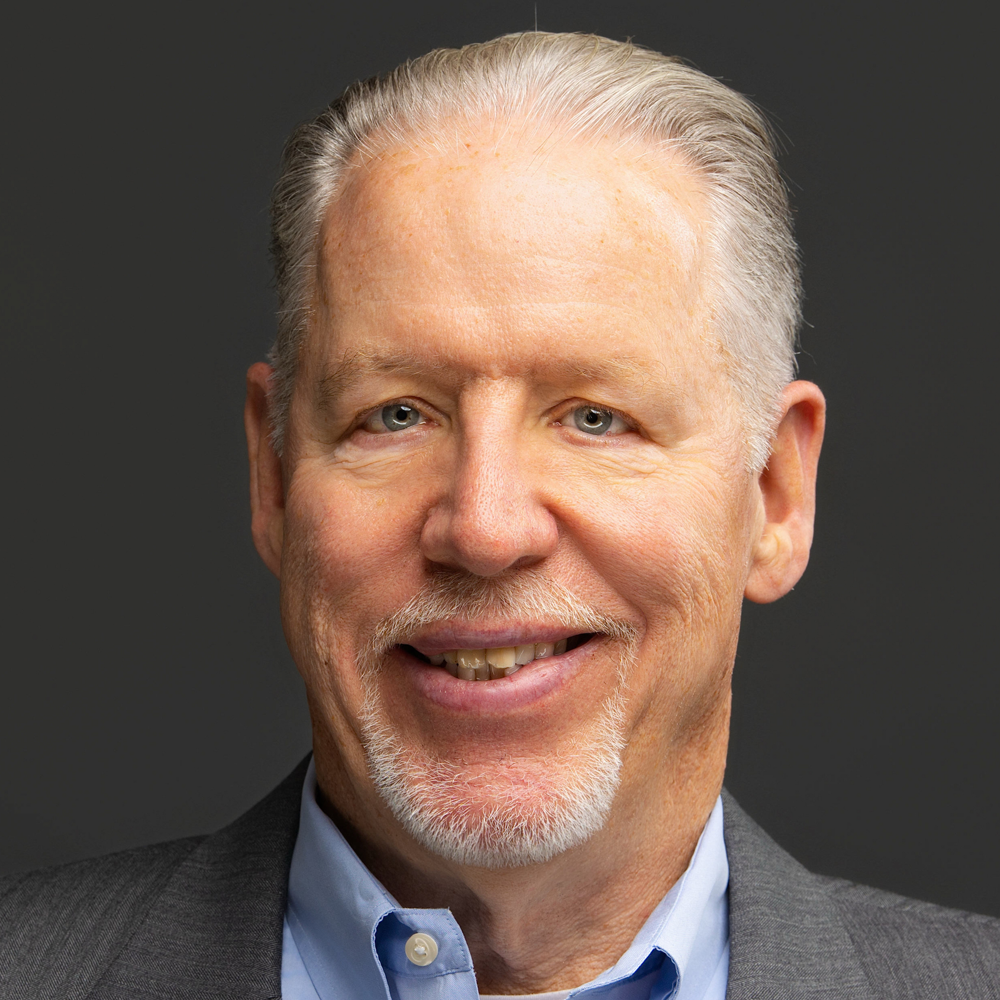
Randy Wall, Principal, Snowsports Expert and Consulting
Randy P. Wall, PE, MPA brings over 50 seasons of on‑hill experience and 40+ years of civil engineering practice to forensic investigations and expert testimony. A nationally licensed Professional Engineer, PSIA‑certified ski instructor, and USSA Level 100 race coach.
Find more episodes:
Expert Witness & Attorney Relationship, Expert Witness Testifying, Expert Witness Visual AidCivil engineering is a discipline within professional engineering that focuses on the design, construction, maintenance of both private and public infrastructure. Civil engineers are often retained in order to lend their expertise to cases that involve buildings, airports, tunnels, dams, roads, water systems, and bridges. Our civil engineering expert witnesses, speakers, and consultants are scholars, researchers, and industry professionals with extensive experience in teaching, research, and industrial positions.
Oxford Dictionary describes sports as an activity involving physical exertion and skill in which an individual or a team competes against another or others for individual or spectator entertainment. Sports can help improve or maintain physical ability and skills. Participation in sports can be casual or organized. Chess and poker are considered by some as a sport because of the competition among players even though competitors are using their brains instead of the bodies.