


Engaging with Estate Planning, Tax Law & Probate Attorney and Expert Witness, John A. Hartog
December 9, 2025In this episode…
Mr. John Hartog recommends that attorneys hire experts as early as possible for maximum impact. It allows time for thorough case analysis, stronger report development, and seamless integration of expert insights into discovery and motion practice. Early engagement also fosters trust and collaboration, reducing the risk of rushed opinions, scheduling conflicts, or credibility issues that can arise when experts are brought in under pressure.
Check out the entire episode for our discussion on maintaining credibility, attorneys working as experts, and initial calls.
Note: Transcript has been lightly edited for clarity
Host: Noah Bolmer, Round Table Group
Guest: John Hartog, Partner at Nutter, McClennan, & Fish
Noah Bolmer: Welcome to Engaging Experts. I’m your host, Noah Bolmer, and today I’m excited to welcome Mr. John Hartog to the show. Mr. Hartog is a partner at Nutter, McLennan and Fish, where he practices estate planning, trust and probate, and taxation law. Additionally, he’s a published author and a mediator. Mr. Hartog holds a JD from UC Hastings and an LLM in taxation from Golden Gate University Law. Mr. Hartog, thank you for joining me today on Engaging Experts.
John Hartog: Thank you for inviting me, Noah.
Noah Bolmer: You’ve had a long and illustrious career as an estate administration and tax attorney. How did you first become involved as an expert witness yourself?
John Hartog: Thirty-five years ago, I was approached in a will contest [by] a local lawyer [who] needed an expert. I don’t quite understand why they hired me because I was green, but they did. I was cheap. That was what it was. I was cheap. They hired me, and I became an expert then. From there, like most things in life, it grew. I was fortunate that people thought I could do a good job as a consulting and testifying expert. It helped that I had publications, so people did not have to spend, people being lawyers, did not have to spend a lot of time demonstrating my expertise. When one writes a well-regarded book, the obstacle to saying that this person is an expert is much reduced. Then, I discovered that I liked it. I was once an expert in a case in front of a judge with whom I had a professional relationship. He and I were on a couple of professional committees outside the courtroom. I expressed my opinion, and he looked at me, and said, “Mr. Hartog, you’re overconfident in your opinion.” I told him that he was wrong, but we went from there. One necessity of a good expert is being confident in their opinion. When someone is looking to hire me or when I’m looking to hire an expert, I want an individual who is confident in how they express their opinion. It’s not- I’ve seen and I’ve hired experts, who, because they were so smart, were always willing to admit that they didn’t know everything. That’s not good for an expert. An expert needs to- when we’retalking about an adversarial process, we’re talking about a testifying expert. It’s important that experts have the confidence to express their opinions to persuade the fact finder, whether it’s a judge or a jury. I was an expert in trust and estate matters, as well as malpractice matters for lawyers who practiced in this area. In malpractice matters, it’s almost always a jury trial, and in trust administration or legal T&D matters, it’s a judge, in my experience. It’s a fact finder. When it’s a jury, the expert wants to communicate clearly without being a pompous “blankety blank”. When it is a judge, the expert can be more adversarial. [They] can’tbe an advocate but can be definite in their opinion. Whereas when testifying to a jury, the expert has to be careful not to sound like an advocate. The other side will object; the judge will exclude the testimony; and the jury will be confused. It all comes back to the confidence of an expert. Obviously, knowing the subject matter.
I had a case once where the expert was an expert. Boy, was he ever an expert. He became anxious about testifying because he had decided somehow that he had to win the case and the lesson we pointed out to him was, “Your job is not to win the case. That’s our job. Your job is to be the smartest person in the courtroom. Just do that.” That’s the line. Experts, because they’re smart people and have expertise, think that they can win the case. That’s not the case. Experts won’t win or lose a case, 95% of the time. I can think of two cases in which I testified as an expert in which the judge adopted my opinion in whole cloth, and that was unfortunate for the other side and fortunate for my side. Experts aren’t the key to the case, because after all, 95% of the time, it’s facts that win or lose. When I’m hiring an expert, I look for the characteristic of whether that person is confident and willing to shade over to the advocate’s side. When lawyers hire me, they’re looking for the same thing. I’m hired as a consultant and become a testifying expert. From the beginning, I may not worry about how I’m going to testify, but I know how I testify governs and colors the way I approach my assignment.
Noah Bolmer: As an attorney, how hard is it to take off your attorney hat or wig and not advocate. Because that’s what we do. That’s normally what attorneys do. You’re advocating vociferously for your client. I shouldn’t ask, do you ever- how difficult is it to maintain that dedication to the neutral truth rather than advocating when you are an attorney and not just an expert witness?
John Hartog: That’s an interesting question. The longer I’ve done it, the less difficult it has become. A testifying expert, as opposed to a consulting expert, is an advocate. The key to a successful testifying expert is to advocate for the expert’s opinion, which always supports the theory of the side that hired the expert. It’s remarkable how often that happens. You’ll get hired on a side, and your opinion seems to coincide with the theory of the case. In fact, oftentimes, one of the reasons I enjoy being an expert is that I get to be a judge. I get to tell the lawyers who hired me, “This is a weakness in your case.” Or “I can’t give you that opinion because it is inconsistent with my real opinion. It’s inconsistent with my publications, and it’s inconsistent with the way I practice law.” You’ve got to figure out a way to get an opinion out of me that you’re comfortable with.
For the inexperienced expert, it’s more difficult because you’re right; the lawyers are taught and paid to be advocates, to find the case, or ignore and gloss over the bad facts. That is not what an expert should do. I have had the unfortunate experience of a judge saying, “You’re being an advocate, not an expert.” Of course, that hurts my credibility as an expert because, as an expert, being forceful and clear in my opinion is important. My credibility is also important. As I said a few minutes ago, it’s remarkable how often the opinions of the experts hired by the side coincides with that side’s theory of the case. That’s why they’realways experts competing- each side finds an expert who can have a different opinion. To maintain credibility, it’s important to say to the side that hired and paying you, “This part of your case is not the best part of your case.” In fact, if you’re a lawyer hiring an expert, you want to have an expert like that because it helps the lawyer to understand the weaknesses of the case from an expert’s point of view. If the lawyer who hires the expert says, “I’m just going to give you this hypothetical set of facts, and [none] of the bad facts. Then you can express an opinion for me that helps my case.” The risk is inevitably that the cross-examination is going to bring up those unpleasant facts, and the expert is going to be in the circumstance of saying, “I didn’t know those facts.” The typical question is, “Would your opinion change if the facts were different?” As an expert, you must be careful whether you say yes or no, because if you don’t know those other facts, you can undermine your credibility and your opinion. It’s important and useful for everybody involved in the case to have a good understanding of the expert’s perspective. That’s why it’s good to hire an expert early.
From painful experience, one of the first things I do is try to find a good expert. In my field and my geographic area, there are not [many] good experts, so we know who the good ones are. One reason to hire one of the good ones early is to neutralize that expert from being- prevent that expert from being hired by the other side. Reason two: if you have an expert who can help you plot your case early on, you’ll have a better case. The third reason, and I can’t tell you how often that’s happened to me, hiring an expert the day before disclosure is due creates a high-risk environment. A) The facts the lawyer tells the expert on the Friday before the Monday disclosure will be a summary. B) The confidence of the expert is going to be a little shaky because it’s too soon or too short a deadline. C) The disclosure, which is a pleading that gets served on the other party, is going to be sufficiently broad so that if the ultimate opinion is much narrower, the other side will be able to take advantage of the fact that there was a generic disclosure. In fact, they didn’t know what they were getting into when they hired the [expert.] That’s important to me. As a lawyer and an expert, one of the best things lawyers can do is to hire experts early.
The counterargument is that experts are expensive. It’s hard to justify unless the trial is a realistic possibility. I understand those economic factors, but in my experience, getting hired early has led to a better resolution, whether it’s by settlement or at trial, than hiring late. One takeaway I encourage your listeners to take is to hire well and early. The flip side of that is if you get into the case, the lawyer and the expert discover that the expert’s opinion is not that terribly useful. If it’s long before disclosure, then there’s no harm, no foul. The expert as a consultant is not going to be disclosed, and that work product remains privileged.
Noah Bolmer: I recently hosted an attorney panel, and they largely came to the same conclusion as you stated which is you need to hire early. It’s interesting that’s one of the more common complaints that I’ve had from expert witnesses is that they are brought on last-minute with not enough time to properly go over all of the case materials, develop their opinion into a report, and all of the things that expert witnesses are tasked to do. Besides finances, which is one possible reason, what are the other reasons that attorneys wait until the eleventh hour to bring on expert witnesses?
John Hartog: It’s the 11th hour, 59th minute. There are a lot of factors that go into that. Primarily its finances because you hear invariably that lawyers say, “We’re going to have to hire experts and that’s going to be expensive.” The second reason is denial. It’s one of the three or four most powerful human emotions across the board. Here we have denial about whether this case is going to go to trial. I’m a trial lawyer and I don’t want to go to trial, I’m scared about going to trial. I’m going to have to confront the reality that I am going to trial. A third reason is that [many] lawyers don’t understand what they don’t understand about a case, and that’s usually in the field of expertise. Most lawyers- all good lawyers develop the facts. Once they have the facts, they think that’s all they need. Then they had the broad picture of the law. You have a good lawyer who knows all the facts, has a broad picture of the law, and doesn’t appreciate the nuances because they don’t practice in the field on a daily basis. Their lack of appreciation for sophisticated issues or the sophistication of the issues.
Tied in with that less frequently, but occasionally, lawyers feel they know as much as an expert and can try the case without an expert. Then they discover that the other side is going to have an expert, they panic and decide to hire an expert. All of those reasons go into it. Frequently lawyers, good lawyers, but not experts in the field, will have hired me and they’ll start talking, and I’ll say, “What about this issue? What about that issue? What about the third issue?” Then, they are like, “Hadn’t thought of that. Let me go see what we can do about that.” That of course gets aggravated if it’s late in time, close to trial.
Noah Bolmer: Those unknowns. One of the things you mentioned is that you live in a location [where] there are not [many] great or qualified expert witnesses in some particular niche. Sometimes an attorney will hire them just to prevent them from being hired by the other side. From an expert witness perspective, how should they be billing for something like that? In other words, is that something that should come out of a non-refundable retainer? Is that something that attorneys even disclose to the expert witness? Can you tell me a little bit about the calculus of that?
John Hartog: It’s happened to me two or three times. One, I was never told at the time, obviously, because then I wouldn’t talk to the lawyer. Two, in terms of finances, it doesn’t take much information- it doesn’ttake a lot of information to be conveyed to the expert, to disqualify that expert from being hired by the other side. Most experts, I shouldn’t speak for most, I’ll speak for myself as an expert. It’s gratifying from an ego point of view that this lawyer wants to hire me as an expert. Usually, it’s a one-hour conversation after conflicts have cleared, of course. A one-hour conversation or less about the case, and that’s enough to disqualify the lawyer or the expert. The expert often will do that as a goodwill kind of- it’s happened to me, and it’s happened to other experts where they’ve been disqualified and haven’t [been] paid for it. Which is why I had adopted a rigid discipline of clearing all conflicts. That includes the lawyers on the other side because I once was hired by a prominent law firm to be an expert. In the course of that representation, a lawyer from a different law firm hired me in a different case, in a different geographic area, to be an expert in another case. Lo and behold, a different partner in the original law firm, was the opposing lawyer in the case in which I had just been hired. I found myself- of course, the second lawyer that hired me was ecstatic because that law firm could not say I wasn’t an expert since he had hired me as an expert. It was an awkward situation because that second lawyer was berating the lawyer from his firm who had hired me originally. It was all difficult. Now when I do conflicts, I make sure that I know everybody down to the second degree so that the likelihood of being disqualified for that reason is remote. When I make the lawyer pay me a substantial retainer, they’re not so inclined to disqualify me. To do that technique of “let’s disqualify this expert.” It has not happened to me in the last, I would say, eight or nine years.
Noah Bolmer: Let’s talk a little bit- I want to back up to something that you mentioned about inconsistencies. This is something that comes up where somebody who has had a long career may have written articles.They may have written books. They may have given lectures, so they’ve said [many] things publicly. In this day and age, once you’ve said anything publicly, there’s a record of it somewhere on the internet. How should a well-published expert go about cataloging all of that to maintain- to make sure that they’re not conflicting something that they may have said at one time? In situations where they do change their opinion or new facts become available, how should they contend with those things in, say, a Daubert hearing or a cross-examination when they’re confronted with something that might be contrary what they said 25 years ago?
John Hartog: You must have read all of the depositions I’ve given over the last 25 years. That’s a real problem. I take that back. It’s not a real problem. It is often done, especially for someone like me who has written a fair amount. I can think of a story where I was testifying at trial in a prominent case. It was a multi-million-dollar trust, and there were lots of issues going on, but I had written an article about an issue,and I was opining differently. Not inconsistently, but differently than what I had written about. I had two answers for that. One was when I write articles, I’m expressing personal opinions about issues of law that I think are important and don’t necessarily reflect- don’t affect the way I advocate for a client or an opinion in a particular fact circumstance. In that case, I was able to say, “You’re misquoting me because you’rereading from the second paragraph and you ignored the first paragraph in which I said something.” My caveat as it were.
I have also had, because I’ve written several books, I’ve had people read- I remember a case in which I was the standard of care expert for a lawyer accused of- the allegations were professional negligence, and malpractice in estate planning. The other lawyer was reading from the books I had written, and I kept saying, “That’s best practice. What I wrote in my book or this article is best practice. This is what we should all aspire to. It’s not the standard of care, because standard of care is obviously what the community does.” The cross-examining lawyer didn’t like that. I was told later that in his closing argument, he said to the judge, “Mr. Hartog’s book is not best practice, it is the standard of care.” I chuckled because I don’t think anyone wants to have the best practice or what we aspire to be the standard of care. Usually, that’s how I deal with it.
It is often- a couple of times, not that long ago, a lawyer asked me to render an opinion about a particular issue in trust administration. I said, “I can’t because I’ve spent my whole career writing about exactly the opposite.” He wanted me to take a position which was direct and contrary to what I’ve always said on this particular issue. I said, “I can’t do that. You’re not going to get me to make an opinion about something thatI have repeatedly expressed the opposite side.” That’s how I deal with it, which comes back to preparation. It’s good to know what the lawyer wants before it’s too late.
Noah Bolmer: Let’s talk about setting up communications with expert witnesses. As an attorney, we’re dealing with confidentiality and privilege. How do you work with your experts, so they know how best to communicate with you, keeping discovery in mind? How do you make sure the expert knows exactly what you need and when that work product is due?
John Hartog: The telephone is a wonderful instrument, and the short answer is especially in my jurisdiction of California, where everything in a testifying experts file is discoverable. As an expert, I try to keep the writings in my file deliberate. I always take notes on the first substantive conversation. I’m always interrogated, cross-examined on all my notes. I can always say, “That’s the first telephone conference. I had to gain an understanding of the facts of a case.” Of course, I wrote this; I wrote that. I have an example. Once in the first case, it involved a marital dissolution, and the wife had a man’s name, and the husband had a woman’s name. Obviously, it was- there were- what’s the word? It could be used by either-
Noah Bolmer: Androgynous.
John Hartog: Androgynous, thank you. It wasn’t that- it was they both started with the same consonants, and they both were four letters long. It drove everybody in the case crazy because it was so confusing. In the first telephone conference with the lawyer that hired me, I was writing names down, and I got the parties confused. I said that one party had done something, and the other party had done the other thing, which was 100% wrong. I was 180 degrees off. The cross-examining lawyer said to me, “Your notes say X&Y.” I said, “I got the parties wrong. This lawyer had the good grace to say, “I’ve been on this case for two years and I still can’t keep them straight.” That’s an example of where I’m cross-examined on the notes on my first hearing.
On the first telephone conference, I take extensive notes because I’m learning the case. After that, as an expert, I’m careful. Usually my emails are, “Please send me this document” or “Please confirm that meeting.”If there was something substantive to be addressed, either as a lawyer or as the expert, I say, “Please call me” or “Can we schedule a telephone conference?” When there is material that we want to go over in the age of Zoom, screen sharing is a wonderful way to accomplish that. As an expert, I get to write my opinions. Then we put them on screen share and then the lawyer can look at them. We can discuss them without any record of what the conversation was. Now that I’ve said this on this podcast, I’m sure that in the future when I get cross-examined, someone will ask me that question. Nevertheless, there it is.
In federal practice, of course, draft reports are not discoverable. It’s a lot easier to write a draft report, talk about it on the phone, and prepare the final report that gets filed into court and served on the other side. In state courts, depending on the state- in California, again, it’s different. The whole file is discoverable. If there are multiple drafts of a report, that will all be grist for the mill. That’s why oral communications arepreferred.
Noah Bolmer: Let’s talk about preparation. What methods do you as an attorney use and what methods do you as an expert witness prefer to prepare for depositions and for trials? What works?
John Hartog: A lot of preparation. The best lawyers are those who are the best prepared. The secret to being a good lawyer is being well-prepared. As a lawyer for an expert, I want to have that expert feel comfortable in their possession, their knowledge of the facts, especially the adverse facts, because cross-examining lawyers have a tendency to do a couple of things. One is to bring up the adverse facts. The second is to make up facts and try to trip up the expert. To see how well the expert knows the facts. I want my expert to know the salient facts as thoroughly as the lawyer does, because then if the cross-examining lawyer gives you a false fact, you’re equipped and ready for it.
As an expert, that’s exactly what I want. The best experiences I’ve had as an expert have been when the lawyer worked with me as if I were the primary percipient witness, because then my command of the facts makes my opinions that much more credible.
Noah Bolmer: Speaking of depositions, one of the things that I’ve been asked about are deposition designations. Have you been through this process of deposition designations where you mark specific parts of a deposition that you’re going to use as evidence? Then that becomes part of the record. It becomes discoverable and can go back and forth. Once the trial happens, the specific pieces of the deposition to be used in specific manners are known by both parties to make it more efficient. Is that something that you’ve come across?
John Hartog: I will designate portions of deposition transcripts to make my case, as it were, so that if I’m the expert, my general rule is not to make any markings on a deposition transcript because that becomes discoverable and then I get quizzed on that. If there is a section, a portion of the transcript that in fact demonstrates as factual support for my opinion, I will highlight that area. Then that’ll go into the record, as you say, and that’ll be useful for my opinion. One thing I- going back to preparation and depositions, it’s important the preparation be thorough because I’ve had it happen enough that I’ve expressed an opinion in deposition, and then I’m testifying at trial, and the cross-examining lawyer seeks to impeach my testimony with something I said at deposition. That happened not so long ago in a trial, and the lawyer who was trying to impeach me had trouble keeping a distance from his case throughout. That came back to hurt, haunt him in the trial because he said, “Here for purposes of impeachment.” The objection was, it’s not an impeachment. The judge said, “It’s not impeachment.” The lawyer was so caught up in his own case, which of course, no lawyer should be, but he was so caught up in his own case that he was unable to keep a distance. He thought I was making comments that I could be impeached with that I couldn’t be.
Noah Bolmer: Let’s move on to the venue for a moment. Have you worked in a variety of different venues as an attorney and as an expert witness? In other words, we have different local state levels, different states, and different types of courts. If so, how do these variations change any aspect about expert witnesses or expert witnessing?
John Hartog: I’ve been pro hac vice in a couple of states, but that’s rare because I practice in California, and since it’s such a large state, so populous that I don’t need to practice law elsewhere. For the most part, Ihave testified as an expert in a variety of jurisdictions, so that I can speak from that experience. Certainly, I’ve been an expert in a case in the Cayman Islands where it was interesting. I was able to opine onquestions of law, which of course an expert is not supposed to be able to do, but the Cayman court wanted an opinion of California law, and I got to provide it. I have testified in Hawaii on the same thing. It was a California document and they wanted to- the court wanted to know what California said about it. I got to be a know-it-all, as my wife says, and talk about California law. Then in federal court, doing the reports, it’sbeen a similar kind of experience. Whereas in most- I testified in other states where I could not do that. I was testifying as an expert on the facts of the case. I was comfortable doing that, and in California too. When testifying as a legal expert, foreign jurisdictions are much more accommodating and comfortable with having, in this case, a California lawyer opponent on California law than in domestic cases where the courts are quite opposite and won’t let the California lawyer talk at all about the California law because that’s the judge’s job. In federal court, the report is written, and the reports I have written tend to be a bit, let’ssay, more expansive than they would be in a state court for similar reasons.
Noah Bolmer: Is there any special preparation that attorneys do or should be doing with expert witnesses when they’re going into a new venue for the first time?
John Hartog: Hire a local lawyer. If I were to go to a foreign state and be an expert on a question there, I would want the lawyer to tell me, how we do it in- I’ve been to Alaska and that was interesting because in Alaska, the things that I thought I could do, I was told I couldn’t do and the things I thought I couldn’t do, I was told I could do. Those are the points that when an expert comes into a foreign jurisdiction, for whatever reason, the local lawyer needs to educate that expert on what is okay and what’s not okay. These are your guardrails and try to stick within those.
Noah Bolmer: I’m going to ask you a general question. What do attorneys want from expert witnesses? Put another way, how do experts and attorneys get off on the right foot, maintain a solid, productive, and efficient engagement throughout the process?
John Hartog: The lawyer needs to understand that the expert will not win the case for the lawyer. And the expert needs to understand that the lawyer is hiring the expert for a particular purpose. The expert’s credibility is one of the two or three most valuable aspects of the expert’s testimony, so the expert needs to keep in mind credibility and a solid basis of the opinion. The lawyer needs to remember that this is only one witness that’ll help the case but will not decide it. As with every other witness preparation.
Noah Bolmer: Before we wrap up, do you have any last advice for expert witnesses or attorneys working with experts?
John Hartog: Don’t be afraid to disagree.
Noah Bolmer: I assume that’s a two-way street, both the attorney and the expert.
John Hartog: Yes, the expert’s opinion gets honed by the lawyer challenging it because that’s doing a cross-examination in advance. The lawyer’s case gets sharper with the expert pointing out the flaws or the weaknesses in particular areas.
Noah Bolmer: Sage advice. Mr. Hartog, thank you for joining me today.
John Hartog: My pleasure. I enjoyed our conversation, Noah.
Noah Bolmer: And thank you, as always, to our listeners for joining us for another edition of Engaging Experts. Cheers.
Subscribe to Engaging Experts Podcast
Share This Episode
Go behind the scenes with influential attorneys as we go deep on various topics related to effectively using expert witnesses.
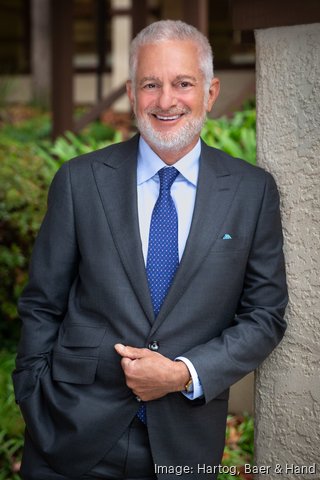
John Hartog, Partner at Nutter, McClennan, & Fish
John Hartog is partner at Nutter, McClennan & Fish, where he practices estate planning, trust and probate, and taxation law. Additionally, he's a published author and a mediator. Mr. Hartog holds a JD from UC Hastings and an LLM in taxation from Golden Gate University Law.
Find more episodes:
Attorney Perspective, Expert Billing, Expert Witness & Attorney Relationship, Expert Witness Confidentiality, Expert Witness Credibility, Expert Witness Preparation, Expert Witness Testifying, Retaining Expert Witnesses, VenuesTaxation is the assessment of mandatory duties on individuals and businesses by governments for the purpose of raising revenue for government expenses. There are three classifications of tax. Proportional taxes are levied at the same rate for everyone, regardless of their income. A percentage tax levies a higher rate of tax on those with higher incomes, while regressive taxes assess lower income individuals at a higher rate.