


Engaging with Entertainment Business Development Expert, David Ciemny
July 13, 2026In this episode… We dive into key topics related to entertainment business development and explore what it takes to succeed in this evolving industry.
Our guest, David Ciemny is the CEO of Ciemny, Inc., a consulting business development and expert witnesses service firm operating in the music, corporate event, and direct sales industries.
One of the biggest mistakes that newer expert witnesses make is undercharging, according to Mr. Ciemny. Make sure that you charge what your years of experience and expertise warrant. It is easier to come down in price during negotiations than to backpedal.
Check out the entire episode for our discussion on AI, moral obligations, and following up after an engagement.
Note: Transcript has been lightly edited for clarity.
Host: Noah Bolmer, Round Table Group
Guest: David Ciemny, CEO of Ciemny Inc.
Noah Bolmer: Welcome to Engaging Experts. I’m your host, Noah Bolmer. Today, I’m excited to welcome David Ciemny to the show. Mr. Ciemny is the CEO of Ciemny, Inc., a consulting business development and expert witness services firm operating in the music, corporate event, and direct sales industries. Mr. Ciemny, welcome to Engaging Experts.
David Ciemny: Thank you, Noah. Great to be here.
Noah Bolmer: You have an extensive background in entertainment management, but how did you first become involved in expert witnessing?
David Ciemny: It’s interesting. I was contacted about a high-profile case for a musician. It was a wrongful death lawsuit for one of the biggest entertainers on earth. I did a series of interviews with the legal team, and I presented my case: how I would defend the case, what questions I would answer, what questions I would ask and they selected me. Initially, I did some consulting. Then I partnered with Round Table Group on a professional level, and there’s been no looking back. It’s been a wild journey as far as being an expert witness in this specific niche of entertainment, musicians, forensic tour accounting, managers, business managers, and things of that nature. It’s a specialized industry. Not [many] people are willing to talk about it, know how to orchestrate that, or demonstrate that for somebody who doesn’t know the industry.
Noah Bolmer: Let’s talk about that interview process. When you get a call out of the blue [from] an attorney, a paralegal, or an assistant, and they say, “I need somebody in this particular niche.” How do you vet them to make sure that this is an engagement that you want to take?
David Ciemny: That’s a great question. What I love about Round Table Group is they send a description with what the case is about, and then you can match your skill set to the specific case. Then, they’ll send an even deeper brief that goes through it. Once you get on with the attorneys, you get a good sense. For me personally, Noah, what I want to know is do I feel like I’m on the right side of this? That’s my biggest litmus test. It’s not so much the skill set, because I’m a good match for most things that come across my desk. If I’m not, I’ll say it. Most importantly, I want to feel like I’m on the right side of the case. I never want to feel like I’m in a position where I have to morally or ethically make a decision that wouldn’t come naturally.
Noah Bolmer: When you say the right side, you mean morally the right side, not necessarily the side that will ultimately prevail.
David Ciemny: Correct. Let’s say, I’m representing a defendant, I want to make sure that I believe that defendant is in the right. Or if I’m on the side that’s going after somebody, I want to make sure that I feel that is justified. I want to have a more- If I’m going to sit on a witness stand, write an expert report, or be deposed, it’s important for me to be able to feel like I’m on the quote-unquote right side of the law. I want to feel like I’m defending the right type of client or the right kind of person, knowing that they were wronged, if you will.
Noah Bolmer: What about some of the more mechanical things, like making sure that you have enough time and you’re in a venue that you’re familiar with? What about some of the other issues that ultimately compel you to say yes or no to an engagement?
David Ciemny: Having the right venue is important. I’ll look at the specific case and ask myself, was there a time in my career that I could directly relate to the exact specificity of this case? Did I ever see other scenarios where I could- before I take a case, Noah, I look at myself and could I [provide] bulletproof testimony if I were on the witness stand with a jury and getting grilled from the other side. Could I stand there with a clean conscience and say, “I have seen this before, and here’s what the outcome was. Here’s how I feel.” Could I justify that?
You mentioned the right venue or skill set. There are some fringe areas where something might cross over to a category that maybe I’ve delved into but is not my main vertical. In that case, I’ll do a little research on my own. Using a hypothetical situation, I might talk to my friends who do that specific thing, to see, “Am I off base here?” Again, obviously not disclosing any type of specificity into the case itself. I want to bounce it off a few people and say, “This is where my brain’s at.” More often than not, I’ll get that confirmation:” You’re on the right pathway.” Then I’ll feel more inclined to take the case and feel like my position will be supported by case law or facts.
Noah Bolmer: Let’s talk about engagement letters or contracts. Do you have any particular terms that you use to protect yourself? For instance, do you have a non-refundable retainer? Do you have project rates, hourly rates, or travel rates? Tell me about the structure of your contract.
David Ciemny: I am one of those non-jaded experts who looks at every case like I want to do it. Part of it is because I get into it. It’s a nice distraction from my normal daily routine. Much like serving on a jury is interesting to some people, I get into a case and don’t fuss about the money. I’ll ask Round Table, “I don’t know where their budget is, but am I in the right ballpark?” As long as we’re in the right ballpark, I may ask for a non-refundable initial retainer, but I’ll make it a little lower. Being non-refundable, it [might] scare them off. The biggest issue I’ve encountered is this whole idea- and it’s something to discuss, but it’s this whole idea of, do you tell the client too much on that first interview? Do you not tell them enough? I feel like I have, at some points, spilled my guts all over and told them everything. It was like, “Why do I need to hire this guy? He told us our entire position.” I always want to be cautious, but I also want to under-promise and over-deliver. I want to make sure that they know clearly that number one, I’m justified in being on the right side. The position that they’re on. Number two, I want them to know I’m the right guy for the job. The only way I can do that is to give them specific instances and experience that I’ve had. I’ve been burned more than a few times where they didn’t call back, they settled, or what have you. I’ve been a bounce pad. There’s got to be something to the idea of charging for that initial consult. Lawyers will get you on the phone and say it’s a free consultation. I don’t know, we might want to rethink that.
Noah Bolmer: That is a fine line to walk, and you’re certainly not the first expert who has said as much. In fact, I’ve heard from a few that are in a small niche that there’s only one or two of them. As soon as the other side gets wind that they’ve retained a particular witness, that immediately drives it to settlement.
David Ciemny: No, I’m still navigating that, and learning the hard way. It’s like any business. You have to learn by experience. You have to ask yourself, I’ve retained three jobs, not 10 or 12 that I was perfect for. What’s going on here? What’s the pattern? Like you said, it’s a fine line. You have to tow that line and let them know. In my last one I said, “If I’m retained, I can do X, Y, Z. If you retain me, I’ll help you with X, Y, Z.” I make it a sales pitch, if you will, to justify the expenditure. I know it’s not a small budget item to hire an expert witness, but I also know expert witnesses win cases. By contrast, they lose cases too, if you don’t have the right expert. Therefore, it’s our job as experts to justify our worth. What are you going to get from me? How much time? The last team I interviewed with, in fact, said as much. They said, in their brains, I planted a seed that said, I’m going to save you guys a ton of time on the back end, stuff that you don’t even want to pretend to know about. I’m going to spell it out for you. In fact, I even went so far as to say, “Listen, I’m going to give you all kinds of prompts. Things you can ask the other side that are going to make this thing cut and dry.” That helped. I didn’t get retained on that one, but boy, I thought I was-
Noah Bolmer: You’ve been doing this for a while now. How have you seen expert witnessing in general change? Has AI changed things? Has telepresence changed things? Did COVID change things?
David Ciemny: When I first started, everything was not digital. I’ve seen a shift from- I remember one of my first big cases, it was a year-long case with a major mega pop star. I remember I would have to take big legal file boxes. They’d ship them to my front door, and I’d pile them in the back of my Land Rover and tell my wife, “I have to leave for the weekend.” I would go to a fleabag motel in the middle of the valley and pile the boxes- stack them high. I’d have 8,000 Post-it notes, and it’d be like, I’m going to zone in- lock in, and sort and sift [through] them. Now it’s digital. Everything is tracked digitally. I will say it’s a lot easier. More searchable.
The second shift I’ve noticed has been ChatGPT. AI is truly changing the game. A buddy of mine is a prominent immigration lawyer, and I asked him- I kicked around a couple of questions, and he said, “You need to go to the law school of ChatGPT.” I was like “Oh, brother.” Sure enough, ChatGPT never has to think about any subject that I’ve broached with it. It’ll spit out a full legal brief in two seconds and you’re like, how is this possible? I feel more for the lawyers, because I don’t know how you quantify writing complaints, or when it comes to an expert, a report has to be extremely specialized, in my opinion. I can’t say that I’ve used ChatGPT for a report. I did use it for reference material, which was incredible. For me, it’s helped look up case law. It’s helped look up resources- third-party resources and books. Things that I didn’t know were around. Things that I could read that would support my case. So, from that standpoint, it’s better, easier, and quite frankly, a time saver.
Noah Bolmer: I also want to throw in my usual disclaimer to all expert witnesses. If you plan on using AI, make sure you check with your attorney because there are disclosure requirements in most, if not all, jurisdictions these days. Something to look out for. How do you see the role evolving into the future as well? We hit all of this technology. What do you think is next?
David Ciemny: Honestly, my gut says, there’s never going to be a replacement for true real-world experience and a CV. Your CV, your background, is going to speak volumes. I have this little joke with myself where it seems like [many] experts that I work with specifically in the music industry are over the hill. For example, I worked for this major pop star, and the other side’s expert witness was this seventies rock ‘n’ roll thing. I thought that this is such a great distinction because that guy’s experience is seventies rock ‘n’ roll. Mine is 2000s pop music touring the world. It just so happened that the case was about a pop star. I feel like you should never- we charge what we charge for a reason, because we have the skill set. AI and all the technology in the world is not going to take the place of how eloquent of a speaker you are. How sharp your brain is on the subject matter. Anyone can write a report using technology if they need to. The same way that somebody could write a book, plagiarize, and do all those things. But nothing will ever take the place of a brain that’s had decades of experience in your specific vertical. Therefore, that is why expert witnesses will always have a role, will always have a place, and will always command a good, solid fee for their services.
Noah Bolmer: Earlier, you mentioned the importance of morality in being an expert witness and deciding whether or not you’re going to take the engagement in the first place. Along those lines and more generally, what do you find meaningful about being an expert witness? Put another way, why are expert witnesses important?
David Ciemny: Every case I’ve been on, and I’ll use this as a little plug, every case I’ve worked on, I’ve been on the right side. We’ve won. For me, that means I’m morally doing the right thing. For example, if I’m working for a major music star, and let’s say that music star has been taken advantage financially by X, Y, Z sources. I can get behind it by reading every email, communication, deposition, and they were screwing this girl over. At the end of the day, it feels good. The same way it would on a jury. It feels good that in the United States we have laws and the justice system, with all its flaws, that give people have recourse. Where a judge and a jury will decide if there are damages. If they were harmed in this and make it right. I love that. Even all the way down to small claims court. The guy that agreed to paint my house for X amount of dollars, messed it up. I went to small claims court. I blew up a major board, took pictures of the entire house, all the mess-ups, and how it was ruined. I held up the sign, and the judge literally said, “Sir, is this your work?” and the painter said, “Yeah.” Then, the judge said, “You never finished the job?” The painter said, “No, I wanted more money.” The judge asked, “But you agreed to do it for X, Y, Z.” “Yes, but he didn’t pay me the increase in money I wanted.” Boom, case dismissed. Full refund. That is amazing to me. It’s so crazy that, for all its flaws, we have every single person- if you have been harmed or wronged- I sound like an accident attorney here, but if you’ve been harmed and wronged, you have an option. You have recourse. You don’t have to just suck it up and take it. That’s where I get fired up about it.
Noah Bolmer: Do you typically follow cases to their conclusion once your portion is done? [Many] people might not realize that expert witnesses often serve a tiny slice of the whole action. They get brought in at some point, and then they’re done. How do you go about finding out the final disposition of a case? Do your lawyers typically contact you? Do you contact them? Tell me about it.
David Ciemny: Always, I reach out to them. In fact, while a case is ongoing, I’m reaching out as well. “How’s it going? Is there anything you need?” I want to know what’s going on. Obviously, I want to know where it ends. Larger cases become public record. Oftentimes, those cases are widely publicized. In one instance, I had a team call me and invite me down to Los Angeles. They said, “We want you to come to the W Hotel.” I said, “Okay.” They said, “Come to the top of the hotel. We need to talk to you.” I walked in, and it was the whole legal team, and they were popping bottles and stuff because we won the case. They said, “Your testimony was critical to winning this case.” I felt like the man of the hour. It was a great feeling to be a lynchpin in a case and do such a great job. It helped me buy another house, and it was a lot of money, but at the same time, I felt like I was on the right side. It was a triumphant moment for me, and it gives me satisfaction.
Noah Bolmer: Are there any tentpole cases or seminal moments in your career as an expert witness that either redefined something you do, changed your mind about something, or reinforced something that you are already doing? Obviously, we know you can’t give a lot of specifics.
David Ciemny: The biggest thing that’s come up, and a lot of it is financial, I do a lot of forensic tour accounting. I go through the book and see who was paid what percentage? Who was taking advantage of whom? One of the things we see on a regular basis is that artists, musicians, entertainers, and actors retain me. They have management teams, business management teams, booking agents, and everyone gets paid regardless. Whatever’s left over at the end of the day for the actual artist is up for discretion. For me, one of the things that this career has done has helped me be more proactive with the clients I manage and represent. To make sure that there’s complete transparency across the board when it comes to the books, the finances, and the warning flags when things aren’t going well for them. “This month, there’s a reason why your overhead is high. You’re paying X, Y, Z.” Transparency in accounting would solve so many problems. Now, when I consult, that’s one of the biggest areas of consulting, whether it be with artists who are looking for new management, disputes, and things like that. The first thing I ask is, “Were they transparent with the books? Were you able to log in? Did they send you regular reports? Do you know where your money went?” That’s the number one thing.
Noah Bolmer: Speaking of red flags, are there any engagement red flags that you can think of where you said, I thought this was going well, but this happened and I’m not so sure. If so, what do you do about it?
David Ciemny: I go back to the initial interview. I found, if it’s 20 to 30 minutes, that’s about right. Anything over 30 minutes, you start to get in a territory where they’re asking a lot of questions. Now you go, this should not have gone past about 20 minutes. Chances are you’ve already seen my CV. You know my experience and you already have decided I’m the guy for the job. Maybe you’re interviewing others, but anything beyond that, you’re milk in the pot. Those are the red flags. If that initial interview or that initial Zoom goes beyond 20-30 minutes, and I meet the team, I start to get red flags if they’re asking too many questions. I’ve had that happen.
I prefer- here’s a little tip if you’re an expert witness. I prefer a Zoom where I can look them in the eyes and see who they are. What kind of office they’re in? As small of a detail as that sounds, I found the ones where it’s a phone call, or where it was a team that I don’t know. I feel like they felt more empowered to ask more questions for free. On a Zoom, I felt like I had more control to be able to orchestrate my position without giving them the entire case that they need.
Noah Bolmer: Do you feel the same way about telepresence generally? Do you prefer telepresence, in-person depositions, or trials, for instance?
David Ciemny: I prefer in person, mainly because I get paid to go in person, and I like to travel. That’s just me. I also feel that in person I can read a room. I want to know who’s in the room. I don’t like Zoom depositions. I never have. But that’s unfortunately, or fortunately, how a lot of them are done now. It’s due to finances, and logistics, but I still prefer in-person. I like to be able to read a room, and I’ve had my best performances, if you will, because that’s what these are. Let’s cut to the chase. They’re performances. You’re performing and working. I’ve had my best results with in-person.
Noah Bolmer: Before we wrap up, do you have any last advice for experts or attorneys working with experts?
David Ciemny: Just be respectful of your own time and their time. More importantly, protect your- you are your own most valuable asset. Protect that. Don’t give away the farm. Don’t cut your worth down because you feel like you’re too expensive. I had a rate sheet that- let’s just say it was more than five years old, and I hadn’t updated it. I hadn’t thought to. I found out what ultimately- the going rate was, and I had to backpedal. Just know that it is okay for you to charge what you need to charge. If they don’t want to pay for it, they won’t. That’s okay. Protect your value. Protect your worth. Your sanity is worth more than getting involved in something that once the pressure is on and you have to perform you need to get compensated for it. That’s probably my best advice, other than marketing yourself.
You should be on every single social media platform. I have a website called rockstarnetworker.com. I don’t monetize it at all. It’s free. There’s a free download there, and it helps expert witnesses and people in my specific industry market themselves via social media. I would encourage you to do a Google search of yourself. If you haven’t already, find out what’s out there. Feel free to go to rockstarnetworker.com and download my 15-page e-book on how to ten times your exposure in whatever industry you’re in. Mine is geared toward the music industry, but whatever industry you’re in, also works. You are your own best advocate and your own best marketer.
Noah Bolmer: Great advice. We’ll definitely check it out. Mr. Ciemny, thank you for joining me today.
David Ciemny: Thank you for having me. Noah. It was a pleasure.
Noah Bolmer: And thank you, as always, to our listeners for joining us for another edition of Engaging Experts. Cheers.
Subscribe to Engaging Experts Podcast
Go behind the scenes with influential attorneys as we go deep on various topics related to effectively using expert witnesses.
Share This Episode
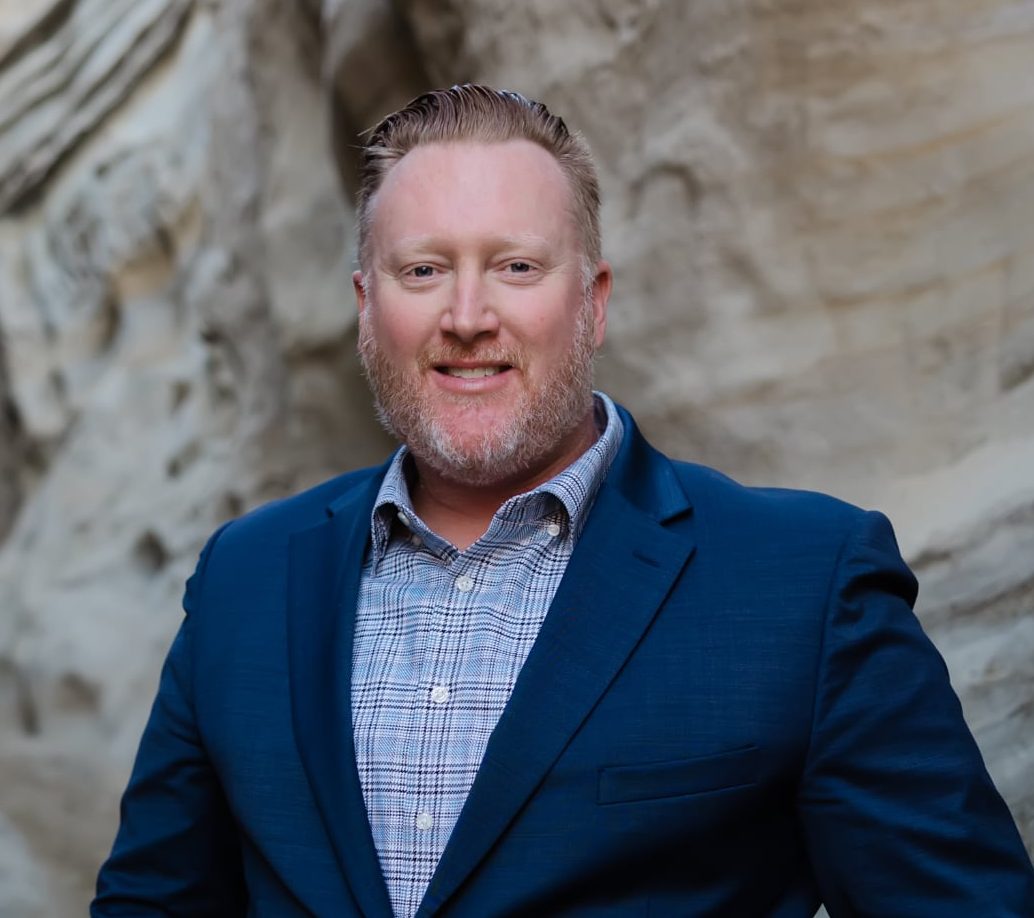
David Ciemny, CEO of Ciemny, Inc.
David Ciemny is the CEO of Ciemny Inc. and a seasoned entrepreneur, business development executive, and expert witness with more than 20 years of leadership experience. He has helped startups grow into established brands, scaled businesses to eight-figure monthly revenues, and led high-performing teams across industries including social selling, live events, music and touring, public speaking, and personal development.
Find more episodes:
Expert Witness & Attorney Relationship, Expert Witness Contracts, Expert Witness Interview, Expert Witness MarketingSales are all activities associated to the selling of goods and services sold within a specific time period. Salespeople need to find people who need their product or service and then get their product to the customer. By fulfilling the customer’s order and being responsive to their client’s needs salespeople can increase their sales and while building customer loyalty and trust for a company and their product.