
Engaging with Horticulturist Expert, Mark Czarnota
May 27, 2026A crop can look fine from the road and still be in freefall, and a “damaged” tree can be one good growing season away from recovery. That gray zone is where expert witnesses earn their keep, and where bad assumptions can turn into huge losses.
We sit down with Dr. Mark Czarnota, associate professor of horticulture at the University of Georgia, to unpack what happens when weed science, herbicide drift, and plant physiology collide with legal deadlines. He shares how expert witness engagements actually arrive, why staying current in pesticide research and specialty crop systems is a daily job, and what it takes to explain technical findings to attorneys, insurers, and lay readers without watering down the science. We also get practical about credentials that come up in court, including certified arborist expectations and pesticide licensing.
Dr. Czarnota walks through depositions from the expert chair, including how lawyers try to corner new witnesses, why sticking to facts protects your credibility, and the courtroom lesson that led to a mistrial early in his career. We dig into report writing strategy, valuation challenges for injured ornamentals and trees, and the contract clauses experts must read closely before signing. If you work in agricultural litigation, horticulture litigation, or any technical field where the truth has to survive cross-examination, this conversation maps the terrain.
Subscribe for more expert-focused conversations, share this with someone who testifies for a living, and leave a review with the most important rule you think every expert witness should follow.
Note: Transcript has been lightly edited for clarity
Host: Noah Bolmer, Round Table Group
Guest: Dr. Mark Czarnota, Associate Professor of Horticulture at the University of Georgia
Noah Bolmer: Welcome to Engaging Experts. I’m your host, Noah Bolmer. Today, I’m excited to welcome Dr. Mark Czarnota to the show. Dr. Czarnota is an associate professor of horticulture at the University of Georgia. He’s an expert in topics ranging from weed control to Christmas trees. Dr. Czarnota holds a PhD in floriculture and ornamental horticulture from Cornell. Dr. Czarnota, thank you for joining me here today onEngaging Experts.
Dr. Mark Czarnota: Thanks for having me. It should be an interesting conversation.
Noah Bolmer: As a horticulture professor, how did you first become involved in expert witnessing?
Dr. Mark Czarnota: Like everyone else that’s an academic, publish a paper, do a video or sound clip or something. Usually, it’s been through my extension publications. They’ll find out what I’m doing and there’ll be something pop up legally that’s associated with it. Then I get some phone calls.
Noah Bolmer: Tell me about the phone calls. What are the questions that you get asked? What are the questions you like to ask? Tell me about the vetting process.
Dr. Mark Czarnota: The first call I got would have been- first, I should say my job entails this type of work all the time anyway. I have my position here at the University of Georgia. It’s mainly weed control and specialty crops, which are all the horticultural crops, which- there [aren’t] many people out there that do this type of work. The last time I counted, if you put everybody in a pot, there might be ten people in the country [that] do the research and stuff that I do. It’s unique. I guess we’re in our field- the first expert witness case I did, I [have] to remember, that would have been a blueberry case. It was dealing with herbicide drift, [which] often happens when they’re spraying an herbicide on a forest situation. It drifts over onto a blueberry field, and all of a sudden sixty acres of blueberries are damaged. They’re trying to get an attorney, an expert witness and put all this together. They needed somebody to opine on what happened and if they can mitigate it. If not, what are the damages? I led from there. There are horticultural cases. I’ve done a lot of bamboo type cases. It never seems to end.
Noah Bolmer: When you first have those phone calls, are there any red flags or anything that you watch out for? I know you said that there are only ten people doing exactly what you do. Do you ever have to go outside the four corners of your experience and read up on anything in order to take an engagement?
Dr. Mark Czarnota: I have to read up on everything, even if I’m an expert in the field, because things are always changing. It’s never-ending. I always tell people, I’m 59 and I learn something every day. It’s been like that for all my life. It could be something simple on how a car works to- generally with my job, some piece of equipment or how a plant reacts to something. It’s always something new and something to be learned.
Noah Bolmer: That’s important. it’s not just about being an expert, but it’s about maintaining that expertise. You say that you’re always reading. Obviously, you’re an academic. What exactly does it mean to maintain expertise in your field?
Dr. Mark Czarnota: That’s a great question. I guess- I often think- I’d like to think I have retirement in my sights in the next few years, but part of me- it’s going to be hard to let all that go because once I leave this field, everything goes away. I’m on the cutting edge of stuff. I go to meetings, and watch people give lectures. I get blanket emails that relate to me from people that work closely in my field. All that will go away. That in itself is being the expert because you’re just- not only do I draw on the 30 years of experience that I have, but you’re also taking in all the new stuff on the front end that’s happening with all AI and drone technology, which is going to be problematic in my field. It has great- I shouldn’t say completely bad, but there’s going to be some- there’ll be some good things from it and bad things from it as well that I could see happening. It’s those types of things that makes you maintain your expertise.
Noah Bolmer: When you say “going to meetings” are there professional associations in your field that you have to be credentialed with or is it more of continuing to stay up to date on developments?
Dr. Mark Czarnota: It would be the latter there. You’re credentialed- the only thing I’m credentialed in is I’m a certified arborist, and I did that because I got tired of arguing with people. They always want you to have the certified arborist thing, which it was mainly herbicide type cases I would deal with. Unfortunately, the Arborist Association doesn’t have any training on that, even though people act like they do and don’t understand how herbicides work. What they do, and the implications of them. They have a firm understanding of that. That would be the only thing I have the credentials in. I have to maintain credentials in my- we have to have pesticide applicator licenses. There are little nitpicky things, but the only two things I have to maintain in my state is to be a certified arborist and the pesticide certification. That’s always changing. It’s good for five years. You have to get- you’re supposed to get points and all this. It’s funny because I go to- I give lectures and give myself points, which I don’t understand why we just don’t get a pass for that. It’s just- it doesn’t make any sense to me. I often have arguments with them about points and how things work.
Noah Bolmer: With so few people in your field, I imagine you do a fair amount of travel. Is that right?
Dr. Mark Czarnota: This year, the grant funding’s down a little for what I usually do. Generally, I’m always putting out- I work with- mainly work with chemical companies, AG chemical companies that develop pesticides of all ranges. Generally, I work with just specialty crops. I also work with companies with adjuvant technology, which is the adjuvants and how they work. [They] make the pesticides work better. I’ve done work with that. I do a lot of in-house stuff at the station where I work, but I also do a lot of- I do travel to actual farmers’ fields, deal with their- find out what the problems are. What issues they’re having, and try to help them become more productive. That’s part of my mission and my position.
I also travel out of state to do expert witness stuff. I do consulting work to help guide people on developing good weed programs. If they’re having trouble with a lot of weed issues, I can help with that. I can write a report- go visit the site, write a report, answer questions, and help guide them on that. Three or four times a year I have meetings out of state.
Noah Bolmer: With site visits and travel with respect to being an expert witness, do you build in any special terms in your contract, to account for like travel rates or different rates depending on what you’re doing or where you are?
Dr. Mark Czarnota: It depends. I usually- usually I’ll just charge a per- a fee for visiting a farm plus travel expenses. I don’t have to fly first class or anything like that. I get there and what I like about doing the expert witness stuff is that it’s always educational for me. I know many people- some people don’t like it because it ends up, I’ve only gone to court once. I’ve been to post many times, but usually of course settles out of court. Going through that process helps me learn a lot of things about what I do in my field. I see the need for publications for things in the legal field too.
I always have problems with- one of the biggest things is valuation of plant material. When a plant would be injured- an ornamental plant’s injured, but yet it’s going to come back. There should be some fee given by the insurance company for aesthetical loss and there’s nothing published on that. Nothing. No hard, fast rules. It’s always what the clients and their insurance companies agree to. It would be nice to have some type of percent. I can value out the tree and tell you what it’s worth, but what is the loss if that tree doesn’t have all its leaves for two years, or it doesn’t do well. There are all kinds of stuff that runs through.
Noah Bolmer: You mentioned going to depositions and trials. If you were an expert and have never been to a deposition before. What are the things that you can expect? What’s the place like? What are the questions that you get asked? How long is it? Walk me through a deposition from your perspective.
Dr. Mark Czarnota: The first deposition- the first trial I did, I caused a mistrial because I told him the insurance company was paying me- I didn’t, but I kind of did. Of course, it caused a mistrial but the lawyer was trying to get a mistrial and stopped the trial three times. The problem is- to the lawyers out there, you need to explain the ground rules to your expert witness. If they go on the stand, [say] “Look, you can’t do this. It’s one of the cardinal sins. It’ll cause a mistrial. This is what you can’t say.” What I can and cannot say, me being as ignorant as I was 20 years ago. I guess that happened- it’s almost 20 years ago. I can’t believe that. What I learned from that- the thing- the problem- the sad thing was that guy was going to win that case once I got up on the stand because of all the information I was going to give and he was doing everything he could to keep me off the stand.
Then, there were the questions for depositions. It’s general just- I noticed that if you’re brand new, they try to strong arm you and get you to say things that [are] not true. I always stick by the science and the last one I had with bamboo where the lawyer was trying to pigeonhole me into saying what he wanted me to say. Of course, I backed off and he was trying to limit- we were talking about the different things- about how to maintain a horticultural system. I went back and said, “It’s about what I’ve learned over the years on how to run important parameters, providing good growth measures for plant material, and things like that you draw off of.” Many times when you’re new, the information- you don’t know what to say because you can’t withdraw that information from your memory banks to make that deposition, go to the clients’ favor as well as your favor. What they’re trying to do- generally. the questions I get are- they want to know things, like what I just said. The value of a tree. If I’ve come up with some type of value. They want to know where I got that. You have to tell them there’s no hard, fast, publishable source to go off of, and they’ll hone in on that. Most of the things- if I state the facts and what I do, and not try to draw me off on something I’m not an expert on, I don’t have issues with it on the number of times I’ve been deposed. It’s been good as far as- I’ve helped out clients.
Noah Bolmer: Do you feel that your attorneys have done a good job preparing you for those depositions and that one time that you were in trial or- going back, would you prefer your attorney had better prepared you or run you through some mock depositions? What preparation techniques work for you?
Dr. Mark Czarnota: I haven’t been on any big, multi- I’ve been on some big cases, but none of them went to deposition. Those people would have gone through some mock trials with me or mock depositions to try to help me out and tell me the pitfalls that [I] would have. It’s usually the small type little farmer things that we have. This is where you don’t get much help. Then you have to draw from what you’ve learned in the past. It’s usually younger lawyers and they don’t understand that you’ve got to tell the person what they got to do. Once you’ve done one or two, you know what to do. My whole thing is I always tell people- I’m always- I try to seek the truth. That’s my job. The problem is there [are] twisty roads getting to that point to exactly what is the truth. They’ll try to- the other side’s going to try to go after that. I understand that because I know- I’ve been on both sides. Working for insurance companies and working for clients where [these are] the questions I’d be asking that person if I was you. Sometimes, I can help the lawyers guide them when they’re doing the depositions on someone else, as well as them telling me what to look for. What the ground rules are and what I can and cannot say as far as the legal stuff. That’s not in my wheelhouse. I’m not a lawyer, although once you’ve been involved in the system you learn what’s legal. What could cause a mistrial and what can’t.
Noah Bolmer: You’re an academic. Do you find that you have to teach the attorney some of the technical details about what it is that you’re being engaged for so that they can perform their job better?
Dr. Mark Czarnota: I’ve come to notice after all the deficits or all the expert witness stuff that I’ve been involved in, sometimes there are conflicts. They’re trying to win a case and I’m trying to seek the truth. Sometimes these things mesh together well and sometimes they do not. On the one large case I was involved in with a DuPont herbicide, I was getting bothered that they didn’t care about what was going on with the actual herbicide and what was happening. You have to let them- I notice [many] times- I don’t want to be mean, but they’re so ignorant about agricultural systems that it takes- you have to go back to the starting point to make them understand, this is how a plant works, because most of the lawyers don’t know the difference between a soybean plant and a corn stalk. Let alone when you’re dealing with other things like technical issues with herbicides and how they work. I barely understand half of that myself, because we don’t understand that information. That’s the type of information- getting from simple growing methods, simple agronomic practices, to the science, to get you aware of what happened in this case. This is why this happened and this is what you need to do to try to mitigate this. Many times, I could say I’d- it’s a back and forth with the lawyers, because I know they’re trying to win this case, and I wouldn’t take something on, which I know is not right. If it’s something that I can help with, I’ll- it’s some back and forth between us to get them where they need to go, as well as staying on the track of seeking the truth is what I try to do.
Noah Bolmer: Tell me about your report writing strategy. When you have to write an expert witness report and you have all this technical information, how do you parse that in a way that conveys your opinion strongly, but is also approachable to laypersons who might be reading it?
Dr. Mark Czarnota: That’s a great question. Once you’ve written one or two, you can start drawing off of those to guide you [on how] to do things. There are always differences in cases. The crop I’m working with. The time frame that the herbicide or damages have occurred. Whether it be herbicides or some other horticultural issue. Once you’ve written a couple, you can hone in. Sitting down and writing is a difficult thing. I always tell people I wrestle with it. You write it, and read it three or four times until you’re happy with it. Technology is getting better for spelling errors and grammatical issues. All that makes it easier to write because you have things going on in your mind, and are trying to get [them] out. I’m the type of person [to] get it on paper, edit it, change it, and refine it to make it readable and professional. I can tell you when writing a dissertation, thesis, or even a publication, it’s getting that first one out.
People don’t have any idea when you go through a publication, this is- when you write a peer-reviewed publication, it’s usually two or three years of work. You write all this out, and then you send it to reviewers. They chew it up and send it back or reject it. Then you [have] to resubmit it. It can be difficult and trying at times, but as you go through that process, you learn how to avoid the pitfalls of publication. If I could tell anybody, do one more. If you just do one and get it out- you will build off of that. You’ll build off the Excel spreadsheets, the calculations, and losses. Everything is much easier once you have gone through that process once.
Noah Bolmer: You’ve been doing this for a while. You’re published. You’ve written [many] reports, and you’ve been in a lot of actions. Do you ever have to keep track of everything that you’ve said because you might be impeached in a deposition because of something that you said 20 years ago? Maybe the technology’s changed. Maybe the methodology’s changed or maybe you’ve changed your mind about something. Is that something you’ve had to contend with?
Dr. Mark Czarnota: The only thing I’d have to say with what- if I had to change anything on my deposition, I don’t think- I know they’re recording stuff more now, but I don’t think that would be- the problem I have is when I’m signing- I have to be much more adamant when I’m reading over a contract I sign for an attorney. I had one case several years ago [where] I signed without reading it, because it’s like you’re not going to divulge information, but they stuck in things in there like I can’t work on any cases involving this herbicide for the rest of my career. I signed that and it was a big mistake on my part. That’s the type of thing I’m adamant [about] when I read stuff over. I’ll be sure to cross that out, initial it, and say, “I won’t work for anyone else as long as you’re paying me.” It’s stuff like that. You have to be careful what you’re signing. If I could tell anybody new to make sure you read that contract over and [not] sign it quickly. It’s only a paragraph, but [there] can be powerful sentences in that paragraph.
As far as what I say, everything I say is based on all the side taping information that I dig up. That can change. If that changes, I’ll be able to prove that. I don’t- that doesn’t bother me at all. I don’t have to- I don’t think about those things. What the attorneys are making me sign- to go back years ago, so I can’t work on anything in the future that would bother me more than anything else.
Noah Bolmer: Let’s talk routines a little. Do you have any pre-deposition, pre-trial- is there anything that gets you in the right headspace for an action? I’ve had guests tell me that they like to drink a lot of coffee, do yoga, fast, make sure they get sleep. Is there something that works for you that gets you ready?
Dr. Mark Czarnota: I’m a normal person. I try to work out. I love being in a weight room. In a garden. I love fixing things. I grew up in- my parents were blue collar. My dad worked at Chrysler as a guard. My mom was a nurse. We had what we needed. I figured it out. I don’t need any of that stuff. I try to take care of myself the best I can. I know one thing, if I’m super tired, I tend to not be so sharp and I try to avoid that if I can. It’s amazing how I end up going to bed at two or three in the morning at 59. You’re like, “Why am I up so late? Why am I writing this at 3 a.m.?” Then up at 6:30 a.m. to get my daughter on the bus. I have a special needs daughter, so it makes it interesting. It makes for an interesting life. I rescue dogs so I have a bunch of dogs to feed. My wife’s a nurse. She works. It’s a full life. Wide open. Anyway, nothing special. Try to get some sleep and lead a normal life. If you’re a well sharpened person, with a good background, I don’t think you’re going to have a problem.
Noah Bolmer: You don’t have to give any details. I know [much] of this could be confidential, but are there some stories or moments that have either fundamentally changed the way that you do something regarding expert witnessing or reinforced something that you already do.
Dr. Mark Czarnota: That would be the latter because I’ve come into situations. The biggest ones are when we have herbicide damage to a tree. You get an arborist and they want to cut the tree down. I’ll say, put the brakes on all that and say, “Look, I’ve seen this happen before and 90% of the time this tree is going to come back within two years. You guys want to cut down this, 200-year-old specimen for the insurance money. That’s criminal.” I’ll do everything I can to stop that or at least put the brakes on to give the tree a chance to come back. I’d have to say out of five or six cases I’ve been involved in; all the trees came back. That’s why I do this and prevent people from- it’s the lawyers using the insurance companies to try to make money because- we’re talking- it’s not that much money in most people’s eyes. A million-dollar case for six trees in somebody’s yard. They want to cut them all down and they’re still alive. I think they’re going to come back. Here’s why. At least I can put the brakes on all that for them, and at least try to convince the homeowner to give them a year or two. The lawyers are biting at the bit to cut them down before anything like that would happen on the other side. Those are the type of cases I love to do.
When somebody’s obviously done something wrong in a blue- for example, that blueberry case I mentioned, the guy had sixty acres of blueberries that- about $1.4 million losses, but it’s about $150,000 an acre. Do that times about- 40 acres were damaged. All of them needed to be replanted at that point because [there was] so much damage.
Then, I was on was the DuPont case, [which was] worth $1.5 billion. I was the person steering those lawyers in the right direction for what had happened. The sad thing on that case, [was that] there were so many other people missing things because they didn’t have an understanding of what was going on with those products and how the trees reacted.
Noah Bolmer: On a big case like that, were there other experts on the case as a trial team?
Dr. Mark Czarnota: We have four people on that one- yeah, there are four of us on that case.
Noah Bolmer: What extent do you interact and work with them or do you at all?
Dr. Mark Czarnota: We worked together quite a bit and that was helpful. The problem is when you get two or three people that don’t like one another and then that’s- I wouldn’t say didn’t like one another, but didn’t like their personalities. It’s life. You get people that you don’t like their personalities, but I respected them. I’ll give you that makes it difficult. Most of the time I get along with most people. It just- some academics can be curmudgeonly, is what I’m saying…
Noah Bolmer: Let’s back up to a general question. What does it take to get off on the right foot with your engaging attorney? How do you maintain that momentum throughout an engagement? The other side of that coin is, are there any red flags that you’re like, “Wow, this isn’t going so hot. Somebody should do something.”
Dr. Mark Czarnota: No, I just- I’ve never had anything go to trial. It wasn’t anything other than one went to trial and caused a mistrial. It wasn’t a big case. It was more that the guy was angry at his neighbor and it should have never gone to trial. It could have been worked out easily. On the big case I worked on with DuPont, of course, I didn’t even get deposed at that one. The attorney that I dealt with was absolutely fabulous. He knew how to talk to us. He had some other attorneys in his group that weren’t so- their interpersonal skills weren’t the best. The fellow that I dealt with was fabulous. He knew how to talk to us and prepare things. He was understanding about stuff and was great. I haven’t had any negative things because I know how attorneys work. They’ll send you stuff and want it two days ago. I obviously finish it and don’t hear back from them for two weeks. You’re like, “Oh, you need it quickly.” That’s where you start figuring that the wheels of justice turn slowly.
Noah Bolmer: Do you [often] find yourself on those tight timelines where they need an expert witness report 3 hours from now?
Mark Czarnota: Oh yeah, I’ve been- it’s incredible some of the cases you’ll get, I’ve dealt with where they’ll want it- they’ll call you last minute, and say, “We need this tomorrow.” It’s like, “I can get it to you.” I’m able to draw off other stuff I’ve written. I usually know stuff- can look stuff up, and move in that direction quickly. If it’s something that’s unrealistic, I’ll tell them that and they’ll move stuff around. It’s usually getting ready to do a deposition and they end up settling out of court anyway. It’s a moot point.
Noah Bolmer: Is that typically because the attorney is bringing you in [at] the last minute and they should have brought you in earlier? Is it because new information is found and they’re like, “Gee, I need an expert?”
Mark Czarnota: No, they can’t find anybody because they don’t know about- and then all of a sudden I pop up and then they’re like, “This happened a year ago. Can you help me with this?” I got a call from a guy, he knows me, but he had a- it was- it’s in North Carolina. It’s an herbicide case on blueberries. He’s [has] a few acres, but he waited too long. That type of stuff happens all the time.
Noah Bolmer: With a small community in your field, do you know all the experts in the field? Do you ever find yourselves across the table, against the other guy? You’re on the plaintiff’s side. They’re on the defendant’s side, and you know each other.
Mark Czarnota: Sure do. Happens all the time.
Noah Bolmer: What’s that dynamic like?
Mark Czarnota: It’s a small group of people. It’s usually- I’ll get involved with other guys that are in my field. I don’t know them that well. I know where they are and it’s fine. it doesn’t bother me. I don’t care. You learn, when you get a doctorate degree, that you can go toe to toe with anyone. It just- you just get to a point- it’s like being a good attorney. You know you’re going to make people mad. It’s your job and you’re trying to do it. I’m always amazed at attorneys when- the one case that I caused the expert- well, I caused the mistrial. The two attorneys hated one another in the courtroom, but [when] you got out. They were talking to each other, “How are your kids doing?” It’s like everything’s put down and you were human towards each other.
Noah Bolmer: You leave it on the field.
Mark Czarnota: Correct, yes, sir.
Noah Bolmer: Before we wrap up, do you have any last advice for expert witnesses or attorneys working with experts?
Mark Czarnota: For people like me, it’s a great thing to do. You can make a little extra money and the great thing for me is it’s a learning process. I get involved in things that are hot topics going on right now. I would encourage people to do it. Sometimes, people are going to try to hurt your feelings and make you not look good. If you have a doctorate degree, people do that all the time when they’re questioning you, and presenting research. I can tell you that happens all the time. It’s nothing you should be scared of. As far as the attorneys, it’s just- finding people- if you have any horticultural or agricultural cases, it’s often hard to find people that are experts in the field that you’re looking for. Usually if you turn to land grant universities, you can find the people and be able to get some to do expert witness cases. I know [many] of my friends won’t do it because it’s time consuming. They have families and they have no interested in it. There are plenty- if you look around, you can find people to do things like that. When you go for a law degree, you’ll go to school. It’s not a land-grant university, because they [don’t] have ag schools. If you don’t have a, if you grew up in a city and you haven’t had a horticulture or agricultural experience- it’s hard to connect those things together and realize that there are people out there that do research in this type- these type things and have information that could help guide your case in a good direction.
Noah Bolmer: Dr. Czarnota, thank you for joining me today.
Mark Czarnota: No problem. Glad I helped. It was interesting. I tell you, it’s a learning process. Nice to meet you. Have a good one.
Noah Bolmer: Thank you as always to our listeners for joining us for another edition of Engaging Experts. Cheers.
Subscribe to Engaging Experts Podcast
Go behind the scenes with influential attorneys as we go deep on various topics related to effectively using expert witnesses.
Share This Episode
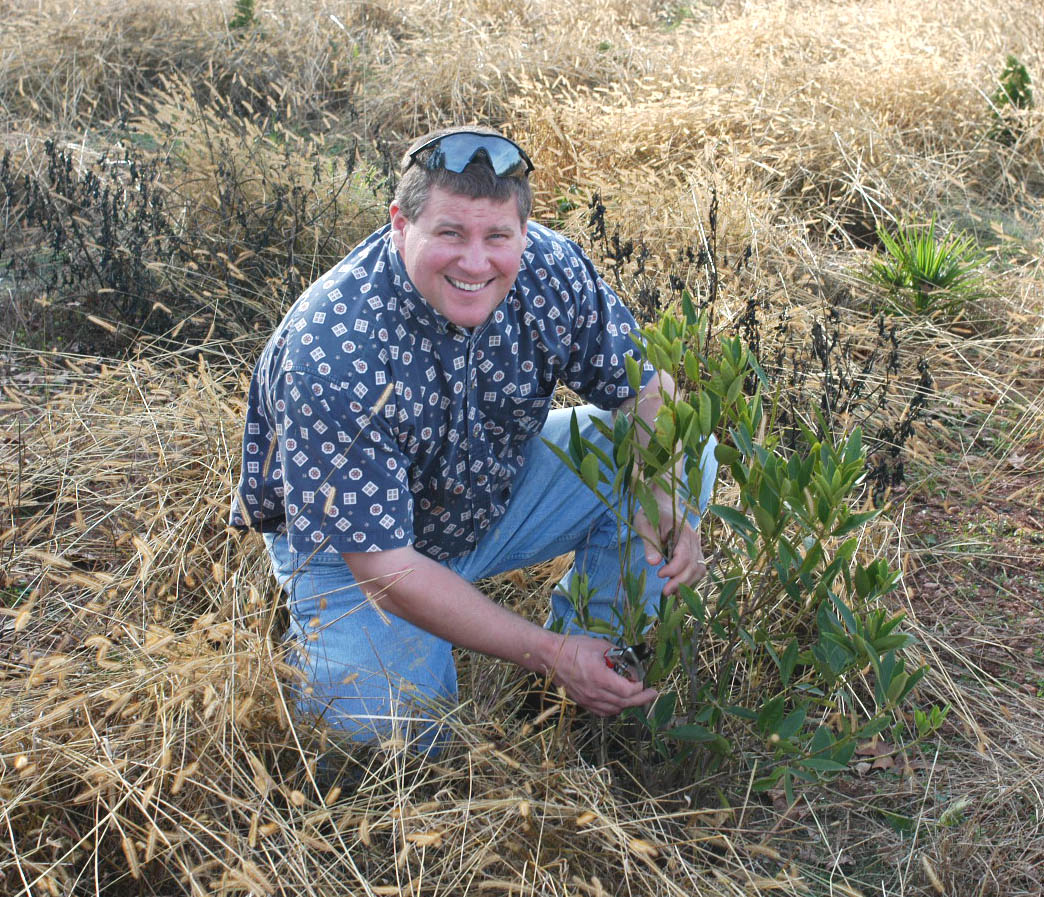
Dr. Mark Czarnota, Associate Professor of Horticulture at the University of Georgia
Dr. Mark Czarnota is an associate professor of horticulture at the University of Georgia. He's an expert in topics ranging from weed control to Christmas trees. Dr. Czarnota holds a PhD in floriculture and ornamental horticulture from Cornell.
Find more episodes:
Expert Witness & Attorney Relationship, Expert Witness Contracts, Expert Witness Credibility, Expert Witness PreparationOur agriculture expert witnesses, speakers, and consultants include scholars and industry professionals whose areas of expertise include agricultural economics, agricultural policy, farm animal health, crop science, genetically modified plants, food safety, public health, business marketing and management, chemical toxicology, environmental contamination, mammalian reproduction, forest management practices, and recycling systems. Our agriculture experts have worked with the Centers for Disease Control, the Environmental Protection Agency, public health departments, and other agencies and have experience in personal injury/product liability, product evaluation and performance, patents dealing with agricultural equipment and grounds maintenance equipment, and other areas.
Environmental is defined as relating to the natural world and the impact of human activity on its condition. It is related to the protection of the natural world of land, sea, air, plants, and animals. Pollution, climate change, resource depletion, and environmental decay are all important environmental issues.