

Engaging with Real Estate and Property Management Expert, Scott Bennett
August 25, 2026In this episode…
Our guest, Scott Bennett is an expert witness in property management and premise liability with over 3 decades of experience. He’s an accomplished writer, professional speaker, and serves on numerous property management boards.
Rather than taking every engagement, Mr. Bennett carefully evaluates conflicts, fit, and capacity to ensure he can deliver thorough, credible work. He also highlights the importance of formal contracts and retainers, protecting both the expert and the attorney, and shares his methodology for building reports from extensive discovery documents.
Check out the entire episode for our discussion on report writing, deposition preparation, and the evolving role of expert witnesses in the age of AI.
Note: Transcript has been lightly edited for clarity.
Host: Noah Bolmer, Round Table Group
Guest: Scott Bennett, Property Management Executive
Noah Bolmer: Welcome to Engaging Experts. I’m your host, Noah Bolmer, and today I’m excited to welcome Scott Bennett to the show. Mr. Bennett is an expert witness in property management and premise liability with over three decades of experience. He’s an accomplished writer, professional speaker, and serves on numerous property management boards. Mr. Bennett, welcome to the show.
Scott Bennett: Thank you, Noah. Glad to be part of the show.
Noah Bolmer: Absolutely. Let’s jump into it. So, your background is in real estate, property management, and things along those lines. But how did you first get into expert witnessing?
Scott Bennett: Great question. You know, I hear a lot of experts say the same thing by accident. And I guess accidents do happen. So, that’s certainly the way I got into the expert witness field. So, you said I’ve been in property management, risk management for the past 34 or five years. And I guess it was about 2017, I got a call from the Expert Institute out of New York; they actually sent me an e-mail and said, “Hey, we have an attorney that would like to talk to you about assistance with one of his premise liability cases.” And me, not being a trustworthy individual, thought maybe it was spam; didn’t really take it seriously. Anyway, they contacted me again and got a call from their New York office. And I said, “You know, I don’t know a lot about what you’re asking. I’m not familiar with you.” So, they said, “Well, research us, get back with us if you’re interested.” So, I did. Long story, called them back. They set me up a conference call with an attorney, I think out of Houston. And I had no idea what the conversation was going to be. And he just said, “I saw you on LinkedIn. I saw you have a lot of experience with property management, premise liability. I’m working a case on an injury in an apartment building in this particular case.” And he said, “I would like for you to draft me a report, look at all the discovery.” And I’m learning all the legal language as I go, of course. It’s—even though I’ve worked in—with attorneys in the past, it’s until you’re close to it, you don’t understand the lingo. But, yeah, so I guess I took my first case in 2017, kind of maneuvered through all that. And, you know, he said, “What do you charge? What are your rates?” And I actually had to research that. I didn’t know what an expert witness should even charge. So, I would all kind of fumbled that in our early career. I worked on that case for about a year. The rewards were very nice, and so that got my attention. And so, it just kind of took off from there. I started looking into it further. And then it seemed like, after that, others are reaching out, word about, as travels, and that’s kind of what happened.
Noah Bolmer: Sure. As somebody who’s been now doing this for quite a long time, tell me a little bit about how it has changed. First time an attorney calls, you have no idea what you’re supposed to be asking, how to vet whether or not this is an appropriate job for you. So compared to then, your very first phone calls, now tell me about how you take a phone call from an attorney. What are the things that you’re looking for?
Scott Bennett: My gosh, it’s been an incredible learning experience. I mean, we’re talking almost going on 10 years now, and I guess I learn something new every case, every conversation that I have with an attorney. As you well know, every attorney style is different; what they’re asking you to do is different. So, there’s never a case identical or alike. I’ve learned as I’ve gone, and as I said, I learn each and every time. So, typically, an attorney reaches out or, I’ve done cases with the Round Table Group, actually just signed a contract with them yesterday. Great people to work with. But atypically, you get a phone call from an attorney, and usually, in my case now that I’ve been doing this for 10 years, it’s a referral. So, I really don’t do much advertising. I have a publication in the SEAK directory. That’s all I do. But most of my business now is just referral type business. So, attorney calls. He says, “Hey, here’s the facts of my case. Here’s kind of what I’m looking for based on your background.” So, I listen closely. I want to know, of course, the parties involved. You got to do a conflict check initially. And then I want to know all the facts of the case or, at least, some detail as to-because I have to determine: can I really help this attorney on the case? You know, some experts tell me, “Yeah, we take everything that comes our way.” Well, yeah, that’s, I don’t do that. It’s just, that’s the, you know, it could put me in a position that, if I did that, either I’m not going to have time to do the due diligence and give you, as the attorney, I’m working for, a good job and a good report. So, I’m very selective now in the cases that I take. I just have to be, you know, number one, if you get too overloaded, then you’re going to miss something. And I don’t want to take that risk because my name’s on that report.
Noah Bolmer: How do you go about saying no?
Scott Bennett: I probably say no. It’s, yeah, I just—well, I mean, great example. I turned down two cases this week. One was a conflict after I did the conflict check; the other one was I just didn’t think I was the right fit with this attorney or the case. And so, the beauty of that now is I have a network of other experts I work with, so I refer to them. I’m telling the attorney I can’t really take the case or, you know, I don’t think I’m the best fit. However, I’ve got another network partner I think can really help you. So, you know, they like that because I’m not giving them a flat no. I’m able to assist them by recommending someone else; they don’t have to do that work. So, they like that.
Noah Bolmer: Sure, absolutely. I want to circle back to when you were talking about contracts. You had no idea how much you were even supposed to charge. These days, do you have any specific terms that you like to put into contracts, either a specific retainer, travel expenses? Do you customize contracts?
Scott Bennett: I do. And early on, I wasn’t doing that because I didn’t know you really needed to. But as I’ve attended a lot of the training sessions with SEAK and some other groups out there, you soon learn. You learn what you need to protect you as a business owner, which we’re a business owner as an expert witness. So, I have a formal contract retainer that I use now and have been using for the past, I don’t know, four or five years. And it’s vetted by attorneys. So, it’s a very solid retainer agreement. And, yeah, in that contract, of course- and typically attorneys will ask you to send them your fee schedule, which I have that outlined, well formatted. And then my CV, of course; then the retainer agreement I send. And interestingly, you asked that about retainer agreements. Some attorneys won’t sign retainer agreements, which I guess I understand that. Maybe I don’t. But they just say, “We prefer not to sign. We agree with your fee schedule. We pay your retainer because [I do ask for an upfront retainer] and agree to your fees.” And I’ve never had a problem with not getting paid. But it’s just—it’s just more of a sense of security for me to have that retainer agreement signed in the file.
Noah Bolmer: You had mentioned report writing. That’s part and parcel to the job. It’s something that every expert has to do. Tell me a little bit about your report writing methodology. Do you like to use lots of demonstratives? Do you use an index? How do you organize your reports?
Scott Bennett: Yeah, that’s a great question. Thanks for asking it that way. Yeah, normally what I do, I’ll take all the discovery documents and I’ll abstract them, meaning I’ll just, I’ll, you know, take out all the meat of the discovery and all the documents; you know, whether it’s depositions, it’s request for information, the petition. I mean, there’s so many; there’s hundreds of documents we have to read; we have to review. And I don’t want to not read a document and then get tripped up at trial or in a deposition to say, “Well, did you not look at that document?” So, I have to be prepared to say I looked at every document the attorney sent me in this case. So, that could be 100 documents; it could be 1000. It just depends on the case. So, we abstract those documents. We then take the abstract. So, it’s really—it’s like putting a puzzle together. Let me just, let me kind of rephrase it that way. So, after all the discovery’s been read, reviewed, and then everything’s in abstract, including the depositions, then I’ll take that and start building my report. And so, my methodology, you know, I look at each case entirely different because they all are different. And so, for example, I’ll look at all my abstract documents, and then I’ll just start building the report in terms of my experience and how, and my experience related to the case. Why I think I can opine and write an expert report for opposing counsel to state my case, so to speak. So, you know, here are the things I see that should have happened or didn’t happen in this case. And certainly, how can I help my attorney build his case to make a stronger case based on his arguments?
Noah Bolmer: Have you written rebuttal reports?
Scott Bennett: I have. Yeah, I mean, because a lot of my cases, yeah, there’s experts on the opposing side too. You know, they have their opinions, and I respect that. You know, I’m not, I don’t go down the path, and some experts unfortunately do; they will bash the other experts’ credibility. And so, I’ve just made it a practice. I don’t need to do that. I mean, we’re all credible in what we do and our craft. But what I do, I will refute some of their opinions. Give you a great example. I had a case months back. It was a fire. Someone was injured. And the opposing counsel had two experts and kind of was refuting some of the things I was saying. But at the end of the day, I kind of looked at their history, and neither of those experts had property management experience, number one. So they’re just kind of looking from the outside in, if you will. Not that they’re bad people and not that they’re credible in what they do. It’s just, in this particular case, they didn’t quite understand the dynamics of how property management works. I just essentially rebutted their opinions because, with being in the property management industry for over 3 decades, I’ve seen a lot and probably understand a lot more than they did in this particular situation.
Noah Bolmer: Speaking of impeaching credibility, let’s talk a little bit about depositions and cross-examination and things of that nature. Do you have a specific preparation method? How do you get ready for a big, potentially long and contentious deposition, for instance?
Scott Bennett: Well, you lose a night’s sleep, number one. Because you’re all you’re thinking through the whole night: okay, what do I need to say here? What do I need to say there? And again, it’s like every deposition’s different. It’s the unknown. I’m assuming you’ve had depositions before, you know how it works, but you don’t know what to expect. And so, can you plan for everything? Absolutely not. So, what I tend to do, and sometimes I over plan, but I review, go back and review the documents, certainly review my report, because I want to make sure I understand everything that’s been pulled together in terms of my reporting. So, you go in with expectations—opposing counsel is going to try to shoot arrows at you every opportunity. I just go in prepared for that, and I have my defense built already. A lot of counselors, attorneys, they want to try to destroy your credibility, number one. And so, I’ve built my business and I’ve built my reputation and my experience to the degree that, I mean, it’s pretty fell-proof. I mean, everything I have on paper is what I’ve done, and so it’s not fabricated by any means. I never worry about the credibility part. It’s just, I just want to make sure that I haven’t missed something in that discovery that the attorney can turn around and say, “Well, you didn’t put this in your report because you didn’t see it,” things like that. So it’s a lot of those little unknowns that you just have to make sure you’re prepared for.
Noah Bolmer: Some areas of practice are fairly dynamic with changing rules and laws and that in turn can allow you to change your opinion as the rules and laws and regulations and fact patterns change. Have you been in situations where an attorney has tried to impeach you on a prior inconsistent statement that may have reflected an earlier thinking or an earlier thing that you’ve written or said or done?
Scott Bennett: You know, that’s a great question. Let me say it this way—it rarely comes up. You know, a lot of times opposing attorneys will- they want to hold my feet to the fire on codes, for example, without quoted. I’m Texas based. So, in Texas, we have what’s called the Texas property code that I refer to a lot because it sets property standards for any related property, whether it’s an apartment or commercial building or retail center or any of that. And so, I use that code book and reference those codes. And attorneys, a lot of times, will try to twist that around. And I have to refer them back to those specific codes because, to their credit, many don’t fully know all codes in that property- Texas property code. So, I have to kind of steer them back to that specific code. And then I use a lot of industry publications. I use the global organization that a lot of us use is Institute of Real Estate Management. We call it IRM for sure. And then there’s the apartment associations. There’s a National Apartment Association. There’s retail organizations. And so, you know, they all have industry publications. I stay updated on all their recent publications and their memos and education literature that they put out. And so, what I run into, and I guess really to answer your question, is a lot of the attorneys, they don’t quite understand that language sometimes, not to discredit them. It’s just, that’s not their work; that’s my world. And so, what we find is, when I reference those codes, they weren’t on my feet to the fire, know exactly the page number, the publication, where I got that, because they want to go look it up. And so, unfortunately, if you’re not a member of those organizations, sometimes you can’t access that. So then I have to prove and show that in a deposition or a trial, where I took that language from that publication.
Noah Bolmer: It sounds like to stay current, there’s a lot of continuing research in terms of staying up to date on a variety of codes. And are there other organizations you have to maintain membership in? What exactly does it mean to remain current in your field?
Scott Bennett: Yeah, great point. I have to stay very active. Well, you don’t have to, but I choose to just to stay up to date on all the current language that we use. But definitely, I’m very involved in apartment associations. I’m very involved in Institute of Real Estate Management. I’m a member of National Fire Protection Association, National Apartment Association. So, there’s a lot of industry organizations that I’m a member of, and then attend their conferences annually, attend, you know, quarterly meetings, and I sit on a couple of various boards with department associations with the Institute of Real Estate Management. So, now I serve on a housing board also that I’ve been a member of for many, many years and served as president of that organization. So, all of that, the downside of that, it takes a lot of extra time. But to craft what I do and be able to stay on what I call on top of my game and do a good job for an attorney, you have to stay connected to these organizations. Otherwise, you get out of the loop at some point. And if you miss a new publication or back to what you said earlier, a new law or standard that’s come up, I can’t afford to miss that. So, you got to kind of stay in the know.
Noah Bolmer: You work out of Texas. Have you worked in other venues? Have you had to deal with codes or rules in other states or even other countries or at different levels of government, perhaps? Tell me a little bit about working in different venues and how that affects you.
Scott Bennett: Yeah, you know, initially, when I started out, 10 years ago, it was primarily all Texas that I did. And then I think, from what I gathered, as my name got distributed and started getting referrals. I started getting cases from other states. I’ll probably have worked in 25 different states, 20 states throughout the US. I got a call yesterday from Montana, of all places. I’ve never gotten a case out of Montana, which is kind of neat. I’ve done California stuff, Florida, Chicago, lot of East Coast, Southwest, and Southeast. So, it’s just kind of neat. I mean, the more geographical areas that I can work in, then I learned that much more because, as every state code is different. And so, that’s the real challenge. It’s like, I was talking to the attorney yesterday. He said, “Montana law is totally different.” I’m like, I don’t know anything about Montana law, but he’s the lawyer. I’m not. So really all he was looking for me is, you know, what we call in my industry standard of care. It was an accident that happened at one of those dude ranches, if you will. And he’s just looking for a property management expert that can opine on standard of care and risk assessment, that kind of thing. So, it’s like I told him, regardless of if it’s an apartment building, a retail center, a commercial office building, or even a dude ranch, which may be my first, at the end of the day, it’s all the same when it comes down to standard of care.
Noah Bolmer: Moving into the more general, has the role of the expert witness changed throughout your career? Have there been any fundamental changes either through technology or the court system operating in some way differently? Has anything changed, and do you see it going anywhere? Are there any trends that you’ve noticed?
Scott Bennett: I mean, it’s just like our whole world. It’s always ever-changing. You know, and if you don’t like change, then you’re probably in the wrong field, especially the legal aspect of it. But when I first started out, and you’ll certainly relate to this, we were doing all of our depositions live, more court appearances, and then, of course, COVID hit. And it seems since COVID, post-COVID, all the depositions now are via Zoom, which I don’t have a problem with. I mean, it’s, you know, in person is a little more personal, but Zoom, everybody loves it now. I don’t know that we’ll ever go back to live depositions. I don’t even think attorneys want to do that. And I’m seeing, now that the courts have been back open, even though caseloads are backlogged on judge’s case list, the courts are back up running full. So, we’re seeing more trials being scheduled, more court hearings, those type things. But I think the big change in the legal industry—and I talk about this every day with legal experts and expert witnesses—it’s a little thing called AI. I don’t know if you’ve heard of it yet, but it has busted wide open. And I think some law firms have introduced, you know, the AI software. And, you know, I’m just—I haven’t really used it to any degree. I mean, I’m aware of it and kind of know what it does. But honestly, I’m just unsure of it. So, I know we were at a SEAK conference in May in Florida. And what I like about those conferences is that they bring in federal, district, and attorneys, people knowing the legalities. And they were talking about AI, and they said, a judge, if a judge even suspects that you’ve used AI in an affidavit or any language you’re using, he’ll throw it out. And so, that’s kind of why I’ve kind of steered clear of it, because I’m sure there’s a fine line in, you know, how I draft a report and how AI may look at something. But, you know, what people have told me—and even attorneys—is that AI is only as good as what you double check that’s coming out of it. So, that’s my extent of what I know about AI.
Noah Bolmer: Yes, and it’s such a developing field that what’s true today may completely change by this time tomorrow. Do you have any stories, any tentpole cases that either change the way that you do something as an expert witness or reinforce something that you were already doing?
Scott Bennett: As I mentioned earlier, every case is different. And I take away many different things from each case that I do, each case that’s settled, or whatever the case may be. But I work so many different ends of the spectrum. I mean, I work anything from shootings on properties, murders, assaults, injuries; mold cases are a big one. And unfortunately, I’ve had three new cases in the past month of child drownings: one was an apartment building; two were in a subdivision community pool where they had an HOA, and one even had lifeguards and allowed a child to drown. So, it’s just, it’s those cases really get to me, especially when there’s a child involved. And one case that really stood out to me that I think was probably a big learning curve for me was, it was a case in, I don’t- I think it was Minnesota somewhere, where a train had two little children gotten away from their parents, ended up on the train tracks, and train had hit both those children. And that was a tough one because, I mean, you go through that discovery and photos, and I think I took away from there, from that, how even though the parent’s responsible for your children, an owner of a property has obligations to kind of put-up safety barriers where a child can’t just arbitrarily walk onto a train track. In this case, it was a fencing issue. So, I think what I learned from that, more than anything, is what property owners and managers are really responsible for at the end of the day. And can, I was in trial last week. Attorney asked me, he said, “Can a property manager assess and know every possible risk on the property?” The answer is no. That’s like looking into your crystal ball. But, you know, the big thing we run into with property managers, again, whether it’s a retail center or apartment community or whatever the case may be, is if they’re not doing the proper inspections, that’s a big no-no because you don’t know what exists on your property and what safety issues you have unless you’re constantly walking it and inspecting it. So, we find that a lot. It does not happen; therefore, that’s why we see a lot of these injuries happen at these properties.
Noah Bolmer: That dovetails well into my next question, which is, what do you find meaningful about being an expert witness? Why is this work important?
Scott Bennett: I’m glad you asked that. It’s, well, to me, you know, I like a challenge. I love a challenge, and I love getting something, you know, from taking it from the beginning, seeing it all the way through to an end result, whether that’s through a trial, whether that’s through mediation, whether that’s just through a settlement by both parties before it even goes to mediation. And I want to be—I had an expert tell me years ago, because when I first started this, I thought, it’s all up to me to win the case. It rests on my shoulders to win the case for the attorney. He said, “That’s not true.” He said, “It’s really his job.” He said, “Just think you’re an integral part of it,” you know, because we may have five experts on one case. And so, I’m 1/5 of that. Once I learned that I can only do so much or contribute so much of my knowledge and experience into the case, then that took a little bit of burden off of me to say, “Okay, let’s have fun with this.” Just number one, enjoy what you do. Take it serious, of course, and do the best you can in the form of a report. And I’ll write my reports just like you and I are sitting here talking. I’m going to educate the opposing counsel and my counsel in that report to say, here’s what I think and here’s why.
Noah Bolmer: What makes for a positive expert-attorney relationship? How do you get off on the right foot to begin with and how do you maintain that momentum throughout the case, no matter what happens?
Scott Bennett: And that’s very important, because really, it’s like an employer-employee relationship is the way I look at it. So, the attorney’s hiring me as his contract employee, but you can usually tell in the first 30 minutes of a conversation if you’re going to enjoy working with this individual. So, again, it’s just like interviewing with a company. Some companies aren’t the right fit for everybody. So, if we get through that hurdle where I’m like, yeah, I kind of like this person and like what he’s saying or she’s saying, and then we start talking about the case and I’ve had experience with what they’re talking about or I feel like, yes, I can be an asset to this attorney and help him or her with this case, then we’ll just, we’ll continue. But I’ve had many instances, well, not many, but several, where it just didn’t feel like the right fit. And I just got that vibe from the attorney that sometimes they’re wanting you to do things in terms of a report that I’m just not comfortable with because it’s not in my lane. So, as we say, we want to stay in our lane. So, if I feel like I’m having to get out of my lane to do a report, write a report, I’m not going to do that because remember, if I’m being deposed, I have to speak to what I’ve written. And if I’m not comfortable with it, it’s going to be tough for me to defend.
Noah Bolmer: Right, absolutely. Before we wrap up, do you have any last advice for experts or even for attorneys working with experts?
Scott Bennett: Again, it’s just like we just talked about. I mean, it’s a mutual respect. And, you know, I think with any case you take or any attorney you work with, what I ask the attorney is: please make sure that I have every possible document you have. And, you know, that’s number one. And number two, you know, don’t, as an attorney, don’t send me 1000 documents to read two days before the deposition. I’ve had that happen, where someone forgot to send me those depositions. And then I guess my worst pet peeve with any case or any relationship is if an attorney doesn’t ever communicate to you that the case has settled. I’ve had a few of those situations, where I’ve gone back in my file three months later and emailed the attorney to say, “I haven’t heard anything, what’s going on?” And they will tell me, “Oh, that case settled four months ago,” but you never told me. So, I, in my world, it’s still open. So, it’s called communication. And so, that’s, I think, the takeaway for me and for any attorney I work with communication is the vital ingredient from beginning to end because they’re- and I get it. I respect law firms; they have so many cases they’re working, and I probably have 30-35 active cases I’m working today, but I have to follow up on those to make sure I’m staying current. And I just, I ask the same of them: please always keep me in the loop on any changing circumstances.
Noah Bolmer: Absolutely. Sage advice: remain proactive. Mr. Bennett, thank you so much for joining me here today.
Scott Bennett: Thank you so much, Noah. Appreciate it.
Noah Bolmer: And thank you as always to our listeners for joining us for another edition of Engaging Experts. Cheers.
Subscribe to Engaging Experts Podcast
Go behind the scenes with influential attorneys as we go deep on various topics related to effectively using expert witnesses.
Share This Episode
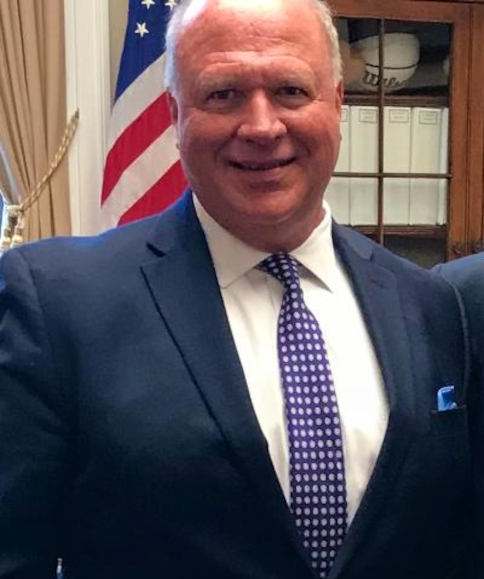
Scott Bennett, Property Management Executive
Scott T. Bennett is a property management and premises liability expert who provides consulting and expert witness services in cases involving serious injuries, life-safety issues, wrongful death, toxic mold, and standard of care. Drawing on decades of experience in the property management industry, he offers practical insights grounded in real-world operations, risk management, and industry best practices.
Find more episodes:
Expert Billing, Expert Witness & Attorney Relationship, Expert Witness Contracts, Expert Witness Demeanor, Expert Witness Deposition, Expert Witness MarketingCommercial real estate includes office buildings, retail space, multifamily apartments, undeveloped land, and other nonresidential properties (ie. stadiums, airports, hotels, medical facilities, self-storage spaces, etc). Our commercial real estate experts have been retained to provide opinions on contracts, valuation, liability, investments, building management, and more.
Property management companies oversee residential, commercial, and/or industrial real estate properties and their tenants. It usually involves managing of property that is owned by another party and entity. This includes apartments, detached houses, condominium units, and shopping centers.
Real estate is property consisting of a piece of land, along with its buildings and natural resources. The term “real” means real or physical property. Residential, commercial, industrial, and land are the four types of real estate.