

Engaging with Land Surveyor Expert, Frank Ferrantello
March 9, 2026In this episode…
Continuing education and research are the keys to staying relevant in a complex field like civil engineering, according to Mr. Frank Ferrantello. An ever-changing body of law and precedent requires expert witnesses that are not only experienced and credentialed, but current.
Check out the entire episode for our discussion on pre-trial routines, explaining complex topics to laypersons, and staying organized.
Episode Transcript:
Note: Transcript has been lightly edited for clarity
Host: Noah Bolmer, Round Table Group
Guest: Frank Ferrantello, President of Ferrantello Group, P.C.
Noah Bolmer: Welcome to Engaging Experts. I’m your host, Noah Bolmer, and today I’m excited to welcome Frank Ferrantello to the show. Mr. Ferrantello is the president of Ferrantello Group Land Surveying, a full-service land surveying civil engineering and construction consultancy. He’s a board member of the Nassau-Suffolk Civil Engineers and Land Surveyors and holds a bachelor’s in civil engineering from Hofstra. Mr. Ferrantello, thank you for joining me today on Engaging Experts.
Frank Ferrantello: Good day. Thank you for having me, Noah.
Noah Bolmer: You’ve been in civil engineering since the late 1990s. How did you first become involved in expert witnessing?
Frank Ferrantello: I worked for my father’s analog, old-fashioned surveying firm. The surveying profession is old, It dates back to the ancient pyramids of Giza and we modernized it. Back in 1999, I was the first land surveyor to use digital photography. When it first came out, I figured if we had this beautiful map or survey and [added] pictures [to make a] photograph exhibit that would be worth 10,000 words for jurors, judges, and plaintiffs, and defendant attorneys. All to look at and understand the existing conditions and the facts of the case because let’s be honest, no one knows how to read a map nowadays. When you look at a survey itself, it is so detailed, intricate, and forensic that I’ve been retained as an expert because of cases that started because of miscommunication or misreading a survey map.
Noah Bolmer: What were some of those first calls like? Were you aware of expert witnessing as a business? Were you expecting to get these calls? Did you seek them out or did somebody call your land surveying company out of the blue and say, “We need an expert witness on this particular case?”
Frank Ferrantello: They seek out a professional land surveyor, but it’s a small profession and a majority of the profession is dying in one way because the average age of land surveyors is in the seventies. My fellow board members are all seventy plus and so there’s not a lot of experience left. There are more technicians and geospatial like technicians. A surveyor is a professional expert that knows the law, the statutes, and the local laws. There are not many of them out there. So, with my expertise producing a product that’s legible, clear, and has all the data. It is not show and tell. We’re doing the right job for the right reason. It talks for itself; The product was sought out for many years from my father’s firm. Then I made it clearer, more legible, and enhanced it with photographs, lines, and illustrations to clearly explain the facts.
Noah Bolmer: You receive a phone call from an attorney or the representative of an attorney and they say, “We [have] this case. We need somebody with your expertise.” What are the questions that you ask them because it’s a two-way vetting process. They ask questions. You ask questions to decide if it’s a right fit. How do you determine if you and the attorney are a good fit for an engagement?
Frank Ferrantello: Number one, I always do a conflict check. That’s priority number one. [Many] people try to get me first sometimes. It’s a matter of doing a conflict check or working for a co-defendant. We’re making sure, we’re conflict free. I like to work alongside the- some plaintiffs’ attorneys can be how would I say, aggressive, demanding and they want results. I’m not a hired gun. I’m an expert [who] is unbiased. I know the law, and I know how to apply surveying to existing conditions, the forensic principles, the statutes of law that I’ve tested on. [It’s] how I got my license. Most people in layman terms, they don’t know- land surveyors need to know New York state law, environmental law, general obligation law, general business law, environmental, real estate, [and] highway law. This is all part of the New York State specific exam to get my license. I was going to become a lawyer at forty years, and I said to myself, why would I go back to law school? I’m a surveyor and an engineer. I wanted to become a lawyer also. I’m like, let them fight over me, not fight against me. I’m well respected in the community and it’s simply stating the facts. I would like to work alongside certain people. I want to defend the facts. It’s based upon the facts.
Noah Bolmer: Do you find yourself working on an even split between plaintiffs and defendants or does it heavily veer on one side? Does that even matter?
Frank Ferrantello: About 50-50, more or less.
Noah Bolmer: Is that important to you?
Frank Ferrantello: I don’t have any preference over either side. It’s a matter of- I look at the case and see if it’s something I want to put my name on? If I can help the case out and how the law applies.
Noah Bolmer: Let’s talk contracts for a moment. When you are doing an engagement letter, do you have any specific terms that you like to make sure get in there? Maybe it’s a project rate, an hourly rate, or an upfront retainer. Are there any specific terms that you like to use to protect yourself?
Frank Ferrantello: I do. I have a standard retainer contract. It’s important for me to be retained and paid for my time. I have seen cases that went on for twelve years before they were, before they even called me or retained me. Then they needed the job by New Year’s Eve in one week. Like what happened? One law firm to another, over twelve years, no one hired an expert to see where the defect [was] or [where] the incident happened. Twelve years and they want it in 2 days or over a weekend. Come on. There [are] some great attorneys out there, but there are some attorneys that- I don’t know what it is. They wait till the last minute. The majority of real estate professionals out there order the survey as the last thing, even though it’s the most important. Whether there are easements, encumbrances, encroachments, out of possession, title or neighborly disputes. They wait until the last minute.
Noah Bolmer: That’s something that I’ve heard from other expert witnesses as well. That sometimes they feel that attorneys don’t contact them until it’s almost too late or there might not be sufficient time for them to do their best work. Let’s shift a bit. You work in a field where you are dealing with complex information. You were saying that a big part of your job is parceling these maps and making sure that laypersons can potentially understand these arcane concepts in land surveying. How do you communicate complex concepts to the trial team, including your attorney, but also to a potential judge or even an impaneled jury?
Frank Ferrantello: I’m highly technical so it’s a challenge for me because I just- it’s my jargon. I try to explain in simple, common-sense terms that an easement is to ease the burden of one parcel or party against another. What does that mean? It’s a parcel of land, for example, that you may have a driveway easement that’s shared. It may mutually benefit both people, but it may also benefit one person and burden another party. So these are why- this is why it gives rise to disputes, because maybe there’s an aggrieved party. Someone doesn’t know the full gamut of the easement. What rights, title, and interest that they have. Someone may not take the time to show them or explain to them the- or forget that even. They have to research the actual original easement document and agreement to say what the limitations of the agreement are, because an agreement, terms and conditions can state anything. I could own below the Brooklyn Bridge. I could quitclaim it and certify that I own it. That doesn’t mean I can own it and I can occupy it. There are certain principles like that where they often go overlooked, especially in real estate title transactions. When it comes to Manhattan, New York City, there are so many laws, local laws. There are so many statutes that apply to expert cases like disputes, air rights, easement disputes, utility losses and incidents, trip and falls, slips and falls, bus stops, pedestrian crosswalks, public and private development corporations developing plazas in front of the setback of high-rise and mid-rise buildings, which would have benches, tables, and statues. Sometimes there are incidents where it’s a public space, but it’s on private property.
Noah Bolmer: How do you stay on top of it all with all of these, not only a large body of laws and oversight, but an ever-changing body of law and oversight? How do you stay current?
Frank Ferrantello: Number one, continue education. Number two, keep my eyes and ears open [for] any new cases or principles that come through. Any amendments to the statutes or case law. Researching things on Westlaw, Thomson Reuters, or different legal platforms. Always being curious. Why am I being retained in this case? How can I help? For example, there are new types of cases all the time. I’m always setting a precedent in them because, for example, sidewalk liability is great. People can slip, trip, and fall on a sidewalk defect, but is it within a certain area that may not be truly public. It could be a sidewalk that’s got crescents, marble tiles, and was installed by a private and public development corporation in conjunction with an agreement. So technically it’s not the joining landowner who installed it, and he’s not- he or she is not responsible for it. It goes back to the Plaza Department of New York City Department of Transportation. If it’s a pedestrian crosswalk, I’ve had cases that got lost before I got retained because they said, “It’s in front of the subject property, the tenant and or landlord is responsible for it.” It’s a part of the public infrastructure and when it’s in charge of the sidewalk, the landlord, I can understand liability for that but when it’s a traveled infrastructure and public pathway taken by hundreds of thousands of public pedestrians each year in front of someone’s property on an intersection that’s a public intersection of two city streets, common sense prevails. That wouldn’t make sense that I’m going to be liable for that. I didn’t install it. I don’t maintain it. I don’t use it. I’ve set legal precedent before by again, looking at the confines of the law, the statutes, looking at amendments, case law, and using common sense. Like the Supreme Court would use common sense and certain principles to make new rulings.
Noah Bolmer: As one of the areas of expertise that do necessarily involve the law, does that ever lead to friction with the engaging attorney who’s in fact a lawyer? Do you have different interpretations of the law or different theories based on the facts at hand? Does that cause any friction?
Frank Ferrantello: Of course, attorneys don’t like to have bad news, but it’s about looking at a case and seeing where I could zoom in. If you look at a case where, for example, a sidewalk joint between two sidewalk flags or sections, it may be almost infinitesimally small. I always ask the attorney to review the survey results, review my findings face to face, zoom in, look at all my data, and I can understand that. I can help you do that but I need to know. I look at the summons complaint, I look at transcripts, and depositions. I look at a lot of different legal documents and exhibits from the case. When you talk face to face to the attorney, then you can understand the story a bit better. You can zoom in and hammer it home and now I understand better what occurred. Is this the uplifted sidewalk or the other one subsided and sunk and fell? There are two ways of looking at it. You have to retrace the defect, and the cause and effect. It could be a drainage pipe. It could be an old root that decomposed and the root is no longer there, so the sidewalk flag and section sunk. That gave way to a proper sidewalk, proper level and compliant, but the other side has a negligent sidewalk that sank, exposing my client’s potential sidewalk, and that creates a trip hazard.
Noah Bolmer: Let’s shift and talk about preparation. You have a big day, a big case. It might be a deposition. It might be a trial or whatever the case may be. How do you get ready for the big day? I’ve had expert witnesses tell me they like to review all of the materials. Then I’ve had some more intangible things. [They] like to do yoga. drink a lot of coffee, or fast. What does your preparation routine look like when you’re getting ready for any potentially big day?
Frank Ferrantello: Blood flow is always good so getting to the gym early and getting hydrated is important. Having my support team help me, guide me, and have all the facts in hand. I may retain a lot of information. I do. My memory has been certified in court, but I’m only human. No one’s getting younger. The clock [doesn’t] go backwards. It’s only going forward. It seems like it goes faster with each month and each year.
Noah Bolmer: Do you have a story or a case or two? Obviously, you don’t have to give the details, reveal the client or anything, but that either reinforced something that you do already as an expert witness or changed the way that you go about doing some aspect of expert witnessing. Do you have any kind of tentpole cases?
Frank Ferrantello: I have a wealth of knowledge on a case and sometimes it’s just too much information for people. Under cross-examination, sometimes less is more. I’ve been successful in conveying the facts of the case because sometimes when an expert’s under cross-examination, the other side, whether they retain me or not in another case, want to disqualify me. They want to Daubert me. They want to distract me. They want to disorientate me. [Many] times I have a great comeback and they’re trying to catch you on something. Less is more sometimes when I have to expand on a principle, a fact, or a principle of the case. Why I feel this way based upon my survey of existing conditions and my findings is because I have a lot of experience, the way I was taught and the way I learned was who’s to say I’m right. Maybe I made a mistake. But I like to have, especially in my procedures, a litmus test. If I had to present every single step in court- why am I right? Why am I correct based upon what factual or legal evidence? Am I right and because I have been questioned? I have been disputed many times from normal property owners, fand use, zoning attorneys, builders, and developers that may be successful. They think because they’re successful, they’re always right. Most of the time, I would say 85% to 90% of the time, they don’t have any factual based legal evidence. They don’t even have an old survey that’s relevant. It may be from the 1950s. It may be outdated, chopped up, and sold off piecemeal. I have all the knowledge. I have all the facts, and it’s rewarding presenting them all. I have to be careful. I don’t say too much because sometimes people will chew on that and try to get you on something, so sometimes less is more. When I have to expand on something, I have to explain it in layman’s terms.
Noah Bolmer: As somebody who’s been doing this for a long time, do you run into situations where the other side wants to impeach you on things that you’ve said before? [They] either take something out of context or look at something that you wrote 20 years ago. Maybe the facts have changed or your opinions change? How do you deal with those sorts of situations?
Frank Ferrantello: I’ve had people [say] what makes me an expert if I worked for my father for so many years? But I’ve been working for myself as an expert longer than I worked for my father. As a predecessor firm, my father’s experience, teachings, and training were a Bible, written in stone. I didn’t agree with some of it. I like to do a diligent approach. I’ve had to deal with politicians, attorneys, public hearings, members of the board, opposition, neighboring joiners, and neighboring owners that they hire their own counsel to go against and oppose a certain application, project, or self-storage building. I have to have those facts. I want to be diligent, and [have] all the information at hand. You got to be organized. That’s the key. We have all this technology. We have all this ability to collect information nowadays. Information and data is powerful. I always like to get everything organized and the easier you organize it, the easier it is to convey it and retain it for yourself.
Noah Bolmer: Do you have any specific organization tools that help you? Do you like any specific apps or are you a paper and pen guy? How do you like to get organized?
Frank Ferrantello: I like to keep things digital because they’re always at the fingertip in the cloud. They’re always- if there’s some mobile- if it’s an e-mail, I like to be clear. The more detailed the better, because you can search by almost any terms. You don’t want to miss a beat. As a surveyor, not just an expert, I deal with all types of clients. Some architects will call it the Smith residence. A title company will have a title number to reference. Internally, project management-wise, we’ll have a job number. The attorneys will have the title of the case. The capture from the court. There are [many] different facts that you have to go by that represent, catalog, and categorize the project or case.
Noah Bolmer: Before we wrap up, do you have any last advice for expert witnesses or attorneys that are working with experts?
Frank Ferrantello: I would say you have to be organized. You have to be consistent. You have to be detailed, and you have to be relatable. You have to be able to explain it so the jurors, the judge, and the bench trial can all understand and relate with what you’re saying. Many people have neighborly disputes with fences, easements, and driveways. The same things may apply to many expert cases, and a lot of it comes down to being relatable and [using] common sense.
Noah Bolmer: Sage advice. Mr. Ferrantello, thank you for joining me today.
Frank Ferrantello: Thank you, Noah. It was a pleasure.
Noah Bolmer: And thank you, as always, to our listeners for joining us for another edition of Engaging Experts. Cheers.
Subscribe to Engaging Experts Podcast
Share This Episode
Go behind the scenes with influential attorneys as we go deep on various topics related to effectively using expert witnesses.
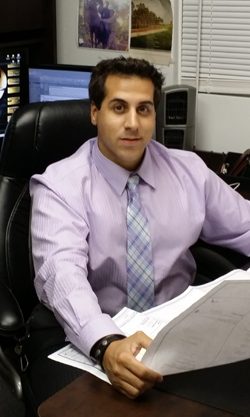
Frank Ferrantello, President of Ferrantello Group, P.C.
Frank Ferrantello is the president of Ferrantello Group, P.C., a full-service land surveying civil engineering and construction consultancy. He's a board member of the Nassau-Suffolk Civil Engineers and Land Surveyors and holds a bachelor's in civil engineering from Hofstra.
Find more episodes:
Expert Witness Credibility, Expert Witness Interview, Expert Witness Marketing, Expert Witness Organization, Expert Witness PreparationCivil engineering is a discipline within professional engineering that focuses on the design, construction, maintenance of both private and public infrastructure. Civil engineers are often retained in order to lend their expertise to cases that involve buildings, airports, tunnels, dams, roads, water systems, and bridges. Our civil engineering expert witnesses, speakers, and consultants are scholars, researchers, and industry professionals with extensive experience in teaching, research, and industrial positions.
Land use is the function or functions that humans apply to available land around them. The land is managed through zoning, which is how local governments regulate and control how the land around them is to be used. Zoning is used to make cities more pleasing, control pollution, protect the environment and efficient transportation.
Real estate is property consisting of a piece of land, along with its buildings and natural resources. The term “real” means real or physical property. Residential, commercial, industrial, and land are the four types of real estate.