

Engaging with Family Law Attorney, Russell Knight
February 9, 2026In this episode…
We sit down with Russell Knight, a Chicago and Naples divorce attorney to unpack how experts get chosen, what courts really value, and the quiet ways reputation and rigor steer outcomes.
Russell breaks down the two pillars of expertise he relies on: financial analysts who trace income, valuation, and debt, and mental health professionals who assess parenting time and responsibilities. He explains the reality behind “court lists”, how the courthouse whisper network shapes expectations, and the specific questions attorneys ask before engagement: Are you accepted in this venue? Have you appeared before this judge? The conversation gets practical fast. Retain your expert, set firm delivery dates, and avoid late, stale reports that collapse under new facts.
If you’re an expert witness aiming to be credible, timely, and resilient under pressure, or a lawyer who needs reports judges can trust, this conversation is a field guide.
Note: Transcript has been lightly edited for clarity
Host: Noah Bolmer, Round Table Group
Guest: Russell Knight, Divorce and Family Law Attorney, Law Office of Russell D. Knight
Noah Bolmer: Welcome to Engaging Experts. I’m your host, Noah Bolmer, and I’m excited to welcome Russell Knight to the show. Mr. Knight is a divorce and family law attorney. He’s authored over 750 articles on Illinois family law. He has been quoted in numerous magazines, and news programs. Mr. Knight holds a JD from the University of Illinois. Mr. Knight, thank you for joining me here today on Engaging Experts.
Russell Knight: Thanks for having me.
Noah Bolmer: Let’s jump into it. You’ve been a family law attorney for gosh 19 years now, do you frequently use experts in your practice?
Russell Knight: They are crucial in what I do. Family law is a mile wide and an inch deep. We need somebody to get further than that one inch and get down to brass tacks quite frequently.
Noah Bolmer: Tell me about the types of expert witnesses that you use in your practice. What are you looking for?
Russell Knight: There are two types of expert witnesses broadly in family law. One is called a financial expert who is generally appointed, like when we say a forensic accountant, what we’re talking about is a generalized financial expert who will go through and determine how much someone owns. How much someone makes. How much someone owes. Those are generally accountants of some stripe. Then there are, in Illinois, we call them 604.10’s. They’re amental health expert who’s a step above Guardian ad Litem and other people who make recommendations for children where they use actual expertise instead of just horse sense. All that gets applied by other people, to make recommendations about custody determinations, determinations of parenting time, and parenting responsibilities.
Noah Bolmer: When you are first making that initial phone call and reach out to an expert witness, tell me about that conversation. What are attorneys looking for? What should expert witnesses be looking for? Because at the end of the day, it is a two-way vetting process.
Russell Knight: There’s a three-way vetting process because what the initial- how do I want to say it? — the initial bottleneck is usually whether the court itself approves that expert. You’re entitled to bring in whoever you want, and you have to prove that they in fact have an expert level of expertise. In Illinois, we generally have something called a court’s expert, which is easier to get in, and that court expert has to be on a list. Every county has different lists. Judges have favorites within that list. The courts- the counties are also open to having new people. They definitely need people on a constant basis. So, my first question is, “Are you on the list?” My second question is, “Have you ever done this in front of this judge before, so, the judge won’t object to me appointing you?” My third question is, “What is your experience? Do you have any policies-” they don’t show me their hand, but for the most part, the folks usually have a reputation. Family law- I practice in the Daily Center. It is the world’s largest, single courthouse, it’s a gigantic skyscraper in the middle of Chicago, and it’s like being in high school, you see the same people every day. Everybody has a reputation, and you can ask anybody, “Who’s good for this?” or “Who’s good for that?” People will usually say, “He’s good for men.” “She’s good for moms.” “This person will give you a low valuation, or this person will give you a high valuation.” We rely on this whisper network. And if the whisper network doesn’t work, if you’re brand new to it, that’s okay. Because a lot of times we want someone outside of the whisper network.
Noah Bolmer: When you talk about these court lists, that’s interesting. Tell me more about that. Are there ever court appointed experts in your field? That’s rarely the case in the United States, but it does happen. Is this a list maintained by the system to let you know that these are pre-vetted people, and aren’t going to get Daubert challenges?
Russell Knight: We’re using the same people constantly, and we- then the judge- if it’s a court-appointed expert, then the judge has to say, “I approve of that in advance.” If it’s not a court-appointed expert, which is your right to bring in, then you have to do the Daubert test and go through all of that.
Noah Bolmer: Have you been in those situations with court-appointed expert witnesses? Something I guess akin to believe it’s a Rule 706 style appointment.
Russell Knight: For the court-appointed experts that [are] pursuant to our local statutes, the judges hold them in high regard because they do all the heavy lifting. The judge did not go to accounting school, and judges particularly don’t care to get into the weeds on financial issues. And then for kid issues, like it’s so sensitive. If an expert- a psychiatrist is saying, “I talked to mom, dad, and these kids, and I verified and corroborated all the evidence that they alleged with teachers, with social workers, and this is my opinion.” The judge’s work is sort of done. The judge doesn’t need to do the hard work of assessing the credibility of every person. If someone does choose to challenge and says, “I didn’t say that at all,” then the judge can weigh that versus the expert. I will say that the experts have an incredible amount of integrity. You cannot hire someone and know what the result will be in advance. They do depend on the facts, and they may have preferences more towards a 50-50 split between parents, which doesn’t reflect being pro-dad, even though that’s what people say. They may have preferences where they are skeptical of business owners’ deductions, but that doesn’t mean that the business owners’ deductions are any more valid or invalid than they would be normally. It means that is the opinion of the expert. If you’re aware of the opinions in advance, then you have to figure out what the bases for those opinions are if you want to challenge them. Otherwise, you accept them wholeheartedly.
Noah Bolmer: Do you glean some of that during the initial phone calls, or does that require some NDAs before you start figuring out what their actual opinion is going to be for a specific fact pattern?
Russell Knight: It’s fair to say in the initial phone call, “What are your experiences with-” let’s use an exact example. “Do you have experiences for 50-50 divisions of parenting time?” Because parenting time is everything. The decision making and if they say- if they could tell me. I hardly ever recommend it because every case is dependent on who the real primary parent is. And there’s usually a primary parent. Sometimes that’s true. Or someone might have very strong opinions about certain industries and how they are creative with their accounting and expenses, and they’ll usually tell you as much. I don’t think experts hide the ball. You know what experts like being? They like being experts. They will let you know exactly how they feel about something.
Noah Bolmer: Absolutely. I’ve heard from [many] experts that one of the things that they truly enjoy about their job is teaching. Do you find that attorneys such as yourself are receptive to being taught what it is that an expert is an expert in?
Russell Knight: I would say that if we’re students, we’re extremely skeptical students. I literally have on my desk right here the Bible for us, John Zervopoulos, How to Examine Mental Health Experts. This is not meant to help the mental health expert. This is meant to tear the mental health expert apart. If you are- the easy part is to bring in an expert that you agree with and say,” Tell me everything you know. I want to hear all about it. How did you come up with this decision? What’s the basis?” I go, “You’re so smart, I’m so smart, the judge is so smart, I’m sure we’re all on the same page.” The real challenge is to say, “This isn’t even a science, is it? You and the horse you rode in on, you’re not qualified to talk about this, are you? In fact, my favorite thing was once I asked the guy, “You’re not very good at math, are you?” He said, “I wouldn’t say that.” I said, “But for an accountant?” He says, “Yeah, maybe.”
Noah Bolmer: Let’s talk about the expert witness perspective. During those initial phone calls, what should the expert witness be asking the attorney and what sorts of red flags should they be looking for whether they want to accept an engagement?
Russell Knight: Good question. The red: the expert witnesses need to have a retainer. Judges [I mean] lawyers understand how retainers work, and expert witnesses should be generous with that. If the person wants not just a report that’s honest, forthright, and based on science, but a report that is thorough, unimpeachable, and they want it soon so that it’s not stale, they need to pay for that. The expert should feel comfortable saying, “This is what it costs to get a report to you by X date.” If that is done, whether the report is good or bad for the person, they can’t say that they didn’t get their end of the bargain. That is what experts need to do. Our problem is not the result of the report. Our problem is usually that the report is late. Then if the report is late, the facts are stale. Even if it’s the report agrees with you, you can’t do anything with it because your other side is saying, “If you didn’t you know that these facts have changed, and if you knew about these facts having changed, would your opinion be the same?” No expert’s going to say, “No, my opinion was going to stay the same no matter what.” It’s not going to happen.
Noah Bolmer: One of the things that experts have often mentioned during these shows is that they feel that they haven’t been given enough time. There [are many] last-minute engagements. They might not have enough time to read all the relevant case materials and properly develop a report, edit it, and the entire process. Is that part of the reason that they might be turning in reports late sometimes, or is that something else?
Russell Knight: This is purely speculation, but the expert is his own breed opining on things. For some reason it feels better if the expert stewed on it. There’s a nature of being an expert to be judicious with their time and not truly rush something, which on balance is probably better than to have a rushed report. I don’t fault them, but the world goes on. So, experts, please prepare your reports on a prompt basis.
Noah Bolmer: Let’s talk about communication and setting up an engagement. How do you set up confidentiality and privilege? How do experts know the manner in which they should be presenting information to you? Should they be making a phone call? Should they be talking? Should they be putting it down in writing? Is this discoverable? Is it not? How do you go about communicating that with a newer expert witness?
Russell Knight: I write all these articles. That’s how I get most of my business and how I become a better lawyer. I specifically have an article about controlled witnesses and how the difference between that and an independent witness. And how the information a controlled witness has is attorney client confidentiality. Tell me anything if you’re controlled. It’s my job to not squeal on you or to tell you what you can say or what you can’t say within reason. For independent experts, everything’s discoverable, so you might be more careful with what you say to the independent expert. But I don’t think that means that you need to be careful with what the independent expert says to you. They’re simply doing their job and what they’re saying to you is discoverable. But isn’t that the point?
Noah Bolmer: Earlier you were talking about making sure that you get your reports and work product in on time. How do you set those expectations at the beginning of an engagement? Before they sign the letter. Before you, both sign the contract, the engagement letter. How do you set those expectations so that both parties are fully aware of what the time commitment is likely to be?
Russell Knight: Court orders are issued by the courts saying when reports have to be due [or] exchanged, when rebuttal witnesses have to be hired and disclosed. Typically, that’s usually enough. In the meantime, there’ll be a back and forth and there’s going to be a constant sort of push, like “When are we going to see that report? When are we going to know more about this?” Or usually done very politely by, “Do you need more information? What else can we do for you?” Once the signature is signed and we’ve paid you; we’re kind of beholden to the expert because we need that report and we need you to like us and like our client, and so we’re going to be as sweet as pie until that happens.
Noah Bolmer: Are there any significant differences for an expert witness in terms of preparing a rebuttal report versus an initial report?
Russell Knight: You don’t know whether the experts know each other. Whether they know anything about each other. Whether- how much of their field could be reliably labeled as mumbo jumbo, even by another expert. Which is- an expert will tell you what’s real and what’s not about somebody else’s report, not about their own. Rebuttal reports or other products, again, you just have to keep saying, “Is there anything else you need?” and they will tell you. If you’re helping them do the work, don’t be surprised if the work looks good on you.
Noah Bolmer: Let’s talk about preparation. Experts find themselves in often contentious situations like depositions and perhaps cross-examination on occasion, although often these things are going to settlements these days in a lot of fields. How do you like to prepare your expert witnesses to get them ready to be in some of these tense situations? How do you yourself prepare for it?
Russell Knight: Depositions don’t work like a cross-examination where it’s like, “Isn’t it true that you do this is all mumbo jumbo, you’re a quack, and you have no basis to say that?” [For depositions] we all use something called the funnel technique where we talk about “Isn’t it true the sky’s blue today?” Then, “Isn’t it true that there was one puffy cloud?” Then you get further onto it. “You packed an umbrella yesterday, didn’t you?” Then, “Do you always pack an umbrella?” “No.” “Do you also pack a lunch too?” You get further down. “You packed an umbrella because even though the sky was blue, there was a fluffy cloud, you packed your lunch, you knew on that date that it would rain later, and you knew that because your expertise told you that. If your expertise told you that, then why didn’t you do this?” It ends up being a long road where you have to expect to get caught in your previous words that you’ve given. Lawyers don’t come out of nowhere and say, “Isn’t it true you don’t know anything?” They prove that you don’t know anything through a slow process. My best advice to the expert is do not fall in love with the person who’s deposing you. They are not there to help you. They are there to actively hurt you. You should keep your answers short, keep your answers extremely long and vague, so it’s tough to pin you on something. Because at another, later date they’ll be like, “Don’t you remember being in my office and I asked you to swear under oath, and you said this?” And that can be taken completely out of context. I don’t know how much preparation the responsibility of a lawyer is to create it and educate the expert in the fact that’s how a deposition works. There’s never a show about a deposition. Depositions happen, and people have a good idea what happens in trial, but they have a poor idea of what happens in a deposition.
Noah Bolmer: Why don’t you walk me through a deposition for an expert witness who’s never done one before? Where does it take place? What can they expect? Tell me about a deposition.
Russell Knight: It will happen at a Zoom typically nowadays. It used to happen in an office. People would sit and be comfortable. Then they’d say, “I’m going to introduce myself. I’m Russell Knight. I’m representing Mr. X. You’ve been hired by Mr. Smeigle, and you understand that Mr. Smeigle is the attorney for Mr. Jones, and Mr. Jones has in fact been the one that paid your fee. I want to walk you through what you know and what you don’t. I also understand, and you understand, that you’re a controlled expert, and you’re going to- Mr. Smeigle might say privilege at any point. And if he does, I’m going to give you permission to stop, okay? Because that must mean that it must be something that’s attorney client privilege, and I’m not allowed to ask about that. Beyond that, though, sir, I’d like to educate you and say that any other questions I have, cannot be objected to. Things you’ve seen in the movies like relevance, hearsay, what have you, those are not valid objections in a deposition. The attorney who’s representing your employer, Mr. Smeigle, knows that so, I don’t expect him to object that way. I’m going to go through a series of questions to learn a little more about you, your practice, and finally about the conclusions you came to and the basis for those conclusions. If at any time I’m confusing you, you can ask me to restate the question. If you elaborate and I don’t like the elaboration, I may ask you to wrap it up. We only have so much time here. Do you need to- if you need to get a glass of water, go to the bathroom, let me know. Other than that, I’d like to begin.”
Then the person’s going to come in. Remember, this person is your enemy. They are there to trap you, and they’re going to ask you all these super broad questions. The idea is that the super broad questions follow a second set of not so broad questions, and then a third set of questions based on the first two sets, and they’re going to slowly put you into a corner saying, “Isn’t it true that based on the fact you told me this and then you told me that, your conclusion couldn’t be what’s in your report?” Then you will get the opportunity to explain yourself away because on rebuttal in court, he’ll explain away. That’s how they’ll be ready for your counter-explanation and that’s okay. You can let them know in advance, it’s not going to be a problem. That’s how I would coach an expert witness.
Noah Bolmer: Absolutely, and who are the parties typically at a deposition?
Russell Knight: In my field, they are usually a spouse and another spouse and one attorney conducting the deposition. Sometimes there’ll be another attorney watching the deposition because it’s easier to watch a deposition and follow up on some emails than to read the whole thing later. Then there’ll be other spouse, an attorney, and usually one attorney defending the deposition who’s only giving the objection of privilege or form of the question. There’s not a lot to do. The easiest thing to do is to defend one.
Noah Bolmer: In your field, do they use deposition designations where lawyers will identify and mark specific portions of a transcript that becomes part of the discovery? That’s what we’re going to- we’re going to talk about, these portions, and everybody knows what’s coming. Could you tell me a little bit about that process?
Russell Knight: In the middle of a deposition, you can say, “At this time, I’m going to be forwarding you a copy of a document. Do you recognize this?” And it’s like, “Oh, that was my report.” “All right; I’m going to direct you first to the last page where you signed it. I noticed you signed it under perjury, [which] means that everything you report is true and the basis is true.” “Yeah, that’s true.” “All right, I’m going to direct your attention to page three where you said this, this, and this.” Then at the end, you can make it part of the record of the deposition, or alternatively, the others when you’re coming in. If I’m the person deposing, that’s when I say, “You have said document that I want to see.” I can ask for it to be a subpoena duces tecum, which means because in the old days, like you’d actually have to appear everywhere, and people didn’t send stuff via mail. They would [say] “I’ll drop it off at your office” like in the Mad Men days. People would come to the office and be like, “I brought in all these documents for you. Here you go.” Then you were like, “Let’s go through the documents together. What am I looking at here? Help me out. Talk to me.” You got to think we talked about attorney-client privilege. This is the only time that the other lawyer, the opposite lawyer, has the ability to talk to someone on the other side directly, not their attorney. Lawyers, me specifically, love doing that because we want to show you what we’re made of and what you’re getting ready for at trial.
Noah Bolmer: Let’s shift gears for a moment and talk a little about venue. Obviously, there’s different subject matter. There are all kinds of torts, criminal and whatnot, but then there’s also local, state, federal, other countries, and different types of courts. What are some of the venues you’ve worked in and how does that impact expert witnesses? Is there anything they need to know when going into a completely new venue or subject matter?
Russell Knight: I only do family law, and I only do it in Illinois, and my little corner of Southwest Florida. I have a second office in Naples, Florida. When it comes to venue, we’re all governed by the same rules of evidence that are based off the federal rules. I don’t think it matters, especially in family law to get a Daubert challenge or Fry challenge. I have to look up to see- it’s so rare. It just doesn’t happen. If someone has a CPA, they’re not going to come up with a creative new way to determine what a person’s income is. It’s just not an issue the way determining how a crash happened or something. There’s less- in family law there’s less “experting” going on, and there’s more of letting your personality shine. Especially, if there are kid issues, the expert is expected to be like everybody else and say, “These are the best interests of the children. This is what we have to do to further for their best interests. Thank you very much.” We all applaud at everyone’s magnanimity of how they always put the kid first so, you the expert better get on the train and figure out how to be so selfless to make that happen.
Noah Bolmer: Do you have any tent pole cases that you can discuss where an expert witness either impacted it, changed your mind about something to do with expert witnesses, or reinforced some practice that you have vis-a-vis expert witnesses?
Russell Knight: What comes out of an expert witness’s mouth is so unbelievably predictable that I would say no. My job as the attorney is not so much to make my expert witness shine because you get it on the record, and the judge is like, “This expert evidence is evidence, and it’s the only expert we have, so it must be more valuable than your argument.” The judge can’t ignore that and will be appealed if they do ignore it. Your real job is to discredit the other expert. Then the judge weighs the credibility of your expert, no matter how boring they are, higher than the other expert. You’re expert’s job is not to be likable. It is to be an expert, an unimpeachable expert. That the strength of a truly good expert.
Noah Bolmer: Let’s talk a bit about getting off on the right foot, getting started. What makes for a great expert attorney relationship? How do you get off on the right foot? How do you maintain that momentum and in general create an environment where there is a solid, effective, and efficient engagement?
Russell Knight: The lawyer should be paying the expert’s bills on time and immediately at request. We’re not here for fun. The expert has an opinion, so that is the lawyer’s duty to the expert, and vice versa. A lawyer’s job is to synthesize and communicate information. If you, as an expert, are good at synthesizing and communicating information, then you’ve eliminated a big chunk of the lawyer’s job, and he can focus on other stuff. He’ll be very happy and for the most part, the lawyer does not understand what the heck you’re talking about. So do the job of a lawyer, which is the communication, synthesizing, and breaking it down. Do that job for them because the lawyer, truth be told, may not be capable of doing that. That is all lawyers are not created equal. That’s why there are famous ones.
Noah Bolmer: Speaking of billing, one of the things that I’ve heard from expert witnesses is that occasionally, not often, but occasionally, there’s a situation where they’ve done their part, but they end up either not getting paid or getting paid late because their payment is contingent on the end client paying the attorney. What do you advise? How do you advise expert witnesses in those situations and what precautions can expert witnesses take to avoid those situations?
Russell Knight: Expert witnesses need to be aware that those conditions where the lawyer only gets paid at the end are exclusively, as far as I know, for personal injury matters. In family law, it is illegal to do anything on contingency. That lawyer should not be hiring you if they aren’t directing their client to pay you directly. Don’t accept later for an answer. You’re going to work hard. You deserve to get paid up front.
Noah Bolmer: Before we wrap up, do you have any last advice for expert witnesses or attorneys working with experts?
Russell Knight: Yeah, don’t use em-dashes. We all think you’re using ChatGPT.
Noah Bolmer: I am going to ask you a follow-up since you brought it up. What do you think about the use of AI for both attorneys and for expert witnesses?
Russell Knight: It’s a great question. You should steer away from it as much as possible. [But you could ask about] your report. “Draft a cross-examination of my report. What hard questions would you ask me about this?” That’s what the other lawyer is going to do. Why not know those questions in advance? You think ChatGPT is going to give him a different answer than [it’s] going to give you? Not a chance.
Noah Bolmer: Fair enough. Mr. Knight, thank you for joining me today.
Russell Knight: Of course. Thank you for having me.
Noah Bolmer: And thank you as always to our listeners for joining us for another edition of Engaging Experts. Cheers.
Subscribe to Engaging Experts Podcast
Share This Episode
Go behind the scenes with influential attorneys as we go deep on various topics related to effectively using expert witnesses.
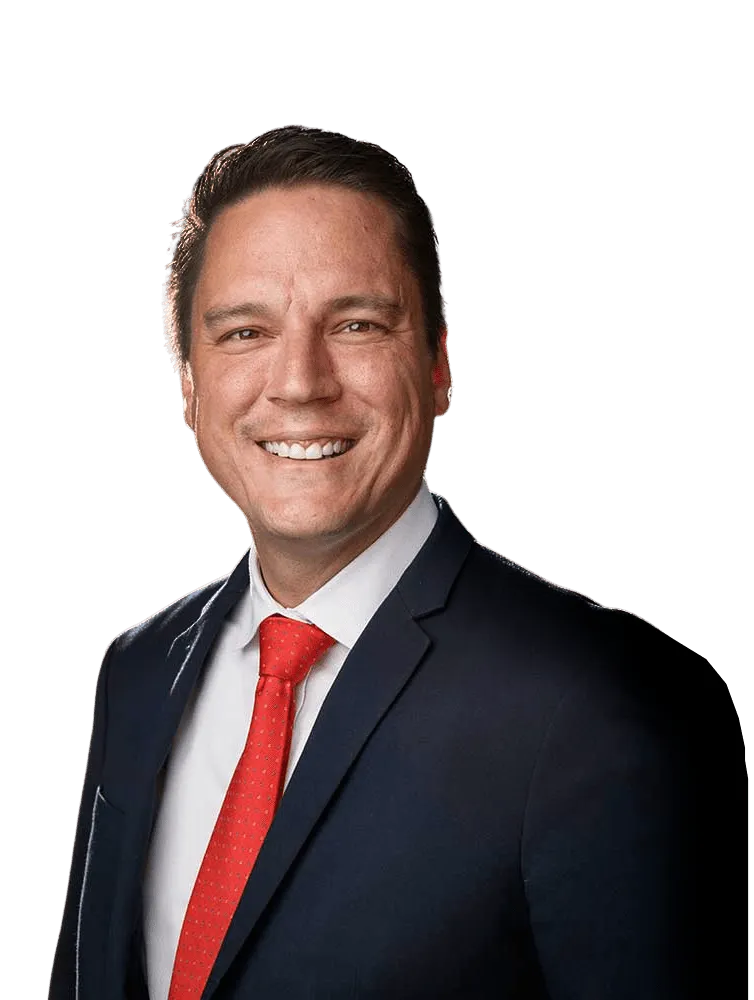
Russell Knight, Law Office of Russell D. Knight
Russell Knight is a seasoned divorce and family law attorney and the founder of the Law Office of Russell D. Knight in Chicago. He has written more than 750 articles on Illinois divorce and family law. Russell earned his JD from the University of Illinois College of Law and is licensed in both Illinois and Florida.
Find more episodes:
Attorney Perspective, Expert Billing, Expert Witness Credibility, Expert Witness Report Writing, Expert Witness SearchAbout 50 percent of marriages in the U.S. end in separation or divorce, which is the sixth-highest divorce rate in the world. Our divorce experts have worked as attorneys, educators, divorce specialists, forensic accountants, psychologists, and marriage counselors.
In the 1950s, the traditional family included a mother who was a homemaker, a father who went to work, and two or more children. Today, the modern family includes a significantly larger range of living arrangements and a wider group of people as families