

Engaging with Employment Law Attorney, Derek Smith
April 21, 2026In this episode…
One weak expert can derail a strong case, while the right expert can change the entire settlement conversation. In this episode, we sit down with nationally recognized employment attorney Derek Smith of Derek Smith Law Group to break down what actually works when hiring, vetting, and preparing expert witnesses in sexual harassment and employment discrimination cases. From avoiding costly qualification failures to mastering deposition prep, damages, and expert credibility, this is a practical guide for anyone who relies on expert testimony.
Check out the entire episode for our discussion on credibility, maintaining humility, and improv as a technique to improve performance.
Note: Transcript has been lightly edited for clarity
Host: Noah Bolmer, Round Table Group
Guest: Derek Smith, Managing Partner at Derek Smith Law Group, PLLC
Noah Bolmer: Welcome to Engaging Experts. I’m your host, Noah Bolmer, and today I’m excited to welcome attorney Derek Smith from Derek Smith Law Group, PLLC to the show. Mr. Smith is a nationally recognized attorney specializing in sexual harassment and employment discrimination law. With decades of experience, he has successfully litigated landmark cases that have shaped workplace rights. Mr. Smith holds a JD from Penn State. Mr. Smith, thank you for joining me today.
Derek Smith: Noah, thank you for having me. I’m genuinely passionate about working with the right expert witness. I can tell you that having the right expert witness means the difference between winning and losing a case. This is an important topic to me, and I’m glad we’re talking about it.
Noah Bolmer: You’ve been practicing since 1995. When did you first encounter expert witnesses?
Derek Smith: The first time I encountered an expert witness was probably my first case. I opened my shop right out of law school. I found an office space in downtown New York City where I was donating 30 hours of my time each month in exchange for a free office. I show up my first week, I’m all excited, and a lawyer down the hall said, “Derek, I got a case, you might be interested in.” I said, “What’s going on?” As it turns out, it was a young female secretary working at a big record company. Her boss came into her office, or by her desk, and says, “Here, I got you a present.” He gives her a fortune cookie.
Noah Bolmer: What?
Derek Smith: He’s like, go ahead, open it. She opened the fortune cookie and the fortune said, “Happiness is when you suck a blank.”
Noah Bolmer: But it didn’t say blank.
Derek Smith: Correct. She’s like, “What the heck” Couple that with all of the times he’s hitting on her, asking her out, and making all of these sexual advances, she comes to me. Remember, I’m right out of law school and I had no idea how to handle a sexual harassment case. I went right for it and opened up my own practice. I went to the Strand Book Store in New York City, which I found was like my original internet. You can go in there- miles and miles of books. I went to the section on sexual harassment, bought all the books, and I read all about it. In there, I saw that the difference between having an expert and not, can mean the difference between a multi-million-dollar verdict being upheld or being reduced to twenty-five grand or less. That’s when I said, “Oh my God, I better get an expert on this to interview her, find out what type of emotional distress that we’re dealing with, and have a real diagnosis.”
Noah Bolmer: Wow. Early on, you hit the ground running with that, didn’t you? You read everything that you could, and then you looked into expert witnesses. What happened next?
Derek Smith: I looked into expert witnesses, and there are expert witness or associations you can contact, and they’ll put you in touch with expert witness. You ask around, I need expert witnesses, and that’s why my reputation for experts is so important. A couple expert witnesses were recommended to me and then for the first time, I hired an expert witness. It consisted of examining my client, examining any past psychological records, then writing a report, sending it to me. That’s what I used to send to the other side to help settle the case.
Noah Bolmer: I don’t know about when you were in law school, but when I was in law school, they didn’t do a lot of teaching how to vet an expert, or how to acquire an expert witness, or a lot about expert witnessing in general. How did you make that first phone call? What were the questions you asked? How did you make sure that they were the right person for the job?
Derek Smith: I was like a deer in headlights back then. At that point, I was relying on the expert. I said, look, so-and-so recommended you, but you raise a good point, Noah. If you and I were opening up a law school nowadays, we would have courses on real-life law practice.
Noah Bolmer: Of course.
Derek Smith: How to hire an expert in a million other things, like how about doing accounting? It’s okay if you’re dealing with a true expert who’s been around for a while, let them lead the way. Hold your ham, say, “What do I need to do? Now what happens?” That’s all right. We stand on each other’s shoulders all the time. You can rely on these experts to help you out. One of the biggest mistakes that attorneys, especially like young attorneys do, is they want to pretend that they know everything. They want to pretend because they’re embarrassed to not know something. It’s okay to say, “I don’t know.” If you’re in a deposition, and opposing counsel is browbeating you, “You should know the law!” “Actually, I don’t know the law. On the record, would you please tell me what the law is and specifically what case you’re citing to so I can look it up to see if what you’re telling me is the truth.” They get all jumbled and everything. It’s important to ask for help and that’s okay.
Noah Bolmer: Now that you’ve been doing it for a while, what are the questions that expert witnesses can and should expect when going into an initial phone call.
Derek Smith: It is a relationship. It’s not just a transaction. An attorney, when interviewing an expert witness, needs to focus on expertise. They need to focus on experience. First and foremost, they want to know has this expert ever been qualified as an expert before. That’s a big deal, because picture this: you spent thousands of dollars on this expert witness. You spent hours and hours doing depositions, preparing expert witness disclosures, prepping your case, getting all the way to trial, and getting all your ducks in a row. And then, “Your honor we call expert witness psychologist, Joe Blow.” Dr. Blow gets up there and the next thing, because of his lack of credentials, the judge says, “I’m not qualifying them as a witness.” And you’re dead. That could have been prevented from the first conversation, “Do you have your PhD? Do you have your clinical social worker’s degree? How long have you been practicing? What type of practice do you have?” These questions are important because you want to make sure that you don’t find yourself completely flat on your back once you get to trial and they can’t be called as a witness.
Noah Bolmer: Let’s talk about setting up communications. Confidentiality and privilege. How do you work with your expert to make sure that they understand what to communicate and how to communicate in a given venue, because this is not always consistent.
Derek Smith: Correct. For the most part, let’s take federal court and most courts, everything between an attorney and their expert is privileged. It’s amazing. I love that because you want to be able to speak freely with your expert. “Do you think I have a case here?” There are certain things that are discoverable, one of which would be every document that you give to your expert, the other side gets to see it. It is so important to give everything because the best way to cross-examine an expert is to say, “Isn’t it true when you wrote this report, you didn’t have this document and had you had that document, doctor, you would have changed your mind.” You don’t want to find yourself in that situation. You want to minimize the cross-examination. Give them everything: the good, the bad, and the ugly. Other times- also any communications regarding their compensation, because that goes to potential bias. If you happen to be in one of the jurisdictions where communications with the expert are discoverable, then by all means, the expert needs to understand that anything that they are giving you- any emails that they’re sending you, text messages, whatever, I want them to picture it, blown up on poster board size at the time of trial, and the whole world is looking at it. Are they okay with it?
Noah Bolmer: Let’s talk about some of those cross-examinations. Some of those difficult situations that experts find themselves in, contentious depositions, people yelling at them like they do on television. What are some of the ways that you like to prepare experts for potentially difficult situations?
Derek Smith: I’m a little unorthodox here and I took a bunch of improv classes. I thought it was the best thing I ever did for my trials. I make all of my attorneys take improv, at least one improv class. We do warm-up exercises in improv to relax your mind and that’s what I like to do with the expert. I do a couple- I’m not even going to tell you the routines, but I say, “I just want you to do this with me, humor me.” They laugh, they get into it, and then they’re relaxed. That’s number one, because you need to have your wits about you when you’re doing a deposition or being cross-examined. Secondly, if they get asked something that I could have told them about beforehand, but didn’t, that’s my fault. Me, the attorney, take the blame. Take the responsibility. Sit down with them and do a cross-examination of them as if you were the other side. In fact, I say do it even harder so that when they are actually testifying, it is not as bad. They’re like, “That was a walk in the park. It was no problem.” Preparation, giving them all the material, relax, and sometimes the other side’s going to make a point. Let them make the point. Don’t fight with them.
Noah Bolmer: Can you, without going into any specific details, obviously some of this is confidential, but without naming names, can you tell me about some of your tentpole cases where an expert witness played an outsized role?
Derek Smith: Sure. I had an expert who I loved. I’ve been doing this for 30 years and many years ago I was dealing with him for decades. When he would get cross-examined, he would start talking about Shakespeare. He would be quoting from Romeo and Juliet or Othello or using Latin phrases. He didn’t do it in a pretentious way. He did it in a way that completely befuddled the defense attorney, where they’re just sitting there. It was impressive and he had a response for everything. He’s an example of an expert [where] the preparation was short. Just go over a few things and they can handle- he has a response for everything. Have you ever been to a timeshare presentation, Noah?
Noah Bolmer: Unfortunately, I have to admit that I have, yes.
Derek Smith: Me too, and I like to say that they are the most talented negotiators. They have an answer for everything. It’s like- it’s almost like a flow chart. If they say this, say that. This expert was like that. They had an answer for everything and it was impressive.
Noah Bolmer: Let’s move on to venue for a moment. Have you worked outside of the country or in any interesting types of venues, congressional hearings or out of state? What venues have you worked at and how does that affect expert witnesses?
Derek Smith: I speak French. I had a bunch of French clients. We also represented Americans. One of the things that people don’t realize is that Americans who work abroad for American companies are covered by American laws. Even in Djibouti. It doesn’t matter. They’re still covered by American law. I’ve had those cases. I’ve got one going on right now. I represent Caroline Manzo, who was a Real Housewives of New Jersey cast member. She was involved in an incident in Morocco. It was being filmed by Bravo and their production companies. The question is does Moroccan law apply? At that point, you [have] to get a lawyer over there and say, “Do I have a case under Moroccan law? Can I sue in Morocco for something like this?” That’s one example.
Another example would be cases where I’m representing foreigners who are, I’m sorry, Americans in a foreign country. You have to deal with psychologists and economists who can talk about the different job benefits that you get in Europe, for example, that you don’t get over here. It’s a balancing act to understand the differences. It does happen and when it happens, you [have] to be prepared and understand that because you’re handling an American case doesn’t mean that you’re not going to need outside foreign help.
Noah Bolmer: Let’s talk red flags. Are there any red flags? You think that an expert is particularly qualified, and everything seems all right, but then, uh-oh, this is not going to be the right person, or even mid-engagement, something that sends up a red flag and gives you a pause.
Derek Smith: Never, ever say anything that’s untrue. You want your expert to accentuate the positive and minimize the negative. Sometimes you’ll get an expert who seems to be trying too hard. That’s a red flag. Why are they pushing this so hard? They want my business. Okay, fine. but I can’t have them compromising the truth. That’s when it becomes a problem and I want nothing to do with that expert. Be an advocate, accentuate, minimize, but let’s maintain our credibility here.
Noah Bolmer: Let’s circle back. You were talking about contracts. You were talking about those first engagements, and engagement letters can become discoverable. Do you have any specific terms that you like or specific terms you don’t like to see in expert witness engagements? Do you typically supply those, or do you use whatever the expert sends at you?
Derek Smith: I do both. It depends if they have- I’ve even had an e-mail setting forth the terms but a friend of mine once said, “You go into business as enemies and you’ll always remain friends.” That means get the terms down. Fight over the terms if you have to but get them down and then that becomes your Bible that you refer to throughout the case. I, as a practicing attorney, love flat fees. The flat fee for this report and evaluation of my client is X, and that’s it. I don’t have to worry about if, their evaluation takes extra 2 hours, three hours, 6 hours, whatever it is. Sometimes it’s good to have multiple evaluations that they want. Let’s have a flat fee. Love that. If it is hourly, okay, but give me an idea of how much and remember, this is going to be a relationship. If you tell me it’s going to probably be no more than $1,000, $2,000, whatever, Next thing I’m getting a bill for $6,000. I have a problem. I don’t think I’m going to use you anymore. And also- and this becomes an issue at trial. If you appear trial, let’s set forth- I have to give you X number of days’ notice and how much you’re going to charge for trial. You’ll use best efforts to accommodate, et cetera, et cetera and if it gets adjourned, because judges get adjourned cases all the time or a witness is unavailable or gets adjourned, what happens in that case? What’s the penalty to me? It should be set forth in the engagement letter right from the get-go.
Noah Bolmer: Are there any other expectations that you like to make sure are set at the outset so that you’re both on the same page in terms of what’s expected and when it’s expected?
Derek Smith: It’s understood that I’m going to treat them with respect. I want them to treat me with respect. Another thing is if they can’t get a document that they need, let’s say it’s a person’s past psychological records, they write the report. and in that report, it says, “If I had the person’s psychological records my opinion might change or my diagnosis is not final until I have it.” Don’t do that to me. Call me up and tell me, “I don’t have the documents.” I will get them for you. I know how important that is.
Noah Bolmer: How do you feel about demonstratives? Do you like reports that have lots of charts, graphs, and pictures? Do you like people who bring models and displays and if so, do you supply any of that or do you leave that to the expert?
Derek Smith: Generally, the expert report is not in evidence. It doesn’t come into evidence. It’s basically used to show the other side this is what’s going to be discussed. But at a trial, oh my God, show and tell is the best. Pie charts, even the question questionnaire like the Hamilton Depression [Rating Scale] Questionnaire, or it could be maybe even the Rorschach test. This is what they found that to be and explain it to the jury. Same with an economist. Bring me the facts and figures. Show me- this person has a work life expectancy. Show me the graph. They would have made this much more money each year going up and up and up. I can then use that when I’m doing my summation saying, “Members of the jury, take a look. This is what they were going to make. You heard Dr. Schmergy say that they’re going to be making this much money.” It’s effective when you have show and tell stuff.
Noah Bolmer: Before we wrap up, do you have any last advice for experts or attorneys working with experts?
Derek Smith: Sure. I come back to relationships. These experts are people I hope that you have decades of career-lasting relationships with. Get to know them. They’re going to be your lifeline. You may say, “Should I even hire you on this?” I love when I call up an expert and they’re saying, “I don’t think you want to hire me on this case.” It’s great. You saved me a lot of money, having you evaluate the case. You taught me something. I need to settle that case for a lot less than I thought. So, relationships, respect, I worry that the latest generations are not valuing the importance of relationships with the people you work with as much as they should. That would be my advice.
Noah Bolmer: Incredibly important and sage advice. Mr. Smith, thank you for joining me here today.
Derek Smith: Noah, it was a pleasure talking with you. Thank you for having me.
Noah Bolmer: And as always, thank you to our listeners for joining me for another edition of Engaging Experts. Cheers.
Subscribe to Engaging Experts Podcast
Go behind the scenes with influential attorneys as we go deep on various topics related to effectively using expert witnesses.
Share This Episode
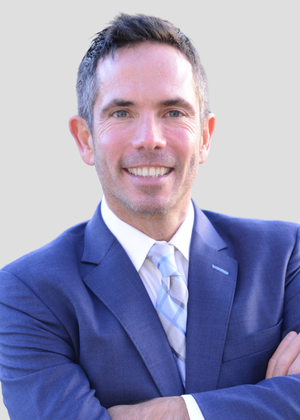
Derek Smith, Managing Partner at Derek Smith Law Group, PLLC
Derek Smith is a nationally recognized attorney specializing in sexual harassment and employment discrimination law. With decades of experience, he has successfully litigated landmark cases that have shaped workplace rights. Mr. Smith holds a JD from Penn State.
Find more episodes:
Attorney Perspective, Expert Witness & Attorney Relationship, Expert Witness Credibility, Expert Witness Deposition, Expert Witness Preparation, Expert Witness Search, Retaining Expert Witnesses, VenuesWorker rights in the workplace are the focal point of employment law, and employment law experts are often retained for their expertise in the areas of law and employment standards. Our employment law experts have worked as attorneys, human resources professionals, recruiters, and more.